Making Movies merge the ghosts of Día de los Muertos with the birth of their latest album

Photo by Brock Wilbur
The Folly Theater is not a safe harbor for evil entities.
The staff at the 126-year- old venue mostly reports encountering one recurring figure: Frank. Decked out in a suit with white tails and a signature top hat, a man who, by all accounts, died in a 1932 explosion has reportedly provided exceptional customer service to theatergoers, as recently as this year. It speaks to the character of the building’s bones that its most malevolent spirits are more likely to support instead of scare.
For a Día de los Muertos celebration, Making Movies could not have picked a more welcoming venue—for both the living and the living-impaired.
Over the evening of Nov. 7, the band curated a cultural adventure that culminated in an album release for Una Vida—their first new album since 2022’s XOPA.

Photo by Nour Berro
It was a gift to watch Making Movies fill the Folly yet again, bringing their beloved brand of spectacle to the space.
Making Movies is KC’s best musical export. Enrique Chi was born in Santiago, Panama, and moved with his family to Lee’s Summit, MO, when he was only six years old. Alongside his brother, Diego, they launched the band in 2009. Since then, the group has toured the world, been nominated for a Latin Grammy, and featured on NPR multiple times.
The new album, Una Vida, is a labor of love three years in the making and marks a change—in more than one way—for the group. Juan-Carlos Chaurand (percussion) and Enrique’s brother Diego (bass) have taken a step back from the band. [Editor’s note: Diego just completed the soundtrack for the cozy indie game Ledgerbound—which is already up for several awards.]
This leaves a space for Enrique Chi to make the most personal Making Movies LP yet. Instead of turning inward, Chi uses the opportunity to widen the lens.

Photo by Nour Berro
Una Vida’s tracks were recorded in five studios as part of a process that involved six cities (Memphis, Kansas City, Panama, Portland, New York and Paonia), an Airbnb, and a patchwork of homes and hotels. This road-trip approach to geography is central to its story: a record made in motion, shaped by the people and places that are worth carrying forth in spirit—outside of time. Musically, the album draws from Panamanian traditions including mejorana, socavón, and tamborito, folding those sounds into the band’s Latin rock vocabulary.

Photo by Nour Berro
More importantly than the sprawling social elements, the LP itself defines an “all killer, no filler” ethos. Chi jams multiple lifetimes into a tight 28 minutes and only 10 tracks. Opener “Anabel” has a Beatles lullaby sweetness in an ever-swelling testament, and album closer “Lover” would fit neatly alongside any latter-day David Bowie recording. The land covered in between is delightfully danceable, with foundations that give all the influences radio readiness—a heavy throughline for heavy material.
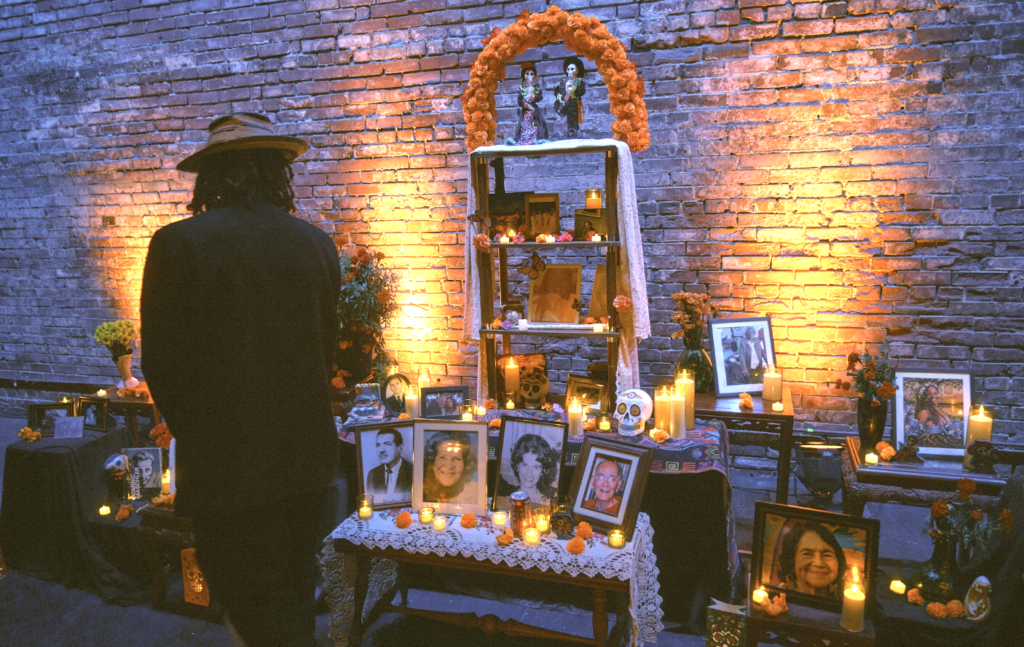
For the album release show at the Folly, special guests included songwriter Hobo Cane of St. Louis, as well as El Grupo Folklorico Atotonilco & Mariachi Los Reales de Kansas City. Syncing up to Día de los Muertos, the night’s openers— complete with dancing kids and featured speakers—laid the groundwork for what the crowd would need to synthesize what came next. The stage was filled with photos and personal items, honoring those loved ones who were no longer here. These momentos came not just from the band, but from an open invite to all attendees, with ushers adding to the monument throughout the night.
Then, Making Movies took the stage and sparked the spiritual dynamite piled up from the earlier honorariums.
Chi on guitars and lead vocals was joined by drummer Duncan Burnett, with touring musician Arthur de Palla on bass. While the three-piece invited a rotation of other performers to rejoin them on stage later in the night, the combo proved from the outset that this lineup was a winning chemical combination for the new material.
Tracks from XOPA sounded fresh and tightly structured. Arthur’s approach to the basslines landed with a mix of drive and tiny accented harmonies that called Flea’s tone to mind. Chi himself seemed more willing than ever to engage in divergent solos or dabble in musical asides—either a feat earned through confident mastery of the material or perhaps the draw to make mincemeat of the known studio versions. Through costume changes and characters, interludes and personal histories, Chi’s band has become not just confessional, but biographical for his entire bloodline. The death of his grandparents, a passed-down book of poetry as inspiration, alongside all the artists who have shared in his adventures—there is no pain in loss, only power to pass on.
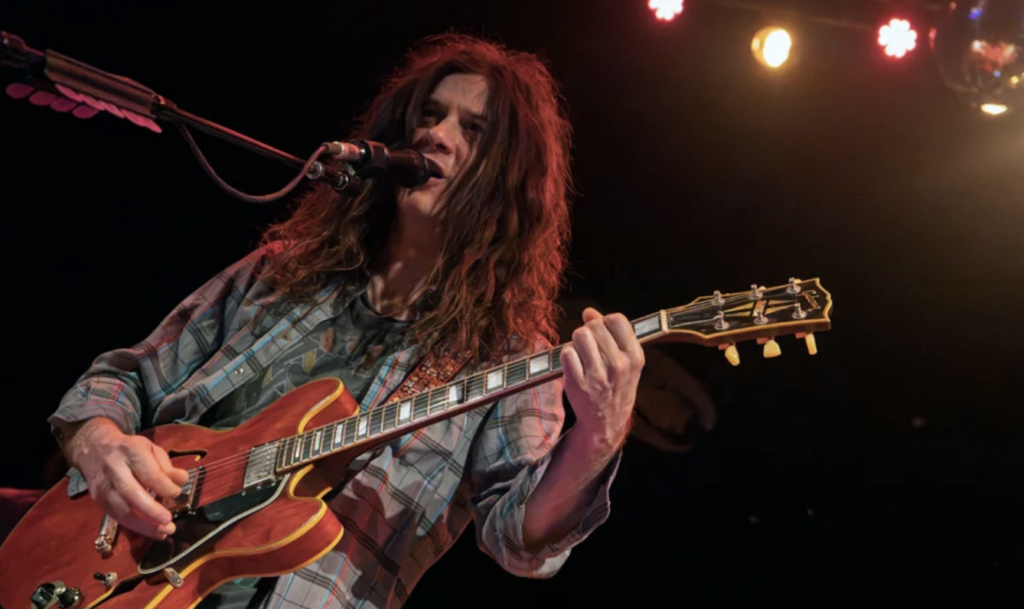
The “Making Movies Mambo” may have overtaken the crowd by the end, but no statement about this new era of the band was clearer than opening with a cover. Una Vida’s single “This Is a Photograph (bajo el sol de Panamá)” is a cover and reinterpretation of Kevin Morby’s hit song. While Chi’s version shifts the song to Spanish, he retained the English-language bridge, which cycles a dozen times on the line “This is what I’ll miss about being alive.” Making Movies find themselves again at a career crossroads, where international superstardom is on the verge of capturing their career.
Whatever they pull from those who have left us, and the stories they have to shout, no one is currently living their one life louder than Enrique Chi.

Photo by Nour Berro