A24’s Club Kid uses queer cultural touchstones to restore the human condition
“Do you know how hard it is to be an aspiring queer philosopher in Azerbaijan!?”

Club Kid. // Courtesy A24
Jordan Firstman has entered a triple-threat era—as writer, director, and leading man in A24’s Club Kid.
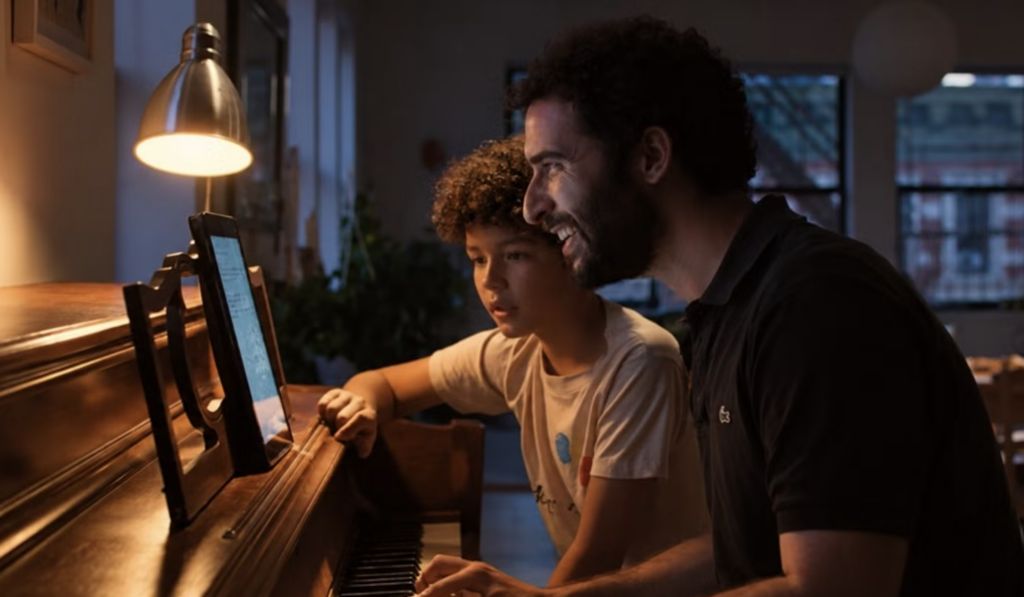
Firstman plays Peter Green, a New York City club promoter of queer parties. He is completely intoxicated by the nightlife, swept up in the hedonism that queer spaces are often rife with. His life is turned upside down when he comes home to his ten-year-old son, Arlo (Reggie Absolom), sitting on his couch. Peter, a gay man, is flummoxed by this, having never known the boy existed. He begrudgingly agrees to look after him, as children were never part of his life plan, but he eventually comes to care deeply for Arlo. With the help of his community, Peter doesn’t necessarily become the best father in the world, but he becomes the best father for Arlo.
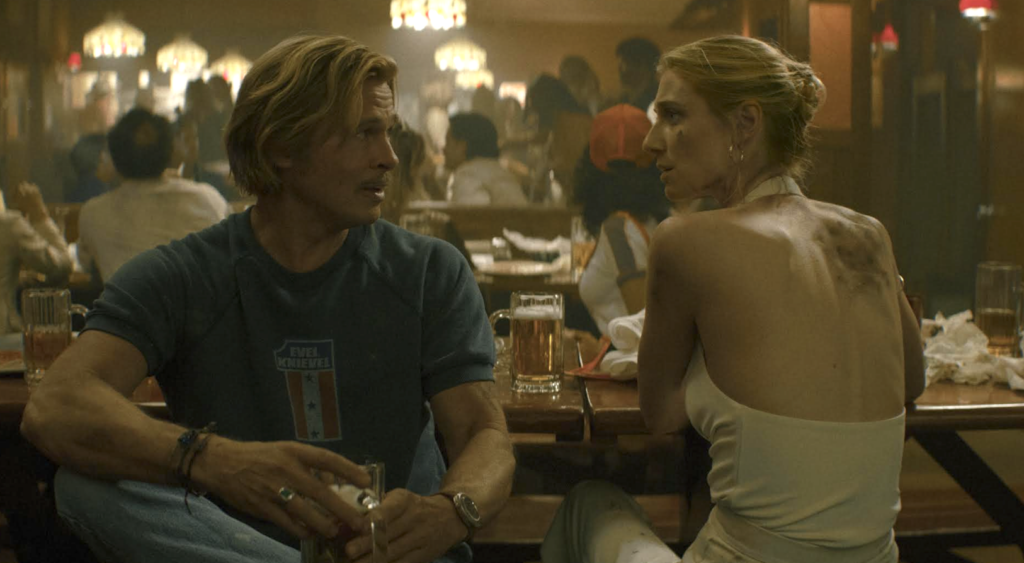
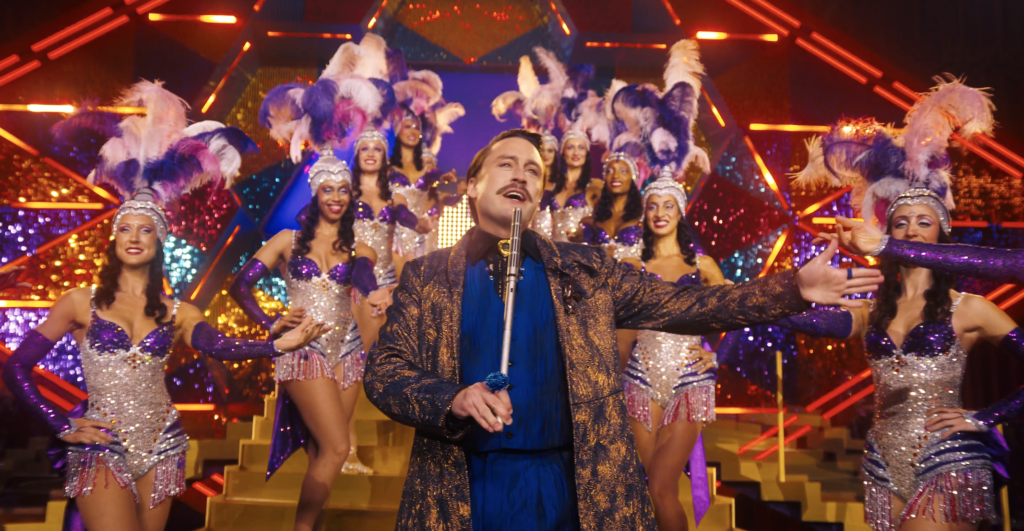
This film was a beautiful blend of drama and comedy. It felt like a queer person’s algorithm had come to life on screen. The opening sequence featured cameos from stars like Internet comedian Tanner Devore and RuPaul’s Drag Race alum Kandy Muse. Amanda Lepore, a performance artist who was a Club Kid in NYC in the 80s and 90s, appears in a skin-tight, turquoise leather dress, walking a man on all fours on a leash. This first scene immediately thrusts you into Peter’s lifestyle, which does seem fun at first glance. But when it’s every single night, like it is for Peter, the exhaustion begins to creep in. The strobing club lights become disorienting and overwhelming, and the downhill slide of giving in to the number of drugs available is concerning and regretful.
Club Kid has an incredible balance to it. One second, you’re in hysterics over Peter’s kinda/sorta roommate, Nicky (lldar Isgandarov), earnestly demanding, “Do you know how hard it is to be an aspiring queer philosopher in Azerbaijan!?” The next second, you’re quietly crying to yourself over the threat of Arlo being taken away from Peter. The bond that the father and son duo share is formed on a stunning performance of emotional regulation.
Peter tells Arlo, “In this house, it is so okay to cry. Encouraged, even. If you need to cry for a week straight, that’s fine by me. Sometimes, I cry for a week straight.” There’s no real way of knowing how much time passes when the two are together, but it’s shown in their developing relationship, culminating when Arlo decides to start calling Peter “Dad.”
There were, however, moments that felt unexplored. For example, Peter takes Arlo to a park after buying him a skateboard. Peter is talking to his friend about how much he likes Arlo, sincerely saying, “Like…he’s just, like, good.” They’re interrupted by Arlo screaming and beating up another kid, for reasons he doesn’t explain to Peter. Peter had been informed of Arlo’s stepfather, a man who repeatedly abused Arlo’s mother, and this could have been an interesting development to Peter’s relationship with his son. After going through a phase where Arlo is only “good” and sweet, how would Peter handle his son exhibiting signs of anger issues that he likely saw in his stepdad? He does take Arlo to social worker Oscar (Diego Calva), but we don’t really see any more emotional outbursts from the child. The previously seen regulation isn’t brought up again, and the film pivots to Oscar becoming a romantic interest for Peter.
Peter starts out not wanting to be responsible for a ten-year-old kid, especially with the lifestyle he has chosen. However, he seems to turn around quickly, buying Arlo expensive presents and staying home with him more often. Peter is one of those “fun dads,” who lets his son curse in public and even agrees to let Arlo DJ at one of his parties. The two never fight or argue, so we don’t see how Peter would have handled the more difficult moments of parenthood. There are some tense scenes, like in the park, but otherwise, there isn’t much to fear with the two until the last half hour or so.
Something I especially loved about Club Kid is how much you can tell it was a story made by queer people. Peter is friends with three trans women, all played by trans women. A stand-out role was Saffron (Saturn Risin9), a DJ in Peter’s social circle. Saffron is kind and encouraging to Arlo, and teaches him how to DJ after he expressed interest in it. She stands next to him for his whole set at Peter’s new party. Saffron and the other trans women in this movie were not inherently defined by their gender. While this part of their identity is essential to their roles, there was no conflict surrounding it. It was a breath of fresh air to see trans people in a movie without their gender being the sole focus–and the accuracy of trans women being the best DJs.
Club Kid is in limited theaters now and expands to theaters everywhere on Nov. 26.