For a stuntman sequel, The Further Mis-Adventures of Cliff Booth is in no rush to accomplish much

The Further Mis-Adventures of Cliff Booth. // Courtesy Netflix
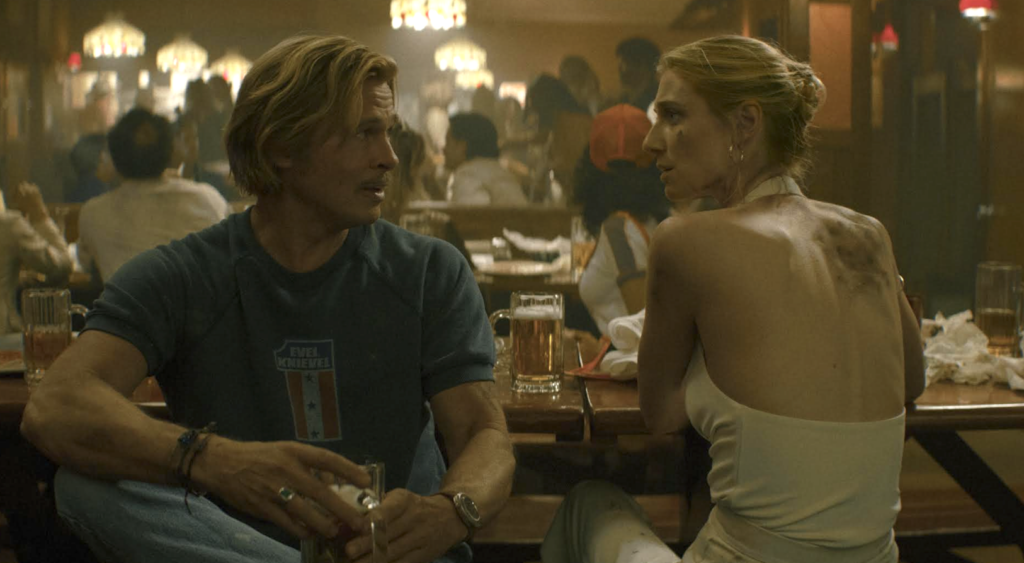
Early-ish in The Further Mis-Adventures of Cliff Booth, Karen Crosby (Elizabeth Debicki), a Hollywood agent and occasional assistant for TV star Charlie Peters (Scott Caan), explains her philosophy on movies to Brad Pitt’s Cliff: They’re hamburgers. Meant to entertain, nothing more. “What about The Godfather?” she’s asked—our film is set in the 70s, so it’s a relatively new release. It’s artistic, she’ll grant, but not art. Only filmmakers and critics consider films art.
Cliff Booth is entertainment, not art, a statement you could make about most Quentin Tarantino-associated movies. But Tarantino, a scholar of the medium and a skilled entertainer, still makes movies with a purpose, whether or not he realizes it.
He uses Hollywood to re-write history in Once Upon a Time in Hollywood, Django Unchained and Inglorious Basterds. He pays homage to female-fronted badass actioners in the Kill Bill movies and Jackie Brown. Pulp Fiction and Reservoir Dogs play with storytelling structure and dialogue. Even if the ultimate goal isn’t high-minded, there still is one.
The Further Mis-Adventures of Cliff Booth, written by Tarantino and directed by David Fincher, has no goal other than continuing to hang out with a character pretty thoroughly illustrated in Once Upon a Time in Hollywood. Even by that film’s loosely focused standards, Cliff Booth feels aimless and self-indulgent. There are moments that shine, and it’s ultimately an amiable time at the movies, but if this is a burger of any kind, it’s a nothingburger.
We rejoin Cliff, former stuntman and buddy of Leonardo DiCaprio’s Rick Dalton, eight years after the events of Once Upon a Time in Hollywood. Rick has decamped to Australia, where he stars in a popular TV series. Cliff now works odd jobs—he’s a projectionist at the Beverly Cinema and a bartender at a Tiki Bar and Mexican restaurant—and lives with his dad Gus (Peter Weller). It’s hardly as exciting as hanging out on a movie set or dispatching homicidal Manson Family members via projectile dog food can, but it’s a decent life.
Cliff is also a fixer, and it’s in this capacity that Caan’s Charlie reaches out to him. During a recent shoot in Manila, Charlie complained about his wife Toni (Carla Gugino) to the Verdusco brothers (Matt Groove and JB Tadena), a pair of Filipino gangsters who offered to bump her off. Now the gangsters are in L.A., but Charlie no longer wants their services. Can Cliff please get these nasty dudes off Charlie’s back before they cause violent damage to his inner circle?
For all its episodic, open-world plotting, Once Upon a Time in Hollywood had a structure that kept it on track. The 1969 Sharon Tate murder provided a framework for the film’s characters to inhabit, a ticking clock that counted down the last moments of a specific era of Hollywood as much as it did the days leading up to the crime. Cliff Booth has no such framework, and struggles to justify its existence as a result. The movie feels like offcuts from Tarantino’s 2021 novel of OUATIH that he simply couldn’t let go of.

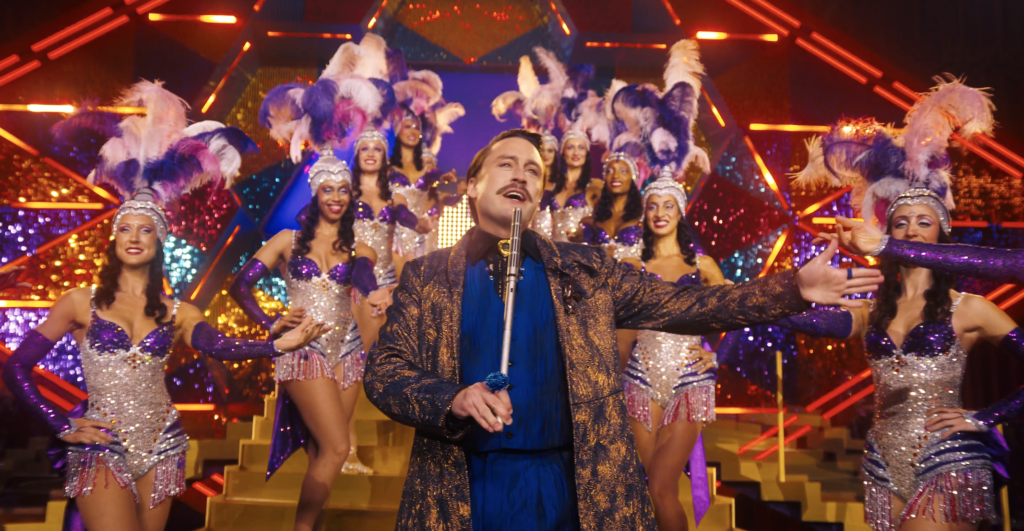
Tarantino’s self-indulgence (in addition to going deep on his existing character, the movie also features his New Beverly Theater and makes multiple callbacks to Tarantinoverse elements like Big Kahuna Burger and Red Apple Cigarettes) also largely smothers anything Fincher brings to this creative partnership. There are a few shots and scenes where you can see traces of the director of Zodiac, Panic Room and Se7en, and they’re excellent but rare. One particular sequence could be removed entirely with no effect (that it made the cut is likely down to the fact that it’s one of the movie’s most visually striking scenes).
Despite all this, Cliff Booth isn’t without charm. Pitt’s affable stuntman with a storied past is still a fun dude to spend time with. Weller’s Gus is, likewise, a delight—I’d happily watch him build model cars, watch Rockford Files and haggle with pawn shop customers for hours. Tarantino’s vision of 70s Hollywood, like his 60s Hollywood before it, is a detailed, lived-in world of tall tales, insecure stars and loose regulations.
But fun characters and cool settings will only get you so far before you start to wonder if this is going anywhere. The answer: Kind of, but no one’s in a rush to do anything. Without stakes, without a destination, without much definition of any kind, the movie’s 140-minute runtime crawls by. Tarantino may have felt compelled to spend more time in this world with this guy, but he doesn’t have anything new or interesting to say about him that should compel you to.