Gift of Jab: Feelings don’t care about your facts in KCAT’s vaxxtirical Eureka Day

Photo by Brandon Parigo
Eureka Day runs through September 27 at City Stage in Union Station. Ticket info here.
In a modern America full of folks who cannot agree on basic definitions of reality, there is perhaps nothing more threatening than a group of people who insist on hearing “every point of view.” There is no unity to be found, and frankly nothing could be more off-putting to me right now than the kind of person who believes there is. Recognizing that there are problems whose solutions can be debated: this is noble. To believe that there is common ground where everyone goes home feeling good about a consensus: delusional. Delusional and perhaps un-American.
By any metric, that way lies madness.
Perhaps the only true, final political common ground—considering horseshoe theory and a shifting Overton window over the last decade—is knowing that no one hates themselves more than progressives. Republicans and Democrats may hate each other, but no one makes a Hell on Earth materialize faster than a room full of well-meaning white people who believe in their own superhuman ability to respect and amplify all voices.
So when a play about parents debating school vaccination policies hits the KC stage, I am soo seated early for an evening of self-annihilation. Hook that implosion of sweet, sweet liberal savior complex directly into my veins. Let the darkness slowly envelop me as we drift further and further from God’s light.

Photo by Brandon Parigo
Eureka Day runs through September 27 at City Stage in Union Station. Ticket info here.
Jonathan Spector’s play Eureka Day is set in Berkley, CA, during the 2018-2019 school year. The community of parents is built, like the school itself, from a blend of hard-working bootstrap pulling efforts alongside affluent newcomers from the tech and culture world. Students and parents from all walks of life should make for a welcoming environment, but in an effort to force comfortable guardrails, the operations of Eureka become too open—and a policy of only making new policies by unanimous consent leads to massive time sinks, as a coalition of four parents and one principal can un-create solutions at record clip.
Case in point: the opening scene is a chaotic crosstalk of impassioned monologues and interruptions, all in pursuit of debating the word around a dropdown menu in a form on the school’s website. Each participant, drowning in the best of intentions, manages to pursue their own lofty ambition of inclusion and representation until they suffocate in the inevitable word-salad. This is education administration run as performative political empty gestures, and once enough hot air has been burned, change can be comfortably sidestepped.
This is all fine for those involved. In fact, the pointlessness is preferable.
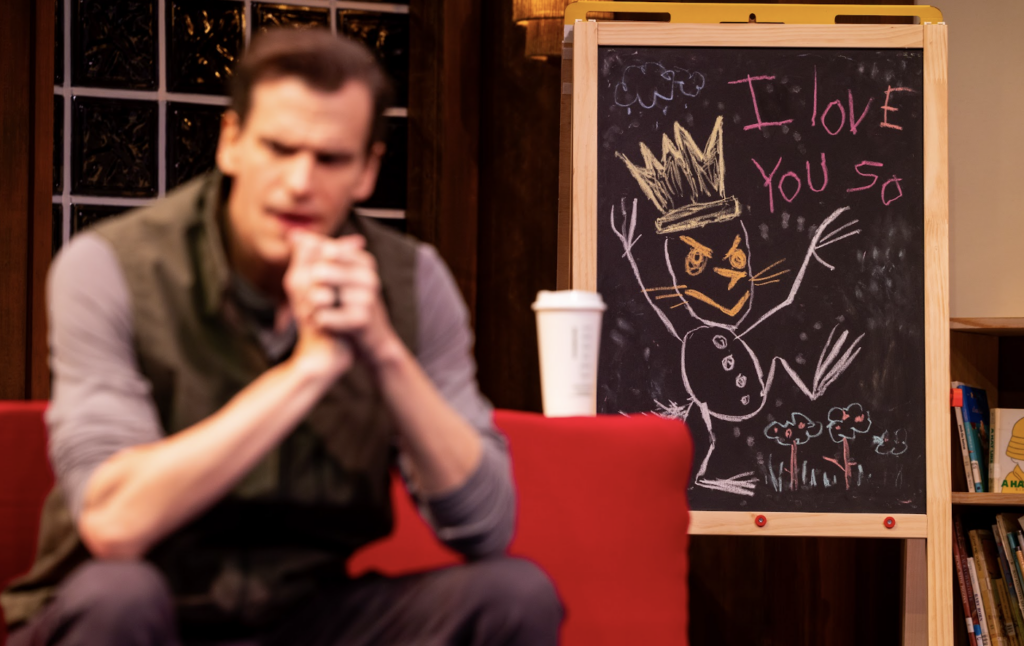
Principal Don (John Rensenhouse) is the captain of the ship, happy as long as the boat is moving, but would have no idea what to do if it encountered an iceberg. Suzanne (Cinnamon Schultz) is a granola lifestyle advocate whose decades of rotating children throughout the school have given her a self-appointed power atop a nonexistent hierarchy. Meiko (Erika Crane Ricketts) and Eli (Ross Hellwig) are parents who need this process to fill their lives, but the advisory panel also gives them a chance to explore Eli’s open-ish marriage, which takes priority. Carina (Teisha M. Bankston) is the only new addition to the team—a new parent who is currently occupying a rotating annual seat, and who recognizes out of the gate that her voice as a Black woman will probably never carry the weight in conversation as the white people here, who cannot wait to speak to the perspectives and experiences of every race, gender, and creed.

Photo by Brandon Parigo
All of this can function, pleasantly over scones with environmentally friendly plates, until an outbreak of mumps hits and a quarantine suspends school operations. The CDC’s recommended vaccination protocol quickly highlights the divergent rates of student vaccinations across what is otherwise a universally ultra-liberal series of households.
Deep divisions immediately devastate a group more accustomed to solving hypothetical problems of their own making, and reopening the school with any sort of communal compliance becomes an untouchable fiction and a factory for friction.
A group of people who believe every voice deserves a seat at the table is soon doing anything within their power to make this table as small as possible—a politics of musical chairs in service of personal preference in the face of scientific consensus and government instruction. No one here is qualified to speak knowledgably about the facts, so the idea of facts is merely absorbed into their feelings. When a parents-only Zoom call with the entire school descends immediately into conspiracy theories and accusations of who is acting the most like Hitler, things are made immensely worse.
It is brutal. It is cutthroat. And nothing is funnier than watching every exercise in open community cause this team to implode further like a neutron star.
Director Darren Sextro is a maestro for knowing when to let one actor take the solo, and when to let every actor play in opposing keys in a race to unwinnable bedlam. The quiet moments are rare, honest, and inviting even when the topic or destination feels deranged. The loud moments are impossible cacophony, and more often than not the entire noise apparatus is churning unyieldingly from a single source.
From the show’s opening moments, it is clear that characters are rarely going to finish a full sentence in Eureka Day—either from being spoken over by someone else, interrupting their own lines of logic, or (most astonishingly) pulling off pitch-perfect liberal guilt apologia that becomes more of an embarrassing musical expression than human communication.
Prime victors on stage here include Rensenhouse’s rudderless but kind leader, whose openness to all input makes every point of dispute immeasurably worse. Schultz’s mother martyr has to be reminded that there are no villains in this debate, despite casually steamrolling every point of contention to bend to her will, at least until the other advisors start to break. As always, Bankston is an actress who knows how to slip seamlessly into the larger cast and then take down her co-stars like a sniper. Here, she operates as the only cast member with the conviction and distance to repeatedly remind the others that, no matter how much they’ve convinced themselves through seniority, bylaws, and internet research… this is simply not how the world works and she won’t allow it.
Kansas City Actors Theatre’s production of Eureka Day is difficult, distressing, and deeply disturbing—mostly because it’s hilarious to watch a pure reflection of the last decade jammed into our faces, and to crudely cackle at how meaningless the entire affair has become. No matter what twists befall these characters, or the institutions they align with, no version of these same protagonists would remain recognizable in 2026. These are people ready to die for ideas they back with total confidence, and yet we know that these same parents in the show are only a year away from the real world asking them about those same ideologies—this time with a gun to their heads.
Another all-time production from KCAT, and a piece that will stick with me for years. If you can, inflict this on yourself immediately, if only as a vaccination against what comes next.
Eureka Day runs through September 27 at City Stage in Union Station. Ticket info here.