Carne Diem: The Briarcliff Butcher Shop Rewriting the Rules
This post was sponsored by Carne Diem
In the Village at Briarcliff, there’s a shop quietly undoing decades of how Americans think about meat. It’s called Carne Diem. Yes, it’s a Latin pun. Meat the Day. But also, reconsider it.

Pilsen Photo Co-op
The Whole Story
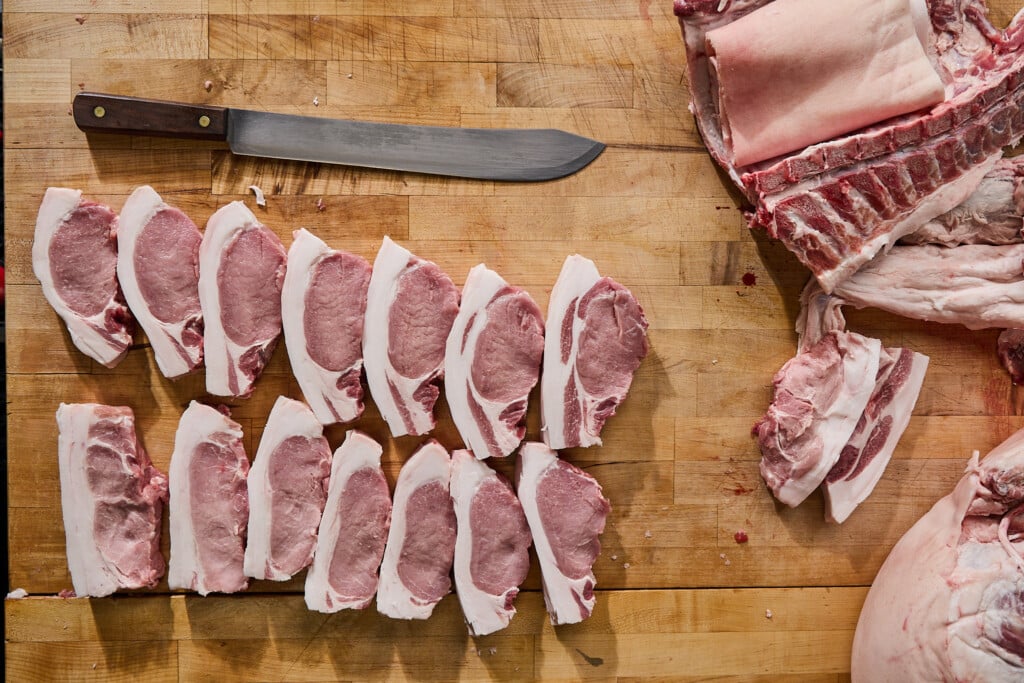
Owner/Operator Sarah Nelson gets right to it. “We are a whole animal butcher shop,” she says. “We use local animals, beef, pork, bison, chicken, turkey, duck, rabbit. We also do sustainable seafood … and we break that all down whole in-house.”
That “whole” part matters.
Somewhere along the way, America decided it only really liked a few parts of a cow. Ribeye. Strip. Filet. The rest got ground, processed, or ignored. Nelson and her husband, Louis Guerrieri — “his last name is a doozy,” she laughs — built their business on the idea that the rest isn’t just usable. It’s often better.
“The beef industry has done a very good job marketing ribeyes, strips, and filets,” she says. “But there’s not a lot of other cuts people are familiar with — which could not be further from the truth.”
A Butcher Shop, Reimagined
They didn’t land here by accident. Between them, more than 20 years in restaurants, starting in Denver’s fine dining scene, eventually led them to Kansas City. There were detours, including a sushi stall that opened in February 2020.
“One month of sales,” Nelson says. “And then the pandemic hit.”
They regrouped, paid attention, and saw a gap.
Whole animal butchery — where a cow arrives as a cow, not a box — was disappearing. “It’s a dying industry,” Nelson says. Skilled labor is fading, and efficiency has turned meat into something uniform and forgettable.
Carne Diem pushes back.
By breaking down animals in-house, they skip layers of processing and cost. “We’re able to mitigate a lot of the premium pricing,” she says. Translation: better meat doesn’t have to cost more. It just requires thinking differently.

Pilsen Photo Co-op
More Than a Counter
That thinking shows up in the customers. Some come for gourmet grab-and-go meals. Others leave with whole briskets and weekend plans.
“My ideal customer? It’s somebody that’s just looking to get more food and less filler out of their meals,” Nelson says.
Behind the counter, it feels less like retail and more like a conversation. Nelson and Guerrieri met in fine dining kitchens — and it shows.
“When people have questions about how to cook cuts of meat, we’re there with an answer,” she says. “Maybe you haven’t seen a lumberjack steak … like, what do I do with this?”
They’ll tell you. With enthusiasm. And options that have options.

Pilsen Photo Co-op
The Cuts You’re Missing
Filets sell out fast. There are only so many on an animal. But that’s not a problem here.
“We have four other cuts that are very similar in tenderness,” Nelson says. “They just aren’t given as great of a push.”
Start with the bavette, Nelson’s favorite, a versatile cut from the hindquarter. Guerrieri’s pick is the Denver, one of the most tender muscles on the animal. Then there’s the Scotch filet, essentially a ribeye with less hype. “It needs better PR,” she jokes.
Same steak. Better deal.
The Deli You Didn’t Know You Needed
Carne Diem goes beyond raw cuts. The deli program revives things grocery stores have quietly abandoned: house-made pastrami, hams, bacons, terrines, even old-school luncheon loaves.
“We get a lot of older customers that are like, ‘Oh my God, you can’t even find this anymore,’” Nelson says.
They don’t just stock it. They build sandwiches from it, including the Europa: pork luncheon loaf, ham, mushroom brie, balsamic, greens, all on local bread. It’s the kind of sandwich that makes you rethink every past lunch decision.

Pilsen Photo Co-op
A Better Way to Eat
There’s also wine, cheese, tinned fish, pasta, all the supporting players of a good meal. But the real offering is guidance.
“We really do enjoy getting to help people create their meal,” Nelson says. “More and more, people want that. Heck, sometimes they even bring in ChatGPT recipes and ask our thoughts.”
You might not know Carne Diem is there. A lot of people don’t at first, Nelson adds. But once you walk in, it’s hard to leave thinking about a cut of meat the same way again.