Squirrel Flower’s Ella Williams on gendered domesticity as performance ahead of Saturday’s White Schoolhouse show
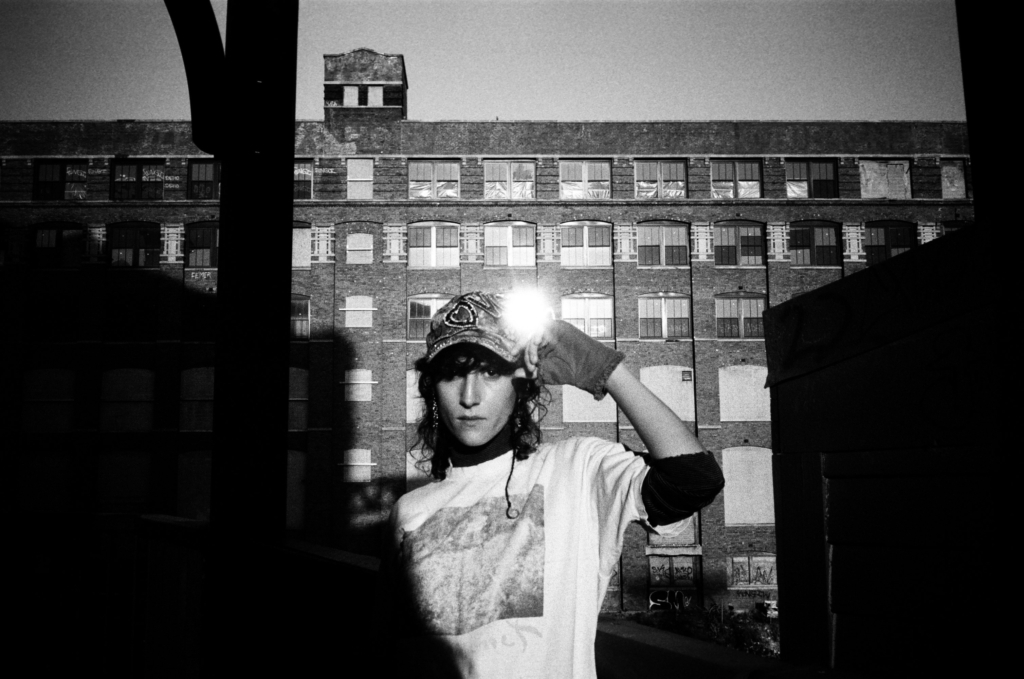
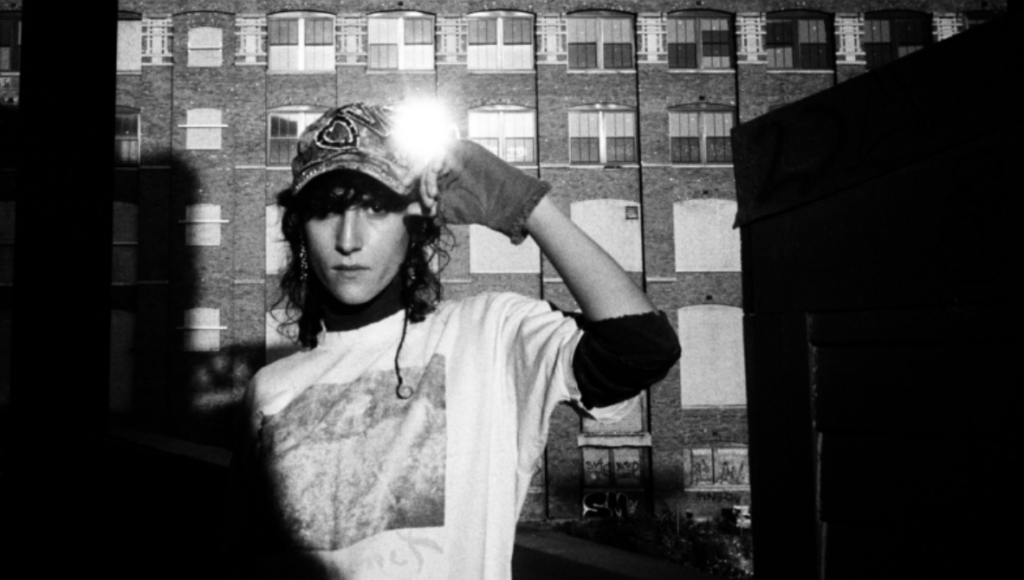
Squirrel Flower. // Photo by Alexa Viscius
Under the musical moniker Squirrel Flower, Ella Williams is a multi-talented force. She translates hyper-specific feeling with ethereal vocals suffusing her indie-rock-folk records. We spoke with her about her solo set last year at Lawrence’s White Schoolhouse and about her recent album, Say a Prayer to the Gods of Getting Going, and Williams talked about flight and stillness and gendered domesticity as performance.
As Squirrel Flower, Williams and her band will be at The White Schoolhouse again this weekend on Saturday October 24. Tickets are available here.
The Pitch: You played a solo set last year at The White Schoolhouse that I chanced seeing.
Ella Williams: Oh, you were there!
Yeah! What resonates with you about the DIY music scene? Because as I understand it that was a tour you booked yourself on.
Yeah!—everything about it resonates with me [laughs]. There’s the ethos of relying on community and what’s available to you, cutting out a middleman, and separating commerce from art as much as possible. Obviously, on that tour, none of the shows were free, but there’s not some grand corporate entity that’s taking fifty percent of the ticket sales. It’s not alcohol-centric. You don’t feel like you have to buy a $15 beer at a venue like The White Schoolhouse, where you’re in a beautiful field with your community. It feels like all these superfluous things are removed, and it’s about sharing the art with the people who are coming to see it, and be moved, and feel connected, and have this experience without all of the bullshit.

Squirrel Flower. // photo credit Amaya Pena
The show felt very peaceful and cathartic, with fireworks going off in the background…
Yeah the fireworks! And I think the train was coming through and blowing its horn, and there were fireflies everywhere. It was so beautiful. One of the most memorable shows I’ve ever played.
I spoke with you and Sofia Jensen of Free Range after the show. If I remember correctly, you both spoke about how you strayed away from sugar during the tour. Is this something you’re still doing, and are there other ways you maintain your health during touring?
I’m very conscious about what I put in my body, especially when I’m touring. I try to not drink on the road. I honestly feel healthier when I’m touring than when I’m not. I find myself hydrating a lot more when I’m on the road. When I’m off the road, I kind of miss the forced routine that allows me to take care of my health in a different way.
And the forced routine part of that seems different than the elements you’re exploring on Say A Prayer to the Gods of Getting Going — it’s all this wandering, exploring; it feels like many disparate landscapes and locations. Did touring form the elements of this album?
Not exactly—traveling did. But it was all of this traveling I did after years of touring. I took the longest extended break I had taken from touring since 2021 and that was nine months off the road. During that time, I continued to move; I was very full of inertia. I wasn’t really able to pivot to being in one place after all of that movement.
Touring is such a routine—you perform the same routines over and over and over again. There isn’t a whole lot of flexibility and I felt the need to discover that again and see what that felt like again. Part of the DIY tour I booked was to bring that feeling back into touring. I’ve been thinking a lot lately about how routine and adventure are reliant on each other. Both are necessary. If you’re spinning out and floating, truly on the wind, it’s not necessarily a good thing, and it doesn’t necessarily feel like freedom if you don’t have some source of grounding. I really felt the need to find parts of myself that I could only find when I wasn’t touring.
You bookend the album with that phrase, “say a prayer to the gods of getting going, say a prayer to the gods of being still.” Is that a theme that you were thinking about throughout all of this?
Through many of the months I recorded the album, it repeatedly felt so good to leave. There was a lot of departing happening. I wasn’t really moving toward things as much as I was moving away from them. And that phrase, “say a prayer to the gods of staying still,” is about the balance that is necessary in order to feel grateful for moving and wandering and the ability to leave, the ability to change your mind; the ability to be in the wind, you also have to have gratitude for the ability to stay in one place—to choose to not leave and to know when it is right to stay in a place and work through that feeling of restlessness and push through and see what’s on the other side of that.
It sounds like the being still part is more of what you’ve been learning recently.
Yeah, in my own way. I don’t have that much stability in my material life. It’s more just an internal feeling I think [laughs] as opposed to now—I have a week off between tours and all of my stuff is in a storage unit and I’m crashing at an empty studio apartment of a friend’s, and that is not exactly stability but in my own way it feels good. Me two years ago would have driven somewhere else and spent the week camping—doing something that would not actually serve me at all. So it feels good to have the ability to rest and allow myself to rest.
On the album, “Highway Woman” feels like that collective grounding cinching the album, like a moment of arrival just before the Celtic-yearning-folk of “Reelin’.” What is it between that grounding and that yearning for a future you’re not going to reach, something’s pulling you back, can you speak to that?
Well, “Reelin’” is half-sarcastic: I’m yearning for these things, but I’m also winking at the listener. It’s not a true statement of things that I desire. It’s more me imagining, what if I did desire these things [laughs]. I’m imagining a potential future I don’t actually want and using songwriting to place myself in it. I wrote Reelin’ before I wrote “Highway Woman.”
And “Highway Woman” is really a song about the record; it’s kind of meta—it’s a song about the process of making the record, what I found in myself during that time: the truths that I hold about myself and what I do truly desire to be. It’s about the self-possession that I desire and admire in other people. It’s also just about life as an artist and the way that committing to an artistic life is a form of immortality. And “Reelin’” is a little less heady; it’s much more about the everyday and the domestic.
I found myself resonating with “Reelin’” a lot because I feel there’s these ideas that are placed especially on women, when we were younger, to look towards that as the future you should want.
I’m very interested in gendered domesticity. That’s always been something I’ve been interested in with my visual art practice too. These performed actions of domesticity and the idea of keeping a home—I think of all of those things as less of things that I do in my daily life [laughs] and more of performed rituals in an artistic way.
How do you explore that, in performance?
When I was in college, I made a lot of video art. I went to college in rural Iowa and I would take myself out to the train tracks that would go through the cornfields. I had this housewife dress that I would wear and I would film myself cleaning the train tracks. I was performing this very domestic task in a dainty dress on this very brutish, masculine, industrial thing that isn’t cleaned that way.
I’ve brought that into my music videos a lot. Like I remember for “Full Time Job,” that music video borrows that imagery a lot. We filmed me mopping the concrete slabs at Lake Michigan in Chicago and vacuuming a gravel lot. We took those behaviors out of the home and put them more in masculine, industrial contexts. I think I do a similar thing in some of my songs.
Last year you were playing solo. How does it feel to be bringing a band to tour this year?
It feels really good. It’s the first time in a while I’ve done a full-band tour this long. It’s never sounded better—it’s never felt better than it does now. It doesn’t feel like we are performing the songs, it feels like we’re playing the music every night. There’s almost an element of improvisation—it feels very alive, it feels very raw, it feels like as a group we’re communicating with each other musically every night. That is the best thing you can ask for as a touring musician: to have that experience of feeling the music every night, not just being on autopilot.
Squirrel Flower plays the White Schoolhouse on Saturday, October 24, with support from Sour Widows and Faith Maddox. Details on that show here.