R&B jammer Jamogi is having his day
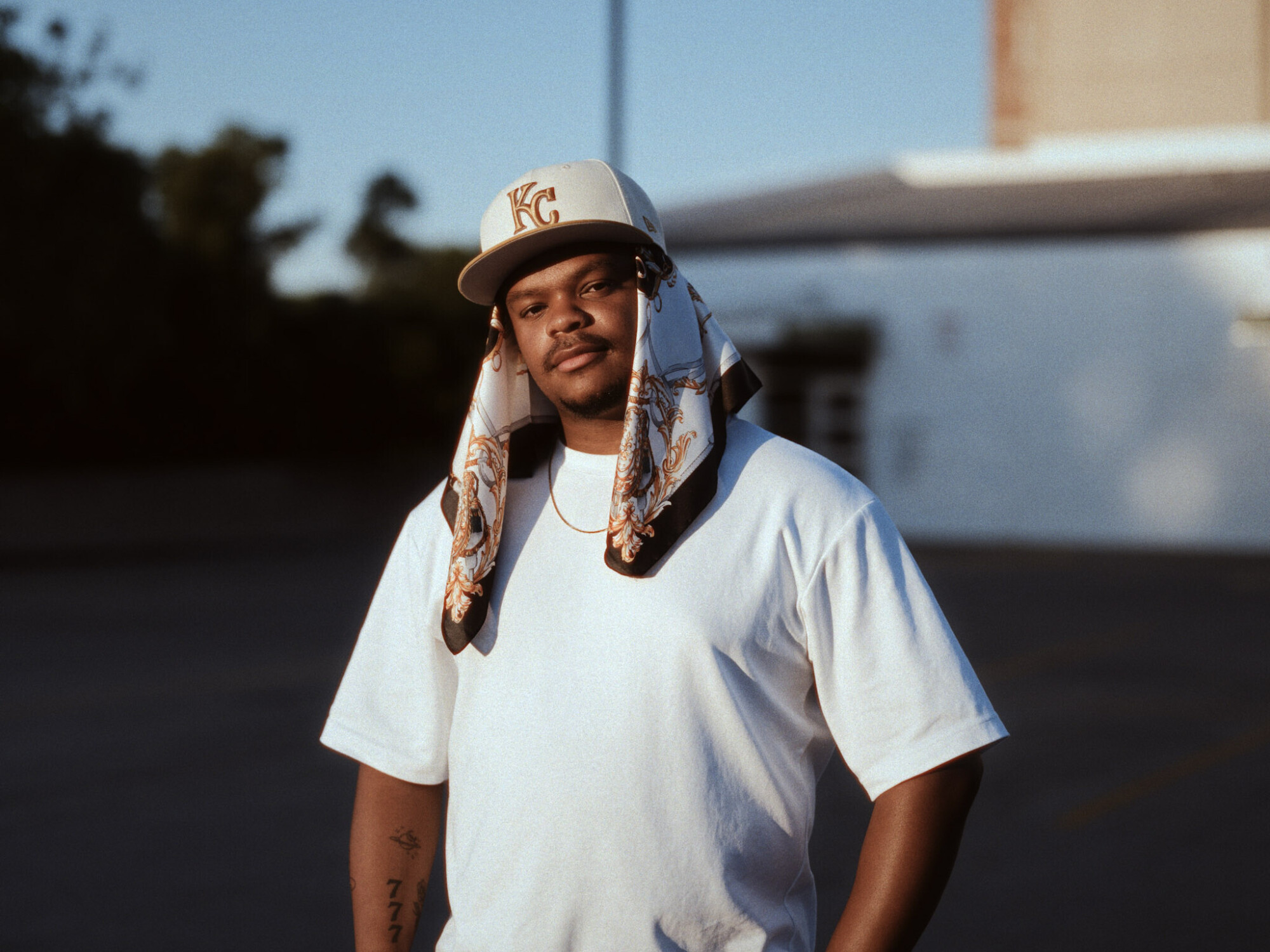
Jamogi. // photo by Vauaghan Harrison
J’Day, the new album from Kansas City funk/R&B artist Jamogi, has all the hallmarks of being the album of the summer. From the big horns on album opener “Go Big or Go Home,” the grinding sway of “Back N’ Forth,” to “Georgia Peach” with a bossa nova sweetness, and of, course, lead single “Hollaback” and its superlative blend of New Jack Swing and New Orleans bounce – Jamogi’s J’Day is a musical journey sure to encourage repeated listens. We’ve definitely had it playing on every single long drive we’ve taken since the files hit our inbox a few weeks back, and now, on Friday, June 12, the album is out for all to hear.
The journey to J’Day has been a lengthy one for Jamogi. Three years, to be specific, says the musician, but there was a lot to get into the album’s nine songs.
“Within that three-year time span, it was just, ‘Okay, what do I wanna get across, especially sonically?’” explains Jamogi when we speak over Zoom one morning. “’How do I take everything that I’ve listened to as a kid and have it tie together in blending different genres and everything?’”
In a recent Instagram reel, Jamogi breaks down some of the influences that led to “Hollaback,” which also features Les Izmore dropping a verse. In addition to Pharrell and the Neptunes, the musician points to everything from Gwen Stefani’s “Hollaback Girl” and the Mariah Carey album, The Emancipation of Mimi.
While the song says the artist is “taking it back to ’99,” you can definitely hear musical inspiration reaching back further than that, and that’s what makes J’Day so great. It’s only nine tracks, but it feels like an encapsulation of so many different eras of music. Jamogi says that, in addition to being inspired by movies and also some of the music that he grew up listening to, he grew up in a religious household, which is an important detail when it comes to how the musician learned about music.
“At the time, the pastor was like, ‘Oh, secular music is a sin,’” Jamogi recalls. “’You can’t listen to it,’ and so I was stuck listening to a lot of Radio Disney and some CDs that my mom had.”
The only exception to “no secular music” that the musician’s mother had was Michael Jackson.
“She didn’t play when it came to Michael Jackson,” notes Jamogi with a grin. That said, this meant Jamogi’s first secular song was “Crazy in Love” by Beyoncé, heard via YouTube at a cousin’s house. “So I was basically playing catch-up from elementary to pretty much high school on music, and I think that was really more of a blessing because I could appreciate music that was released a while back.”
This shows up on J’Day in myriad ways. For example, “Do It To Me” was inspired by Zapp and other ’80s sounds, but when Jamogi was working with producer OceanLife Gianni, he was careful to make sure that while the tracks contained vintage elements, they didn’t feel like old songs, but rather just brought the memory of the era from which they drew.
The song “Storybook” was inspired by “Say You Will” by Brandy because of the simplicity of that song’s production, but also the feel of the era in which it was released.
“I was like, ‘I want it to feel like you’re in the early 2000s in an apartment where you have the wood furniture and everything, and a white refrigerator,’” describes Jamogi, evoking a very specific time and place. “’You have your countertop and everything, carpet on the floor, but you’re also in a romance film.’ We’re just playing around with different visual ideas and what would that sound like?”
Part of the challenge for some of the songs was trusting himself and trusting that what he was making is actually what he liked. “Hollaback” started off with a drum loop from March of 2023, and it took Jamogi rediscovering it, listening to it, and being like, “Why didn’t I put this out?”
“Over that three-year span, it’s really just me trusting myself with different things,” continues the musician. “Allowing myself to be like, ‘Okay, you know what? The people that get it will get it. If they don’t like it or they don’t understand it, then that’s okay.’”
Other examples include “Go Big or Go Home,” which took two years in terms of Jamogi writing and figuring out what he wanted to say. In his voice memos, Jamogi says, there are six or seven different versions of that track, talking about different things, with different chorus lines and different ideas, whereas a song like “Treasure” felt easier to write–mostly because it’s more personal to him.
“I think once ‘Treasure’ was written and made, that’s when I started to really have that full confidence in my decisions and in my beliefs,” Jamogi states. “That I’m finally in tune with what I want and how I want this sound to go.”
Even saying that, Jamogi is quick to acknowledge that, when “Back N’ Forth” was first written, his response was more along the lines of, “Eh, I don’t know if I should put this out,” than out-and-out excitement.
“But then I was, ‘You know what: if SZA can have a song called ‘The Weekend’ that talks about being on the side, and people sing it and go up for it, then it’ll be fine for ‘ Back N’ Forth,’” he says.
Again, that whole three-year period making J’Day was just Jamogi finally trusting himself and learning to give himself grace. He also made a promise to himself, saying, “If I’m gonna put out music, I want it to sound like me, and I don’t wanna sound like something that everyone else is doing. Everyone else can have these particular sounds, and that’s great, but I wanna put out something that represents me and everything that I’ve listened to.”
As a kid, Jamogi grew up listening to many kinds of music and genres, as where he was brought up was culturally diverse. Thus, he was listening to merengue and dembow, and because his family is from Belize, Jamogi was also listening to soca, as well as the music of the church. Everything blended into one another, really, he says.
“It’s all song,” he notes, pointing out that even religious music changed from its original three-part vocal harmonies meant to represent the Father, the Son, and the Holy Spirit but as time progressed, bar songs became the influence into the holy music. “This can inspire this, and all these other songs inspire other genres. Then why can’t I just do that myself?”