‘Mahjong in The Mandarin’ to wrap up AANHPI month by bringing focus back to the game’s Chinese roots
“There’s a lot to be gained from knowing where something comes from, especially if there’s a cultural significance."
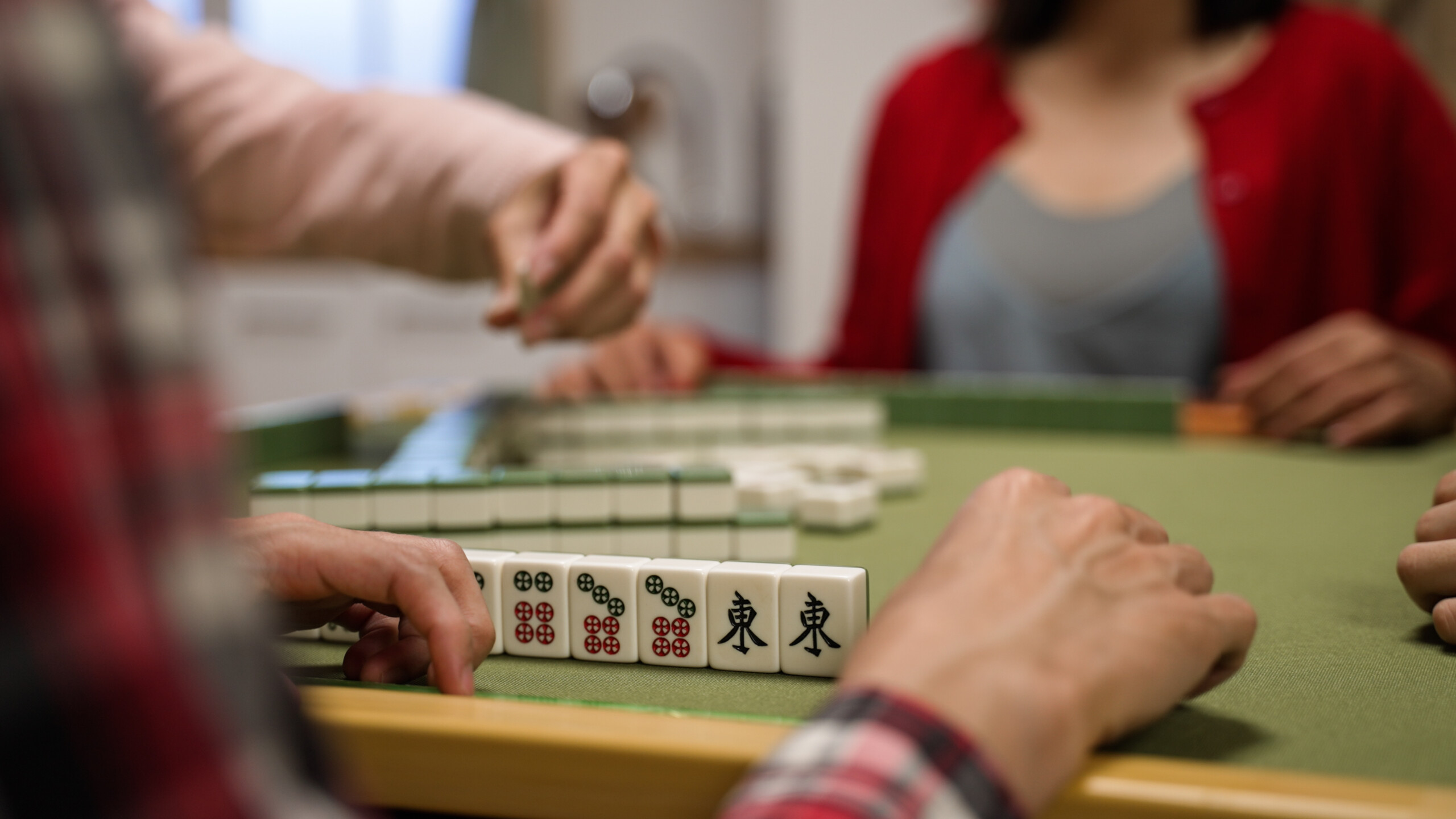
Adobe stock image
Vivilore in Independence, MO, is wrapping up AANHPI month with an event centered around the traditional way to play mahjong. Jollene Hastings, owner of Vivlore and its event space, The Mandarin, aims to honor the Asian heritage of the game.
“It’s very trendy right now, and there’s a push to make it ‘aesthetic,’” Hastings says. “We wanted to show the original way that it was intended to be played.”
The game of skill, luck, and strategy goes back nearly 200 years. It was brought from China to the New World in the 1920s and standardized in 1937 by the National Mah Jongg League in New York. The American version, according to Hastings, is much more complicated than how it was meant to be played. The League issues a yearly card that slightly alters the game, with other differences between the American and traditional versions, including extra tiles and suits.
Hastings says you’ll be learning a “simpler” game at her event on May 30.
She learned mahjong as a kid through an “osmosis” of sorts, watching her family members play. So naturally, the event will be taught by friends of Hastings’ who soaked up the game the same way she did.
“It would be a great success if there were a lot of non-Asian people there,” Hastings says, explaining how players can even bring in their American mahjong sets, since they’ll only have extra pieces and can easily adapt.
There’s been an ongoing conversation over whether brands that carry luxury American mahjong supplies and sets are contributing to the erasure of Chinese culture; Hastings thinks they do. She described seeing an Americanized mahjong tile, which traditionally has Chinese characters and symbols, with ‘limoncello’ on it. Having nothing to do with Chinese culture, Hastings sees it as capitalizing on the traditional game.
In 2021, a Dallas company, The Mahjong Line, became embroiled in controversy after selling mahjong tiles with images of bags of flour, bubbles, and palm trees. The company, founded by three white women, apologized after these tile sets—sold for upwards of $400—were called gentrifying.

Past event at The Mandarin, Courtesy of The Mandarin
“I grew up seeing my dad and my grandparents playing this game in the living room,” Hastings recalls, “It was very casual, but fun and lively. It never needed to be a whole production.”
Hastings has always been an advocate of celebrating culture, and in college, rechartered the only Asian-interest sorority in Missouri at the time, Alpha Phi Gamma, as a freshman.
“Knowledge is power,” Hastings says. “There’s a lot to be learned and gained from knowing where something comes from, especially if there’s a cultural significance.”
Around half of the tickets are left for ‘Mahjong in The Mandarin,’ but they are limited—there will be up to 10 open tables of four players. Though mahjong often involves playing with money, there will be no gambling involved at the event, and no experience is necessary.
Tickets are $8.88, and purchasing one enters you into a raffle to win a mahjong set worth $65. Attendees will also get to taste samples of two teas from Tian Tea House and mahjong-themed macarons from Sugarfold. Small fusion dim sum plates will be available for purchase.