Author Kody Keplinger explores Where Lost Girls Go
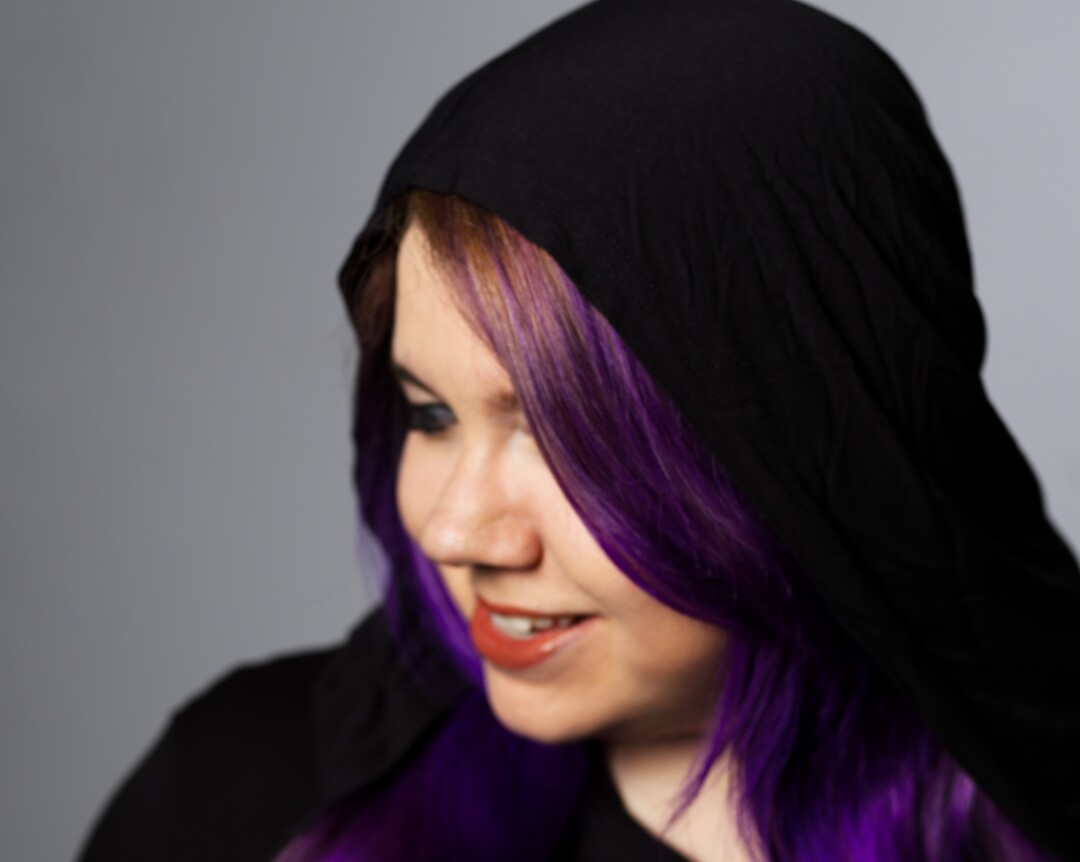
Kody Keplinger. // photo by Aleksandr Karjaka
New York Times bestselling author Kody Keplinger came to readers’ attention with her debut novel, The Duff, written when she was in high school. Her latest, Where Lost Girls Go, out now from Scholastic Press, is described as The Girls by Emma Cline meets The Scammer by Tiffany D. Jackson, and it’s a page-turner.
Telling the alternating stories of Iris, a young woman living in a Kentucky mountain cabin with four other women she calls “sisters,” and recent arrival Caela (who will become Rose) and their interactions with the group’s leader, a man known only as Sol, it’s a culty story of identity and empowerment, and what happens to those who are abandoned and to what lengths they’ll go to belong to something–anything–again.
We spoke with author Kody Keplinger from her home in Rochester, New York, about Where Lost Girls Go, its inspirations, and her career as a whole.
 The Pitch: What keeps you coming back to Kentucky to for your novels?
Kody Keplinger: I grew up there. I know that growing up there shaped me in a lot of ways. Frankly, it’s an area of the country that I don’t think is written about very often. When we see people write about the South, more often–I actually saw a joke about how everything set in the South is either Texas or Tennessee. Especially in music: every time country songs reference any place, it’s usually Texas or Tennessee.
But Kentucky, I think, gets forgotten when we talk about the South because it’s the northern part of the South. It borders the Midwest, but there’s so much beautiful country there, and for this book in particular, I’ve always known I wanted to write something in the Cumberland Mountains or the Smoky Mountains, that part of Appalachia because it’s just such a beautiful region, and there’s something very almost haunting about the way the mountains are so misty and blue from the distance.
I’ve always known I wanted to set a book there, but it wasn’t until about a decade ago that I knew what I wanted to write there–that I knew I wanted to put a cult there.
The idea of taking something beautiful and putting something scary there is a longstanding tradition, and it works so well in Where Lost Girls Go because I love the atmosphere that you generate, especially between the two narratives, when we’re bouncing back and forth between Iris and Caela.
That was a challenge: moving back and forth between them. Caela’s narrative changed a few times. Iris’s has been pretty consistent from draft one. But Caela and how I wanted to structure Caela’s narrative and where Caela’s narrative would take place largely has moved around a few times before I settled on it starting in Ohio before moving down to Kentucky.
You wanted to give it a bit of a flashback before we move into the main narrative?
Yeah, because we’re really following two completely different stories with Iris and Caela. With Iris, she’s very isolated. Not isolated in terms of people, but isolated in terms of location. She’s very stationary, but she has this close-knit group. And for Iris’s story, it’s really about how does someone come to terms with the fact that the people who took them in might not be the safest place for them? That maybe just because someone seems like a savior to you, they might not be perfect?
There might be some flaws. There might be some manipulation happening. And I needed that isolation in terms of location to make that story work. It takes a while before the arrival of Rose brings some outside voices into Iris’s head to start making her question this life that she’s been living for a while.
Then, with Caela, I wanted to do the opposite: have someone who is out in the world, but is socially isolated. Obviously, small spoiler for the first chapter, but she loses her guardian, and in losing that parent, she also loses the home where she had friends and a community and so, she’s moving around a lot. Even though there are people around her, she doesn’t really feel like she has a place.
With her, I wanted to explore how someone gets lost to begin with. I had some fun playing with place for both of those narratives. Iris, again, like I said, she’s got people around her, but she is isolated, location-wise, whereas Caela is coming from Ohio and then down into Kentucky. She moves about and goes through these towns, but is pretty alone in a lot of ways. They’re contrasts of each other.
The way the story unfolds is just a rollercoaster of sadness, hope, sadness, hope. The peaks and valleys keep getting more and more as it goes on.
That is actually a great way of describing my last few books, actually: sadness, hope, sadness, hope. That is literally probably the exact roller coaster that I have found I write towards in my last several books, and I don’t know what that says about me, but yeah, I think that’s how I like to structure things. I like to move back and forth between the emotions. I also always joke that my endings are rarely happy, but they’re always hopeful and that remains true with this book, I think. Like I said, not necessarily happy, but definitely hopeful.
Finding the balance between Iris and Caela was a challenge that took me a few drafts to get right. Figuring out where Caela actually came in, ’cause she’s actually page-wise a pretty small part of the story. She feels bigger than she actually is. Page-wise, I think she’s only not even maybe 20% of the actual book, but she feels bigger because so much happens to her. And figuring out how to place that and where to put her chapters took a lot of work because, as you said, I need to move back and forth between the sadness and hope without ever feeling like one is bombarding the other.
And in all of this, you have the stories of the other four girls coming in and out–not in their own words, but you get glimpses of what brought them in. Did you construct backstories for everyone else?
I did. There was a draft where each girl had like a short vignette from their point of view that gave a little bit of their backstory. We ultimately decided we didn’t need it and it killed the pace. But yeah, no, I know all the girls’ names before they ended up in the cabin. I know where they came from. Not as in-depth as I personally know Rose and Iris’s, but I have at least a few paragraphs on each girl’s actual backstory and upbringing.
I feel like in any book that deals with a cult and especially one with a charismatic man as the head of it, there’s a looming threat in the background that you’re always afraid is going to happen. I’m very glad that threat didn’t. It’s very weird to be like, “The only thing that happened was psychological abuse and murder.”
My editor and I talked about this a lot because there is a certain aspect of abuse that happens in a cult– especially one run by a man–that is very pervasive, and that it almost seems strange to have a story where that isn’t taking place in a cult.
What we landed on, personally, is that we are only seeing what happens from Iris’s point of view when we are in the cult. We are only experiencing what she has experienced. We don’t know what maybe has happened with the older girls, with Lily and Violet, but we know Iris’s point of view. If that kind of abuse is taking place, it hasn’t taken place for Iris; that’s basically how I landed.
That wasn’t the part of the cult I wanted to explore personally. Obviously, it’s a very real aspect of a lot of cults, and I am not ruling out that, again, it may be taking place where Iris cannot see. But for me, the thing I really wanted to explore most about a cult was the concept of identity and how identity can be steadily stripped away and rebuilt by someone else.
And so for me, that just wasn’t something I felt like I needed to include for Iris’s story, personally. I think I’ve had a few readers say that they always felt like that looming threat was still there, and that’s on purpose. It should feel ominous. It should feel unsettling. I think the fact that there is a grown man living with five young girls–only two of whom are over 18–yeah, I feel like that should feel pretty ominous and unsettling.
But as far as Iris’s story, I felt like it’s been explored better in other books. I’ll put it that way. And I didn’t feel like I was the one to write that part of it.
There’s sort of an aspect of this book that reminded me of something I saw when I was a kid, which is this miniseries called I Know My First Name is Steven.
My mom has talked about this to me so many times. She saw that miniseries when she was younger too, or I think she read the book, actually, and then the series came out. She’s mentioned this to me a few times, so it’s so funny you bring it up.
It’s the idea of finding identity and realizing, like, after the fact that, “Oh no, this thing I thought that was wonderful and beautiful was actually very terrible.”
Yeah. There’s a great documentary on Hulu that I’ve been recommending to everyone, especially if they enjoyed this book or are interested in this book, called Stolen Youth: The Cult at Sarah Lawrence College. I thought it was just a phenomenal piece of documentary work for one thing because I have a lot of feelings about ethical true crime, and they did a really good job of making sure that all of the survivors of this cult- almost all of them took part in this documentary and sat down for interviews and talked about their experiences.
It was incredibly harrowing to hear them talk about how these were all promising kids going to one of the best schools in the country, many of them from good families–they did a really good job with the documentary of showing that this doesn’t just happen to foolish people or naive people or people from bad homes. This genuinely could happen to anyone. The right person comes along at the wrong time.
 In terms of ethical true crime, I feel like that ties into one of your previous books, That’s Not What Happened. What are the challenges in ethically taking things that are inspired by true events and turning it into fiction?
I always try to be sure that even if I am inspired by a real event, I am changing things. I’m never gonna use the real people’s names. I’m never gonna use an identical scenario. I am going to change enough that it is its own story. And also, in the case of That’s Not What Happened, I obviously was critiquing the way we talk about mass shootings as a whole.
Obviously, there was some influence from Columbine. I think that’s pretty clear. But I don’t think people realize I took a lot of influence from several other mass shootings, not just school shootings, and also 9/11, which is a weird one to mention, but when I was doing research for that book, I was looking specifically at how we write about and talk about tragedy, and there is no tragedy that has been more written about in the past 40 years or so than 9/11.
I had a lot of research I could mine there, and several things in that book were actually inspired by things I’ve heard survivors from 9/11 talk about. I always try to be sure whenever I’m writing something that is inspired by something real, that I am changing enough to make it its own story, and that I am pulling from a lot of different pieces of media and history, and not just one, because I do think if you pull from only one, you do run the risk of running too close to a real story.
With That’s Not What Happened, as I said, obviously a lot of people have pointed out some of the similarities with Columbine. But I’ve also pulled from several mass shootings. The amount of research I did for that book in particular was harrowing. It was some of the most difficult writing I’ve ever done in my life because I was researching the most horrific events every day. Thank God for a good therapist, ’cause I needed it.
But I’m very proud of that book. I think it’s one of my best pieces of work. I think it’s the book where I most got across what I was trying to say clearly, and it’s the book that I get the most feedback on other than The Duff. Obviously, The Duff was made into a movie. That’s probably forever going to be the one most people are familiar with. But That’s Not What Happened, even though it never hit the bestseller list, just continued to find its audience, I think partly because I think it’s been taught in a few schools.
That’s the one I get reached out to from people a lot who tell me that they really appreciated it because it made them look at school shootings a little bit differently and how we talk about things differently, and that was my main goal because I was so frustrated with not just the media but also myself because I realized as I was doing research for that book that I was guilty of it, too–of how we talk about a tragedy when it first happens and then we move on so quickly that we’re still not, we’re not actually around when we get the truth about all the details.
Yeah, I had a lot to say with that book, and I feel like Where Lost Girls Go is in some ways its sister, where, again, I’m taking a topic that I have a lot of thoughts about–in this case cults–and trying to make a bit of a point while still telling an engaging story.
Kody Keplinger’s Where Lost Girls Go is out now from Scholastic Press.