Author Yoon Ha Lee discusses the magic of language in new novel Code & Codex
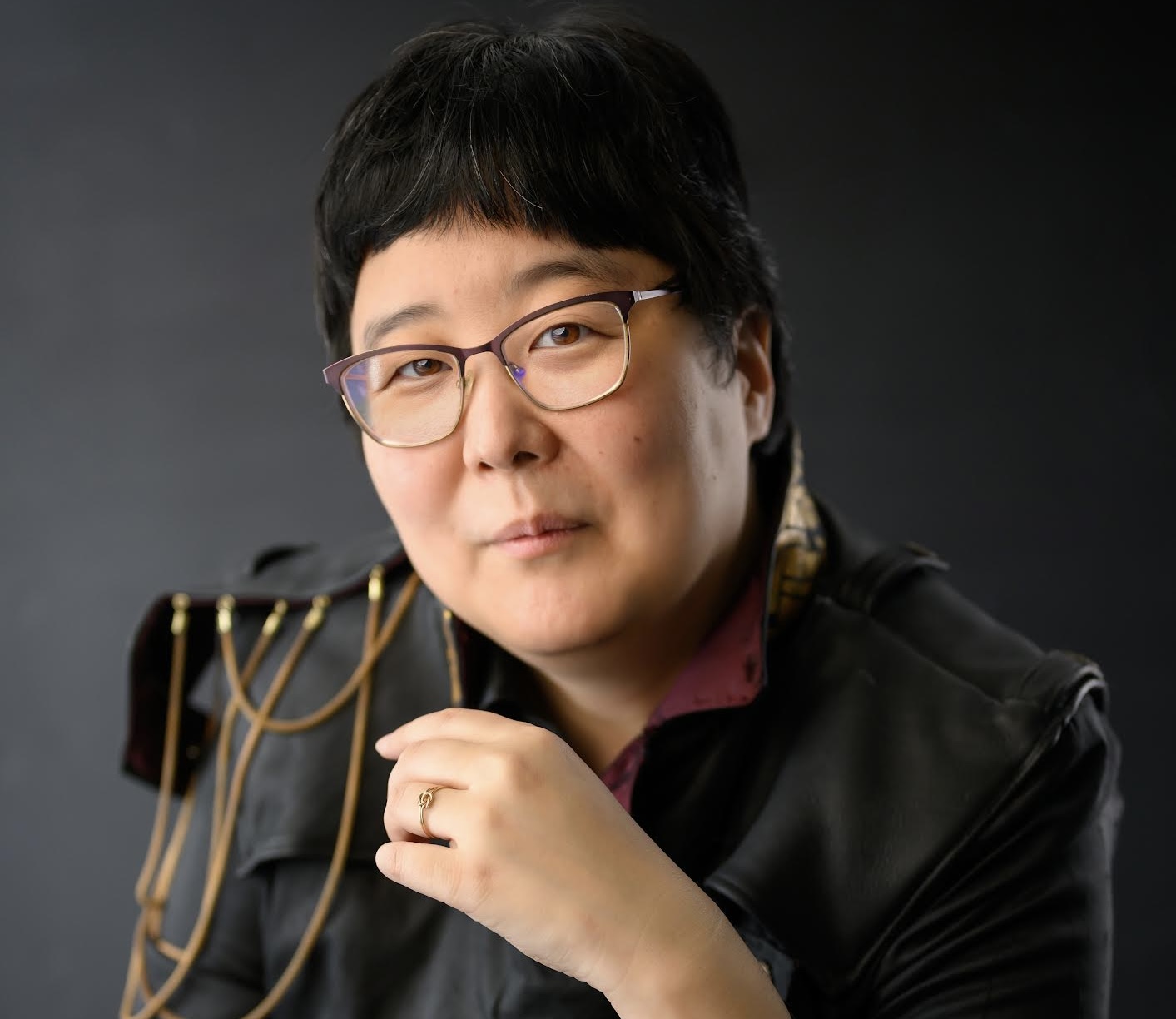
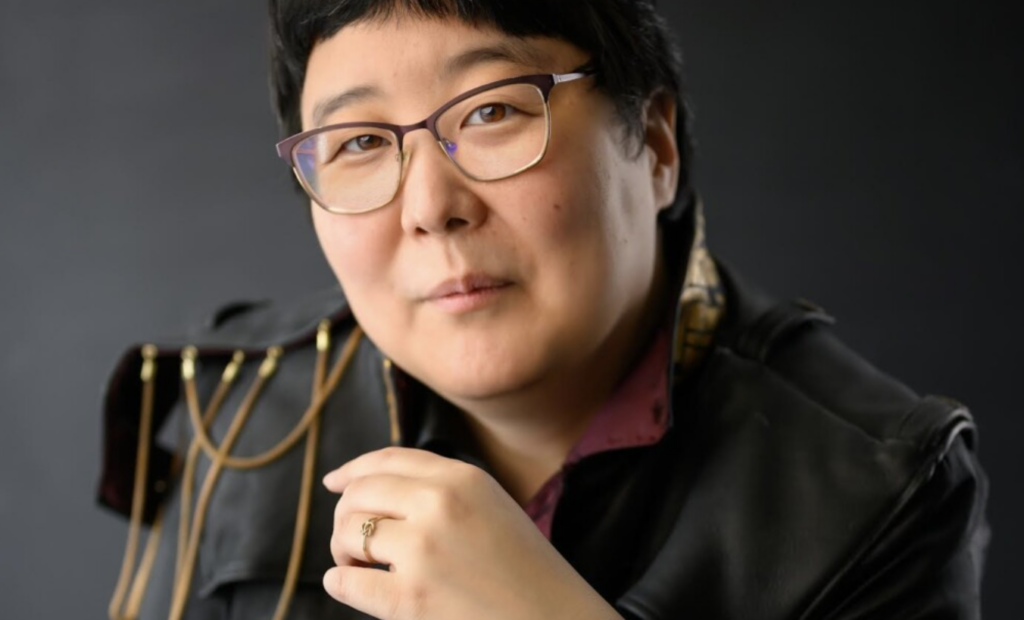
Yoon Ha Lee // Photo by Caleb Bourque
Yoon Ha Lee’s Code & Codex is available now through Saga Press.
Linguistics magic, a young woman who speaks to the AI assistant fused to her spine, and a winged cat vomiting on a starship are just a few things you’ll find in Yoon Ha Lee’s newest sci-fi/fantasy adventure, Code & Codex.
Releasing on Oct. 27 from Saga Press, this spectacular space opera is filled with political intrigue and new vocab words that would make your English teacher proud.
From fiction novels to table-top RPGs, X-Men comic scripts to video game writing, Lee is one of those creatives who dabble in a little bit of everything. He is self-described as an author who loves “destroying the reader,” compelled by the intellectual chess games his fans may endure. Several of his young adult novels have earned acclaim, with titles such as Moonstorm winning the Locus Award for Best Y/A Novel and Dragon Pearl from Rick Riordan Presents gracing the New York Times bestseller list. This year, Lee returns to adult fiction with a new tale of drama and danger.
Code & Codex explores a futuristic world ruled by a calculating ruler bent on conquering the galaxy. Only one language is allowed to be spoken and written, and Valentina is in charge of snuffing out anyone who speaks another. Using a mystical knife and her own magic, she must choose between following the leader she’s sworn her life to or fighting back against the universe’s censorship. Lee’s prose is stunning to read, rich with acute attention to detail, selective use of F-bombs, and a slight helping of spice. Described as a mix of Babel by R.F. Kuang and Star Wars, this book is the perfect next read for literary nerds of all creeds, and it made me even more excited to discuss sci-fi and fantasy with Lee.
The Pitch: I read your ‘cautionary note’ at the end of the book once I finished it, and you said, “This story wasn’t inspired by a particular system of government or specific unjust institutional structure or any individual despot unless the canvas under consideration is the sum of human history.” How did the idea for this story come to fruition, and how did you develop it as you wrote?
Yoon Ha Lee: For Code & Codex–it’s weird, because I normally write starting from a plot standpoint, and then I construct the characters and let them kind of come to me in a sense of, ‘Who is the character that this plot would happen to?’ After years of complaining that the character-based writers must have it easier, this one came to me from the characters. I was sitting there, writing all these little scenes of, ‘this happens between these characters, and they have a moment together,’ and then I was like, “Crap, now I have to put all this stuff into a plot. This is not better! The grass is not greener on the other side! Thank you so much, Brain!” So, really, it was written almost completely non-linearly, and I had a sense of where the character started and where the big confrontations were and how it would end, but I didn’t actually know what the throughline was in any kind of detail, which was hugely nerve-wracking because I never write that way. It is kind of a claustrophobic book because I was really interested in getting into these characters and their extremely toxic relationships with each other. Like, all of you need 500,000 years of therapy, at minimum.
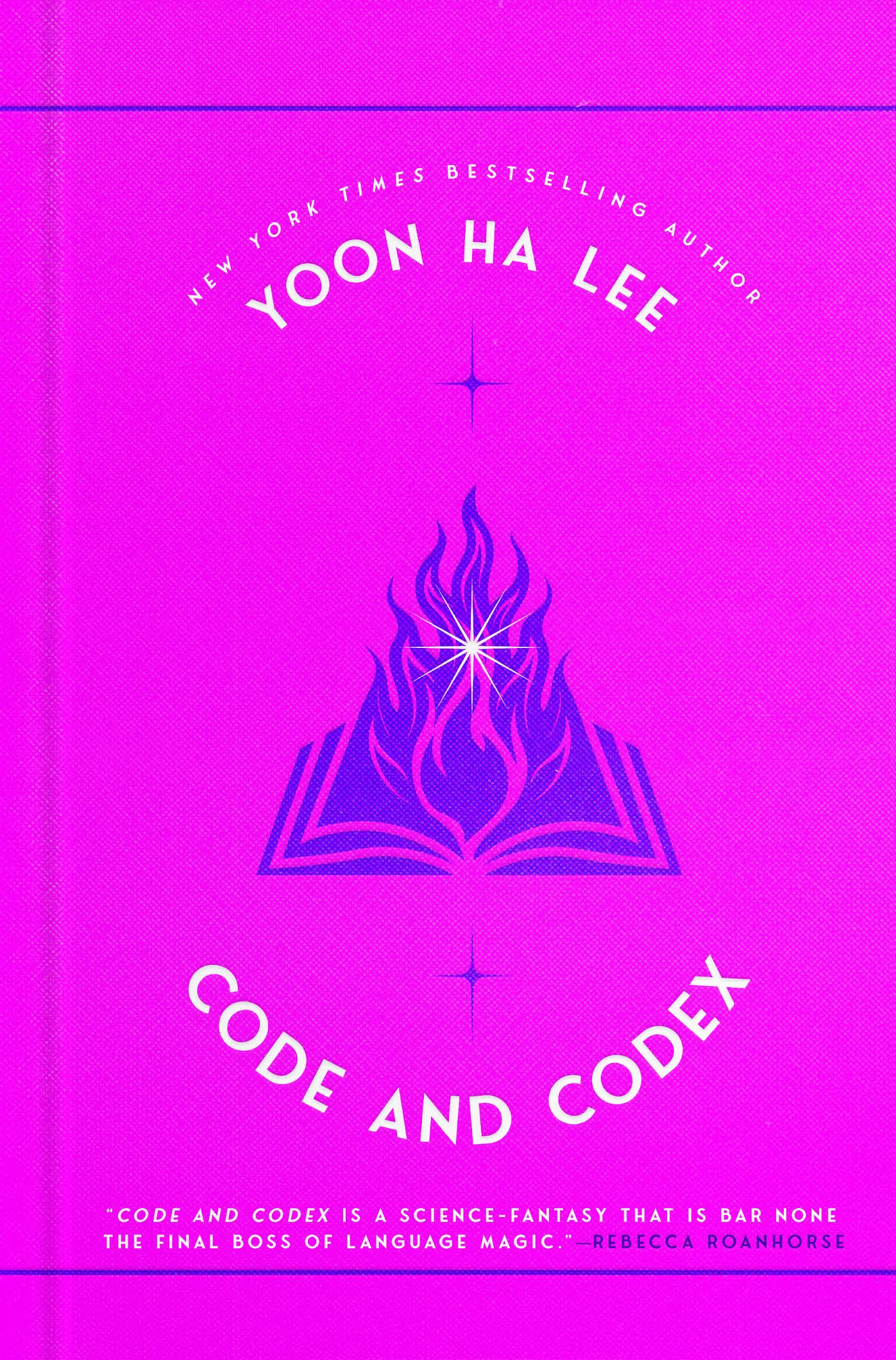
Cover for Code & Codex // Courtesy Simon & Schuester
And I agree, 100 percent. But I also like my characters a little toxic and beating each other up and then kissing later. I also love finding new fantasy stories with unique magic systems. We see a few different abilities, like Valentina’s “swan song” and the Basilisk’s deadly gaze. How did you develop these powers, and the characters who wield them?
So one Christmas, I think I was in the 10th or 11th grade, I checked out this encyclopedia of mythology. I knew a little about basilisks and the usual mainstream stuff, but then there was an entire article on Dietrich von Bern, someone I had never heard of, from my very Korean parents. I think what I really wanted was to sort of gesture at things that were mythic. Frankly, one thing you run into as a writer is that when you’re naming things, all the really good names are already taken. Like, so many characters have a dragon as their moniker or imagery. So it’s like, ‘Okay, what has been slightly less used, and what power can I give them?’ I remember my husband saying a peacock is an odd title, but I told him peacocks have those “eyes” on their tail feathers, and that’s where I got the idea.
I was wondering about that! You have a lot of bird references in this book: the Peacock, the Swan, the Basilisk, the Sunhawks. What drew you to using birds as a symbol throughout the book?
Mainly, it was sort of the efficiency principle of: do I want to be hunting around different kinds of animal kingdoms? Do I really want to be sitting there trying to come up with a system for if I have, like, salamanders and different kinds of fish, or should we just do all birds? Let’s just do all birds; it’s simpler. Valentina, the Swan, came about because my dad was super into ballet, so growing up, we’d go to a ballet basically every year when we were in Houston, and my favorite one was Tchaikovsky’s Swan Lake. And then I learned about swan songs, and it seemed thematically appropriate.
This book is largely about language and censorship, especially Valentina’s role in destroying foreign languages, but it’s mainly about defying the systems that enforce censorship. Why do you think this is something important to discuss, especially nowadays?
I remember having this discussion with a literary agent about whether really offensive terms should be censored out of books. A formative reading experience for me was in high school, where the school library had a collection of those short stories by H.P. Lovecraft. What I really appreciated was this gigantic introduction, like 30 pages of introduction, putting H.P. Lovecraft into his historical context, saying, “Here’s an author, here are the other authors who were doing the kinds of things they were doing, here are some authors who came after, who took inspiration.” It also said, “Here is what he was as a person; here are the beliefs that he had,” like his racism and all the things that are morally questionable. It just kind of laid it out there. You can see these themes in his stories; they are integral to how he was as a writer. I really liked that approach because I enjoyed the unhinged-ness and all the adjectives in Lovecraftian fiction, but it also gave me a window into approaching a text as something a fallible human wrote. I know it’s tempting to look for a text with nothing wrong with it or a perfect author. I don’t know if I believe that’s a thing. In terms of censorship, I think we should generally let texts speak for themselves, but we should also be able to put them in context.
I definitely agree with that. I still see discourse over that kind of language in classics like Wuthering Heights or Huckleberry Finn. You’re almost completely negating the point of the story if you leave out those controversial bits.
Right, and I mean, if you’re doing it for a 10-year-old audience, that’s one thing. But for adult ass readers…Yeah.
I may be a little greedy, and I know this book hasn’t even officially hit shelves yet, but as a new fan, I’m curious if you have any other upcoming projects you can tease?
I am doing a part-time MFA in media composition and orchestration for film, games, and TV. As a student project, I’m really excited about a 2D animated short of “The Battle of Candle Arc,” one of my short stories, adapted for the format. My program only cares that I produce music for this project, but I went ahead and recorded all the voiceovers. That’s the project I’m really excited about. Obviously, 2D digitally hand-drawn animation is incredibly time-consuming, so I still am a couple of years from having anything that would be a final or released project, but that’s what I’m doing in the near term. I’m just gonna give my brain a chance to process and see what I come up with in the next couple of years.
What’s something readers should know before picking up a copy of Code & Codex?
I really love linguistics and constructed languages, more as a hobbyist. My editor said that he had never had to run to the dictionary so hard in his life, but I love that feeling. I grew up in a bilingual household; my dad speaks English and Korean, and my mom only speaks Korean. My sister and I would speak whatever mélange of languages we wanted. I love learning words in other languages. I love learning grammar and how languages are structured so differently. It’s sort of one thing I’d become disconnected from with writing for younger readers, not that you can’t use beautiful language in books for younger readers. But I just wanted a chance to really let loose and do all the vocabulary and write all the unhinged-ness.
Yoon Ha Lee’s Code & Codex is available now through Saga Press.