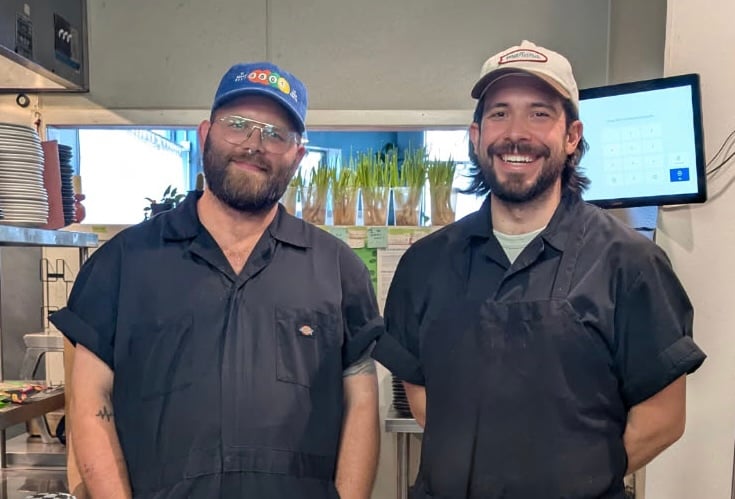
Mise en Place: From 22-hour days at The K to defining Silo Modern Farmhouse, Chef Laura Favela shares her inspirations

Chef Laura Favela // Photo By Sarah Sipple
At Silo Modern Farmhouse, Executive Chef Laura Favela blends the curiosity-driven wisdom from her grandmother with large-format adaptability gleaned from years working in stadiums and casinos.
Her traditional techniques are right at home at Silo, where she has spent years fostering relationships with local growers and purveyors, as well as the next generation of chefs as an apprentice instructor for JCCC.
We sat down with Chef Favela to learn more about her source of inspiration and how it all comes together on the plate.
The Pitch: Tell us about yourself.
Chef Laura Favela: After crossing the border to finish high school in Texas, I went to The University of Texas at El Paso. I started doing food science there. I was always interested in food because my grandma, Felipa, would cook at home; we would go to the markets and make everything by scratch. All the time she told me to buy from the farmer because it’s cleaner and all the other stuff that a child doesn’t understand. I was like, yeah, okay, okay. But this is my memory.
I was interested in it, but then a lot of people aren’t—you know, preservatives, hormones, everything. So I went in a different direction, to be a chef. I said, well, maybe I can make my own food, own ingredients from farmers, and cook like my grandmother. All my inspiration is from my grandma. She was a really good cook, and everything that is related to food is because of her.
Is there a specific recipe that helps you feel the most connected to her?
It’s not about recipes; it’s about the effort that she put into it. Being a Hispanic lady, she crossed the border multiple times and took the time to translate recipes. And we’re talking about an old lady. She would go to Esperanza, who worked at a phone company where they required her to speak English. So she would take a bus to Esperanza and ask her to translate recipes. She was really into it.
Believe it or not, she would make meatloaf… and in Mexico, nobody would eat meatloaf. And a big leg of ham—brining it. I remember that. People just were freaking out in the neighborhood, like “Felipa, what are you doing?” She would go to market, make anything—it just moves me.
Every time that I eat food, if it’s not as good as my grandma’s, well, I’m picky about it. She used to travel to Mexico City. Mexico City, compared to further north, has completely different foods, and she made me try all kinds of stews; tacos from everywhere; she’d bring peppers from there and see how they’re different from what’s in Chihuahua; and Puebla, to try all the moles. Can you even imagine? As a child, I tried all sorts of stuff, and I was into it, because of her. So she was really a good part of my journey.

Chef Laura Favela // Photo By Sarah Sipple
She sounds like an incredible model of curiosity and effort and open-mindedness for flavors. That sounds really special.
Totally. She was open to eating anything. You know, they eat a lot of crickets there; making stew with crickets and stuff like that. That was my journey with my grandma. The best times in my life. Eating all kinds of food, flavors, and back then, you try it, or you don’t eat at all.
Tell us more about your chef journey.
So I moved to Austin, Texas, and I started working in a hotel, and then I got to meet a really good chef, Jeffrey Troiola. He invited me to go to Chicago, and that’s when my journey really started as a chef. We worked in this private club, University Country Club, in Chicago. I was working there for six years, and the food was excellent. Everything nice, fresh—it was great to learn good food and service there. I lived there, so I never paid for apartments, I never got a car—I got a bicycle. I thought that was the best years of my life.
And then they decided to move him [Troiola] to Kansas City. So he’s like, You want to go? So I came to Kansas City to work at the Carriage Club.
After that, he left, and I decided to take some time away from the Country Club setup, and I went to open the Hollywood Casino. Totally different experience, totally different people. Day to night. But that was a good experience—getting to work with unions, how directive they have to be as a casino. I actually spent most of my first years with half of my shifts in classes. They’re very structured; they’re dealing with a lot of money, and they don’t want to be sued.
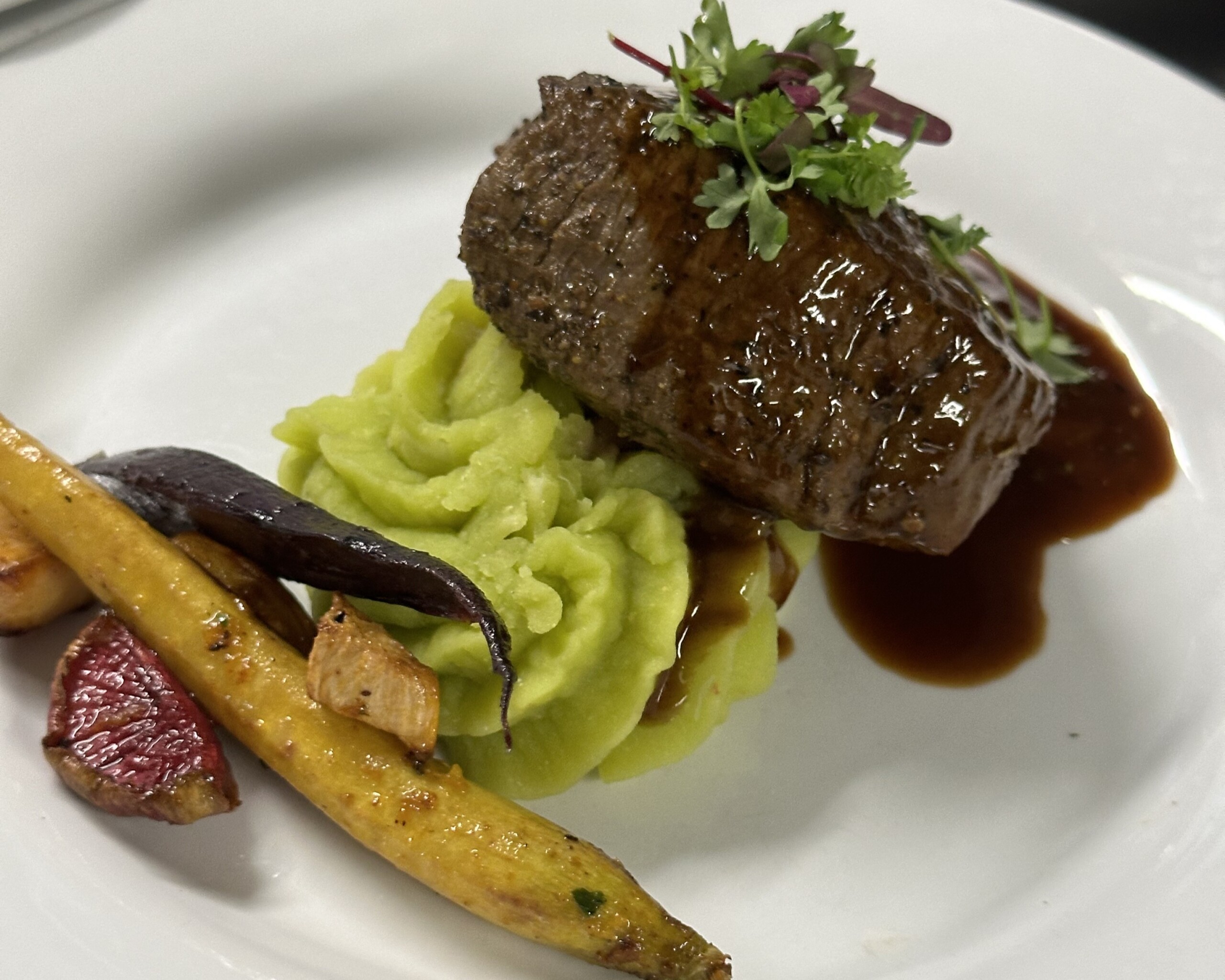
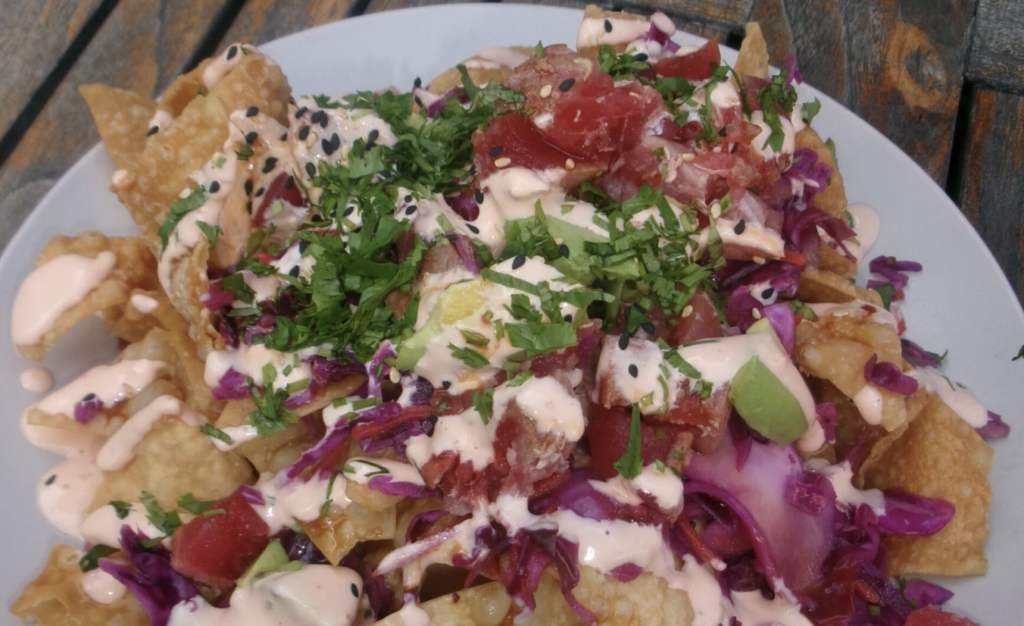
Photo by Laura Favela
I was there for two years because I wanted the experience of opening a place. Then I went to Aramark, for entertainment—for Royals, Chiefs, and travel around when it’s not season. I opened Craft and Draft, and I was hired for my experience with fine dining and nice dishes, stuff like that. They saw my potential and skills in upscale dining and gave me the premium area [that is now called CommunityAmerica Crown Club].
Even though people were telling me “oh you’re just making hot dogs and brats,” the reason I wanted to work at Aramark is that they have a really good tuition program. They name you pro chef one, pro chef two, etc and it’s almost a $15,000 – $20,000 program if you want to do it by yourself at the CIA (Culinary Institute of America). So I took advantage of that, and I went through pro chef one, two, and left in three to come work here.
I never did any research to know that you can work food in entertainment. I just want the tuition. I pushed myself because it’s rough.
They flew me to Minnesota to open the U.S. Bank Stadium as well. So, I’d go there, do concerts, and then come back here to do the games in town—so many games. And that was in 2014 and 2015, so I was busy!
So when they play in San Francisco, I don’t know if you remember, everybody’s like, okay, they lost, so we wrapped everything, closed the kitchens; we’re ready to go. And they basically call us in the parking lot, “guys, we open tomorrow.” So, believe it or not, we worked for 22 hours straight to put the stadium together. And Sysco had to be delivering the food for the next day at 3 or 4 a.m. 22 hours. Straight. And in 2015, same story. I mean, games until 2 in the morning, and then after that, they want to celebrate, so we let them get out of there at like 4 or 5 in the morning and the next day, 8 in the morning: do it again.
And then, at that period of time, we were still in the process of opening US Bank in Minnesota. I spent probably a year back and forth until they rented me a place because I was spending too much money on hotels. And I kept traveling around: Canada Blue Jays, help support the big rodeo in Houston, and I did that for almost six years. But I take advantage, you know, I do these programs, and the travel was fun until it wasn’t.
Then, they called me from this place—I don’t know how they got my resume! They just called me, I came to make a tasting. They liked what I’m did, and they hired me. The place wasn’t ready for a bit, so I was just practicing the concept, the menu. We opened in 2018, and then COVID hit, and then we reopened again. Basically, I opened it twice.
So you have had full control over the menu the whole time.
Here, yes. Since we opened.
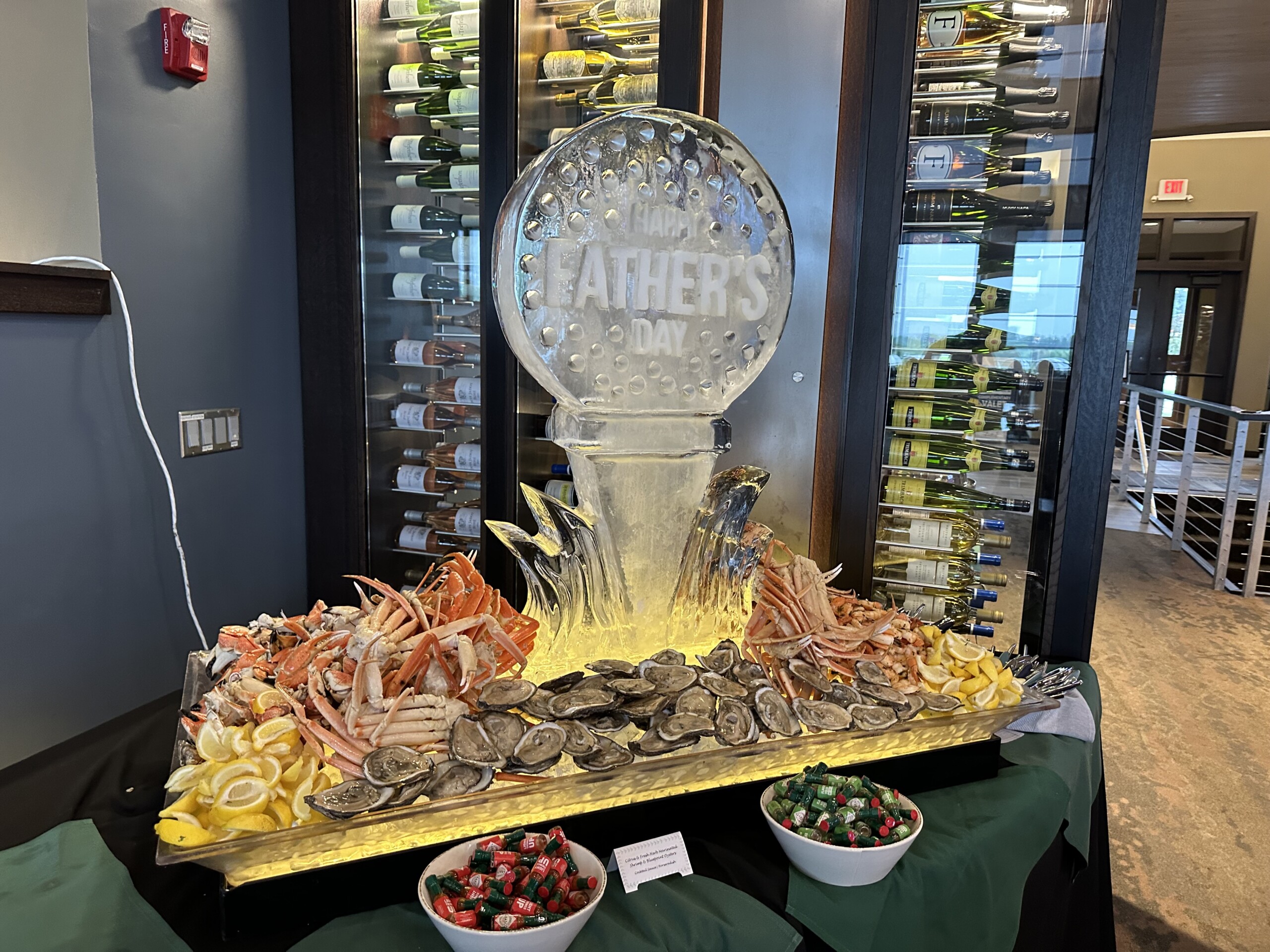
Photo by Laura Favela
What are some of the biggest changes on the menu or in the way you operate from pre-opening to now, eight years later?
It’s just the trending stuff. Plus, we get more and more people interested in events here. I keep the menu very updated. For example, we added wagyu. And two years ago, I started a dry-aged meat program, added new wines, and stuff like that. I try to incorporate more local places, like KC Burger now. We’ve got KC buffalo burger right now. But we’ve had Green Dirt Farm and others from the beginning. So the menu itself doesn’t drastically change, but every year, we add stuff.
We bring more farmers; I’ll give them an opportunity, even if it’s more expensive. The owners, they own Midwest Health, and they’re not out here to make millions a year. They allow us to be generous, do what we’re doing, serve good food, and help the community around here.
So I tried to buy a lot of local stuff because a lot of people claim farm-to-table, but it’s not really. But we try to do the most we can. Obviously, we still buy regional and local from C&C Produce or Liberty, but I don’t buy produce from Sysco at all.
The menu is large and, as you said, has grown over time. How big is your team in the kitchen?
We have four here in the morning, four people on the lines. I’ve got three sous chefs now. I used to have two, but now three because they made me a Corporate Chef, so I also take care of Spin Pizzas, Blue Moose, and Crush.
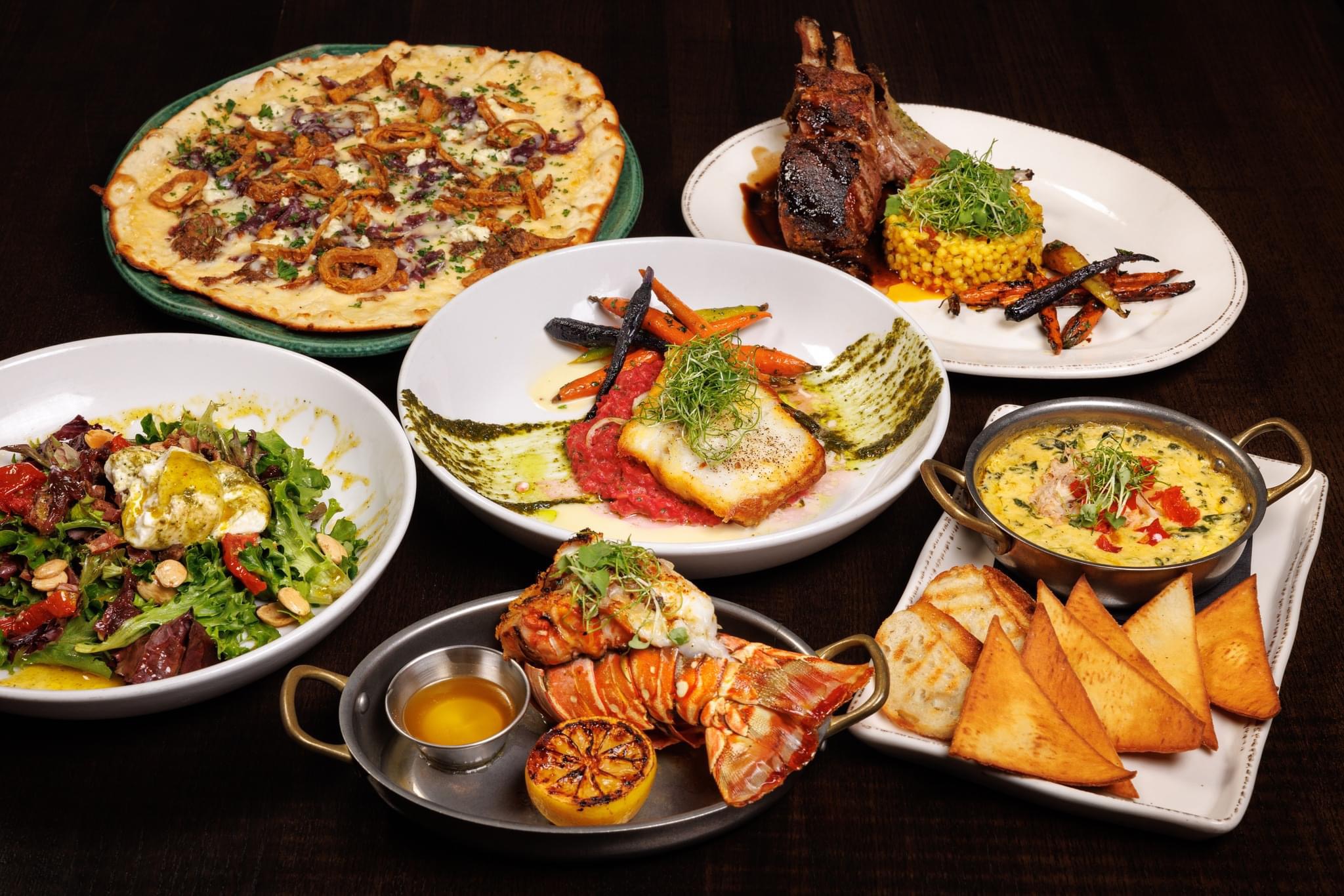
Photo courtesy Silo Modern Farmhouse
When I think of Silo, I think of the 32-layer cake. Do you have a baker on staff?
Not exactly a baker. We have a lady that I trained. Our popovers, rolls, crackers, banana bread for French toast, and pies, we make here.
The desserts are made by a guy that used to work with me in Chicago—very crazy story—he used to be the dishwasher. And then I see him in Kansas City! I saw him, and I was like, “Jesus, what the heck?” Believe it or not, he was a baker at the Ritz-Carlton/InterContinental Hotel. He went from dishwasher to pastry chef. Now he owns his own bakery. We used to make everything here, but the capacity… there’s just no way. So, he uses our recipes to make three items: tiramisu, the 32-layer cake, and carrot cake.
Can you tell us the story behind “Chef Laura’s chicken salad”? Why does that one have your name on it?
It’s just because nobody makes it in that way anymore. Nobody takes the time to boil a farm chicken with mirepoix. Nobody takes the time to let it rest, shred it. Nobody uses local anymore; they just want a chicken breast all shredded and ready to go… dry. I was like, let’s put some love in there: some apples, apple juice, a little cider, a little creamy bacon thyme dressing. So that’s why I call it that, because I’m proud of the process, even if it’s chicken salad.
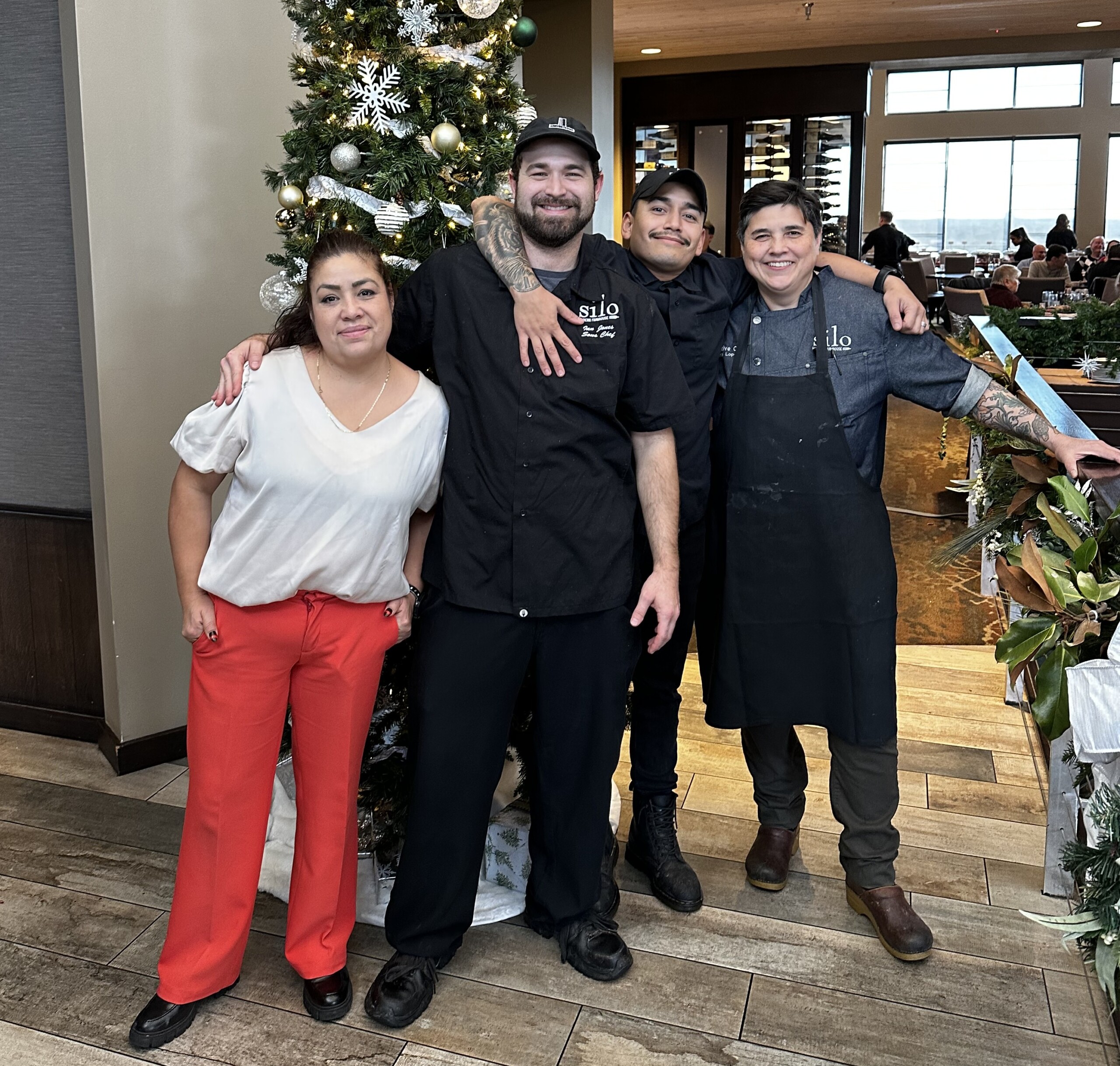
Photo courtesy Sarah Clark
You’ve been in the restaurant industry for a long time, in different areas, so if you could fix one issue in the overall industry with a snap, what would it be?
More authenticity—make it your own. A lot of places just buy everything ready to go. Just open boxes, ready to go, and the cooking part is missing. They try to open [a restaurant] with too little effort. Like we make our crackers, for example. It’s so easy. They don’t make rolls—they don’t even try.
On a day off, where would you choose to go eat and drink in Kansas City?
I love Messengers for the croissants and everything. So even though I’m not too much of a coffee fan, I like matcha. For lunch, I’d say Zero Zero Handmade Pasta. Then Ocean Prime for appetizers. But I don’t go out for dinner so much. It’s hard, you know? I love sushi, though, as a late-night meal. Also, Anjin.
Silo Modern Farmhouse is at 17501 W 87th St, Lenexa, KS 66219.