Christopher Nolan’s adaptation of The Odyssey is impressive but lacks a sense of wonder

Courtesy Universal Pictures
Christopher Nolan has proven over and over again that he’s a filmmaker who can do spectacle. He can give you folding cities, rotating hallways, a roof-surfing Batmobile, metaphysical libraries and harrowing illustrations of the atomic bomb. But can Nolan do wonder?
Nolan’s adaptation of The Odyssey has spectacle in abundance. To really capture the multi-generational appeal of Greek myth, however—vengeful sea gods, sorceresses and the like—you need to do something other than show your audience a big, cool thing. You need awe. You need childlike curiosity. You also need a sense of humor. None have been historical strengths of the director of Oppenheimer, Inception, The Prestige and Memento. And though The Odyssey is undeniably well-made technically, these elements are specific, glaring weaknesses.
The Odyssey is, like all Nolan movies, precisely executed by a huge group of talented people. Groundbreaking cinematographer Hoyte van Hoytema is back behind the camera making everything look gorgeous and grand. Composer Ludwig Göransson is back, too, with a score that incorporates diegetic sound, Last Temptation of Christ-era Peter Gabriel and some stylishly applied synths.
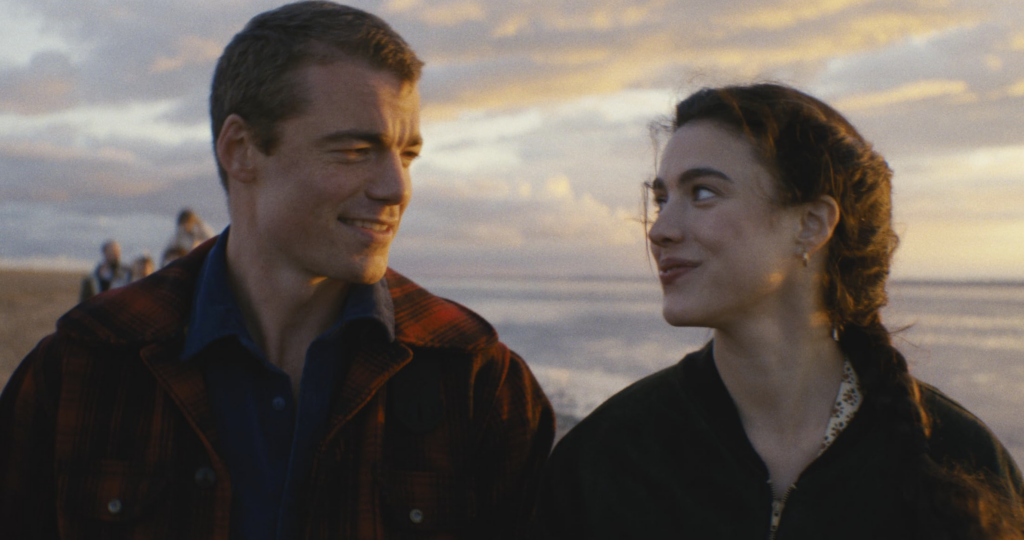
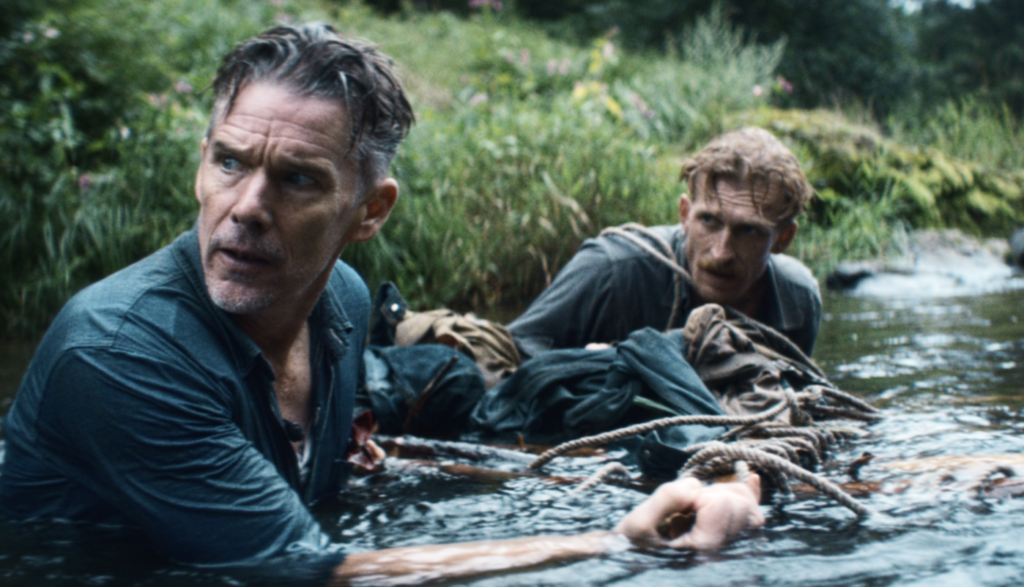
The talented cast gives the high-caliber performances you’d expect. Matt Damon is canny and commanding as Odysseus, king of Ithaca, lost with his men on his return from the Trojan War. Anne Hathaway is calculating, hopeful and increasingly scared as his wife, Penelope, staving off a posse of dirtbag suitors led by a squirrelly Robert Pattinson. Tom Holland is eager and appropriately naive as the prince of Ithaca, Telemachus, though every time he calls Penelope or Odysseus “mom” or “dad” he sounds cringingly childish. The supporting cast is stacked with talented actors (Jon Bernthal! Lupita Nyong’o! John Leguizamo!) and interesting faces that add welcome texture to a movie stuffed with battle scenes.
All of this is expected from Nolan—the guy’s no slouch. But the tone, also characteristically chilly and dour, saps the fun from the experience. Nolan isn’t as interested in the colorful, polytheistic spiritual elements of this story as he is in the guilt and regret at the heart of Odysseus’ character. As a result, the adventures of Odysseus and his men feel like a series of side quests en route to an emotional revelation that isn’t particularly revelatory, especially for this filmmaker.
One telling exchange has Odysseus arguing with his right hand man Eurylochus (Himesh Patel) after killing a giant cyclops (notably, this gray, ashy cyclops resembles a Francis Bacon painting come to life. Nolan has taste, even if it’s deeply predictable). Eurylochus claims that because the cyclops was a child of the sea god Poseidon, their voyage will be cursed. Odysseus waves him off, stating he has no time for omens, despite the fact that he, y’know, just killed a giant cyclops.

Courtesy Universal Pictures
This grudging acceptance of the supernatural combined with a baffling commitment to rationalism characterizes much of how Nolan presents the story of The Odyssey itself—a bunch of stuff to be gotten through in order to arrive at the emotional core of the story. With the exception of a deeply creepy encounter with Samantha Morton’s Circe, who turns Odysseus’ men into pigs via a well-executed body horror sequence, the movie and its characters don’t linger on the crazy stuff that happens along the way.
If Nolan only nominally cares about the fantastical elements of this story, why include them at all? The Odyssey is nearly three hours long, but the parts it cares the most about—Odysseus’ PTSD from Troy and his love for his wife—could easily fit into two hours (a mythology-free version of this story, Uberto Pasolini’s The Return, did this in 116 minutes just two years ago). Is it because not doing so would mean fewer chances for van Hoytema to go ham on cinematography? Did the sacking of Troy and the claustrophobic realities of the Trojan Horse not offer enough spectacle?
Whatever the reason, the imbalance leaves Nolan’s Odyssey feeling strangely flat, though it remains a sweeping epic. It’s worth seeing, but what’s here isn’t anything more interesting than you’ll find Nolan or his crew doing elsewhere. It’s a respectable film, but feels like a staid enterprise that feels dismissive of the bits that would have separated this from the rest of the filmmaker’s work.