Salina’s son Nathan Tysen brings both The Great Gatsby and Joe’s Pet Project to KC simultaneously

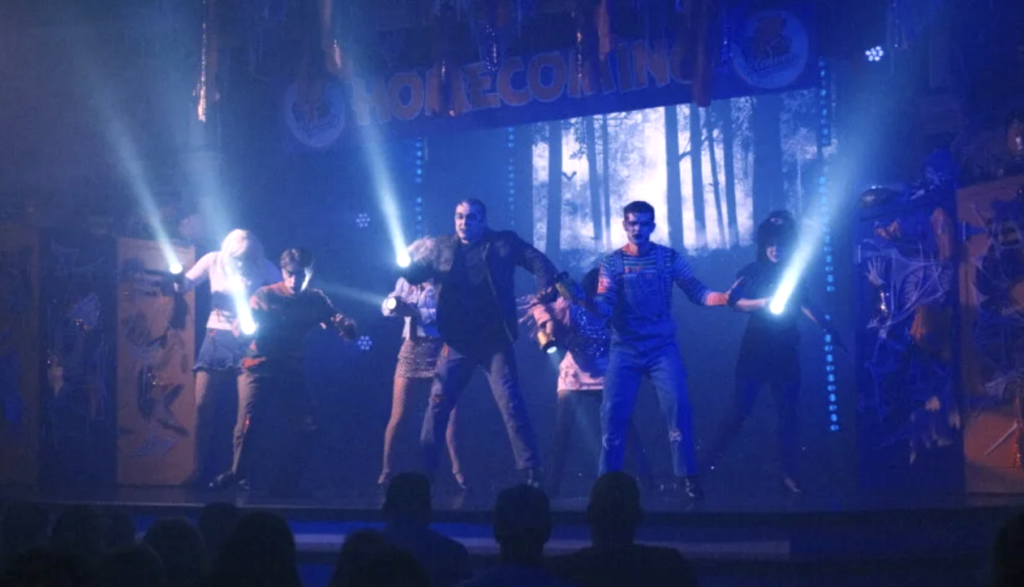
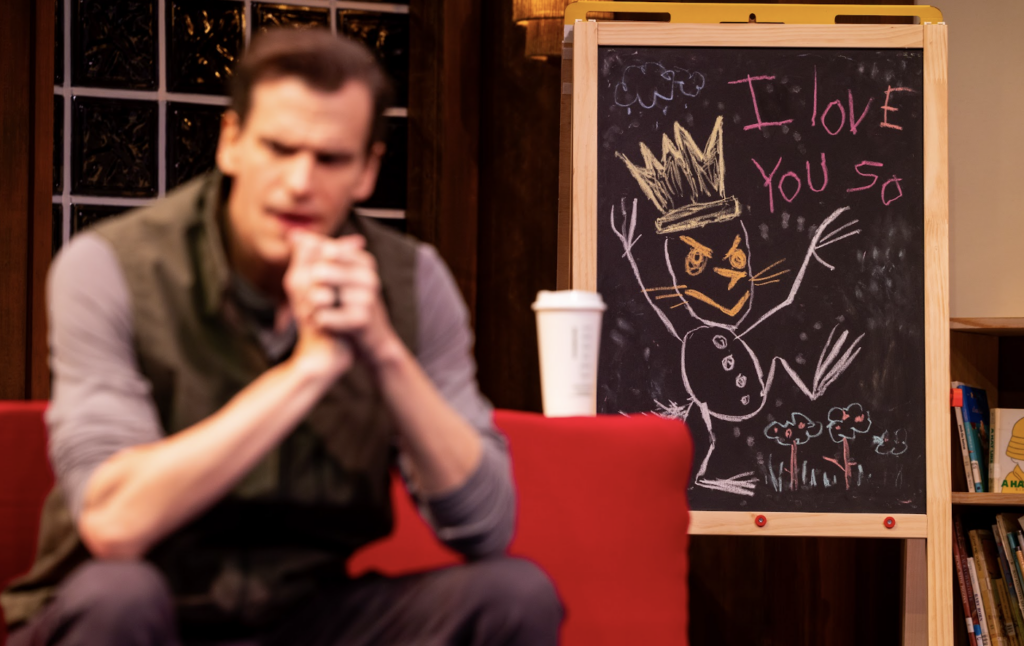
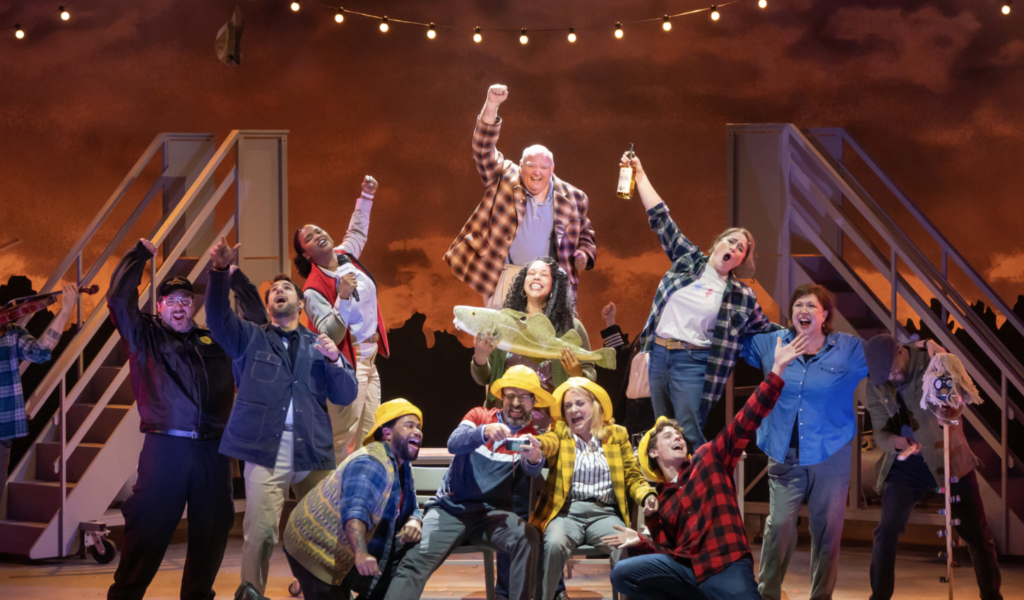
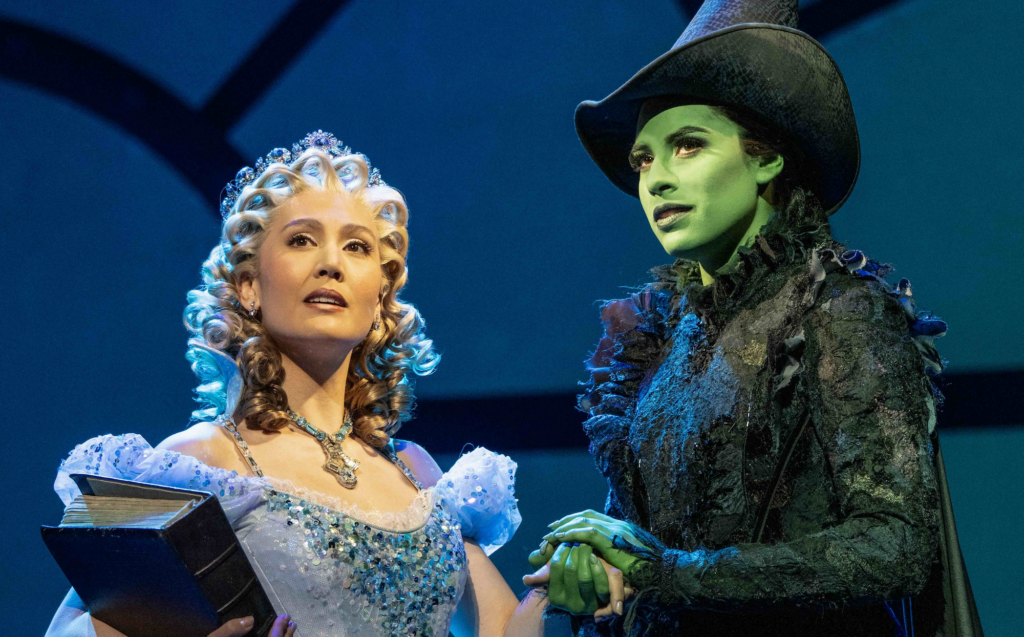
Photo by Matthew Murphy and Evan Zimmerman
The Great Gatsby is the sixth engagement in the ’25-26 “PNC Broadway in Kansas City” series, and will take the Music Hall stage March 17-22, 2026, for eight performances. Tickets are available for purchase at BroadwayInKC.com and Ticketmaster. Joe’s Pet Project plays at The Brick on Saturday, March 21, from 9 p.m. to midnight.
Nathan Tysen is coming home, and he’s bringing all of his artistic vehicles along for the ride.
Tysen is the Grammy-nominated songwriter behind Broadway musicals like Tuck Everlasting, The Burnt Part Boys, Fugitive Songs, Revival, Dreamland, and The Mysteries of Harris Burdick. He’s also a huge part of the musical adaptation of the film Amélie, and now the musical mind behind the musical adaptation of The Great Gatsby, which is currently running at Music Hall here in KC.
Raised in Salina, Kansas, where he made his mark on local theater from a young age, this return to his region is coupled by a victory lap with his nearly three-decade-running rock band (also comprised of childhood friends from Salina) under the name Joe’s Pet Project. While the stage musical is dazzling audiences via its touring company as part of PNC’s Broadway series, Tysen will be in attendance, and then off to The Brick on Saturday night for a long gig with JPP.
We hopped on a call with Tysen ahead of the Gatsby shows in town—and while he was in the middle of readings for his next show—to discuss adapting the classics and adopting creative opportunities.
The Pitch: We’re catching you today while you’re in the middle of readings for a new show. Is that under wraps or is it something you can talk about?
Nathan Tysen: Yeah, it’s an adaptation of a Japanese film called Poupelle of Chimney Town. You can actually watch the whole film on YouTube right now. It was a very popular picture book that became an animated film, and now they see it becoming a musical. It’s sort of E.T. the Extra-Terrestrial but in a steampunk universe. If we can figure out how to translate the visual world to the stage, it will be spectacular. 
So you’re really making a career right now out of adaptations—taking films and books and big properties and turning them into something much different for a very different audience. What is that process like, and considering that the original texts have big fans with big ideas about what the stories should look like, how do you manage those preconceived notions? Do you push back against what people expect, or does it figure into your work?
You have to shut out the outside noise of opinions and expectations. With The Great Gatsby for example, you need to remember that it was not a hit when it first came out. Nobody liked it. Fitzgerald guessed that the female audience didn’t connect with it because he worried he had underwritten the female characters. It didn’t become a hit until they sent copies of the novel overseas to servicemen. It was this short novella that anyone could pick up. Soldiers liked it because it was about a man coming back from war to find a woman who was ostensibly waiting for his return. A lot of these soldiers came back to America and became teachers, and started teaching the book they had read on the battlefield. So already, Gatsby was a story that had its own adaptation in how the audience came around to it—or was built in the first place.
When it comes to adapting material into musicals, you should always be asking: “Why does it matter that these characters would need to sing?” For a lot of musicals being adapted, I believe that the answer is, well, they don’t need to. There’s no reason for those stories to become musicals. They aren’t earned from a place of deep emotional pressures that require characters to break into song.
You’re talking about this amid a two-decade rise in the ‘jukebox musical’—where popular songs are just grafted onto stories and movies folks are familiar with.
Exactly. So I look at the material and try to find a reason that it would deserve/need to become a musical. In the case of Gatsby, there’s music throughout the book, and Fitzgerald even quotes lyrics throughout. Gatsby hires an orchestra to play at his parties every weekend. So there is some low-hanging fruit, where you begin to write a few songs that feel ‘of the era’ and explore from there. You don’t want it to become pastiche, and we were careful to keep it from becoming a ‘museum piece’—it needed to be as exciting as jazz felt in the 1920s. You’re upping the horns, you’re doing a jazz-infused score, but from a place of “What if Bruno Mars did these horn arrangements?” You have your clarinet, muted trumpet, your foxtrot, and big band—but contemporary. Once you have a few of these songs together, you explore from there.

Photo by Matthew Murphy and Evan Zimmerman
Nick Carraway, the narrator of the book, isn’t given the main perspective in your show.
Taking him out of it gave us a couple of things. Not only did it allow scenes to be more active, but it also gives us the ability to write in scenes that Nick would’ve never seen or known about. One of the first scenes we wrote involved Daisy and Jordan, at Daisy’s home, hitting golf balls into the Long Island Sound, and talking about subjects that Nick wouldn’t have cared about. It helps make the female characters more three-dimensional than if they were under Nick’s perspective. It allows us to explore Daisy’s dilemma.
With Gatsby himself, how do you handle the amount of Jay that the story focuses on, versus everyone else?
In development, we tried introducing him at all sorts of stages. Everyone is hungry to see him, but there’s a lot of ‘track’ to lay down before you hit that reveal. So we had to calculate exactly how much time and information the audience needs before he gets to a song. We figured it out, with him arriving about 15 minutes in. You have glimpses of him from the top, and then we finally get to his journey. It was tricky to navigate.
You mentioned not letting this show become a ‘museum piece’—how difficult was it to balance the story’s original context with its very clear parallels in the modern moment, like disproportionate wealth, war, and a country emerging from a pandemic?
Our writing on this show was actually delayed by pandemic, and during that extra research time we were given, we looked at photos of 1922—as America was coming out of the Spanish Flu—and it looked like no time had passed. Folks were waiting in line for something in New York City, all wearing masks. The difference was that their masks had little holes cut in them, so that they could all keep smoking cigarettes. In our first draft, it had Gatsby’s reveal involving him turning around, taking off a mask, and saying, “Well, I don’t know about you, but I’m done with Spanish Flu!” A real invitation for 1922 to escape from its cloister, basically. That got cut.
But for the rest of the parallels, we don’t have to work to highlight them. People see them. The economic inequality, the political unrest, ‘new money’ from online betting and influencers and Silicon Valley and podcasters… people see it. It’s all there.
With your work on Gatsby and Tuck Everlasting, you’re adapting these sort of… High school English teacher books? Stories that a lot of folks had to read as homework at a specific point in their lives, where one person in authority probably explained a singular interpretation to them. Is there anything singular about the challenges there in addressing how varied the text’s message is—and do you have a set of expectations that are challenged by folks who were straight-up taught in school that these books have a singular message?
It is almost the opposite. Many people don’t remember how they read a book in high school, or you only read half of it, or maybe you even just read the Cliff Notes back then? I’m blown away by the number of people who don’t remember, say, the triple homicide that occurs in the story. These are big plot points, and a vast swath of our audience can still be shocked by them. There are rose-colored glasses in memory. People remember the parties, and they remember a romance. They probably didn’t remember the context or what the ’20s were experiencing as the backdrop. We have a lot of that party element here, but it exists so that we can eventually pull the rug out.
With Gatsby having a Baz Luhrmann movie from 2013, do you ever have to work with marketing to convince people that this is not, y’know, a show based around the music of Jay-Z or will.i.am?
People didn’t like that either. So, yeah, it is good to let folks know that we’re doing our own thing. 
In terms of doing your own thing, you’ll be in KC to catch the musical, but you’re also coming to play a show with Joe’s Pet Project—your rock band that has been running for 25 years now. How have you kept that going, and does it bring you joy to be able to work creatively from both ends of the musical spectrum?
Personally, as a writer, I just want to be writing songs. To have Joe’s in my back pocket as a rock band means that the things I make… they always have a home. We love to explore different genres, and we’ve certainly had time to dabble in everything. All these guys grew up in Salina, and all of us live in different states now. We’re all over the place, but we still make time to play together, and that means a lot to me.
We just recorded a record, and that’s wild because we looked back at the last 25 years, and realized we’d never released anything digitally—or on vinyl, or on CD, unless you count the ones we burned and sold at shows. So we’ve gone back and re-recorded all of our favorite tracks, and fixed a bunch of very old songs, so in June we’ll release our big album. It is very strange and delightful to be releasing our ‘greatest hits’ as our first official release.
The Great Gatsby is the sixth engagement in the ’25-26 “PNC Broadway in Kansas City” series, and will take the Music Hall stage March 17-22, 2026, for eight performances. Tickets are available for purchase at BroadwayInKC.com and Ticketmaster. Joe’s Pet Project plays at The Brick on Saturday, March 21, from 9 p.m. to midnight.