KC Teaching Clinic provides free healthcare for all, but logistical barriers block their full potential
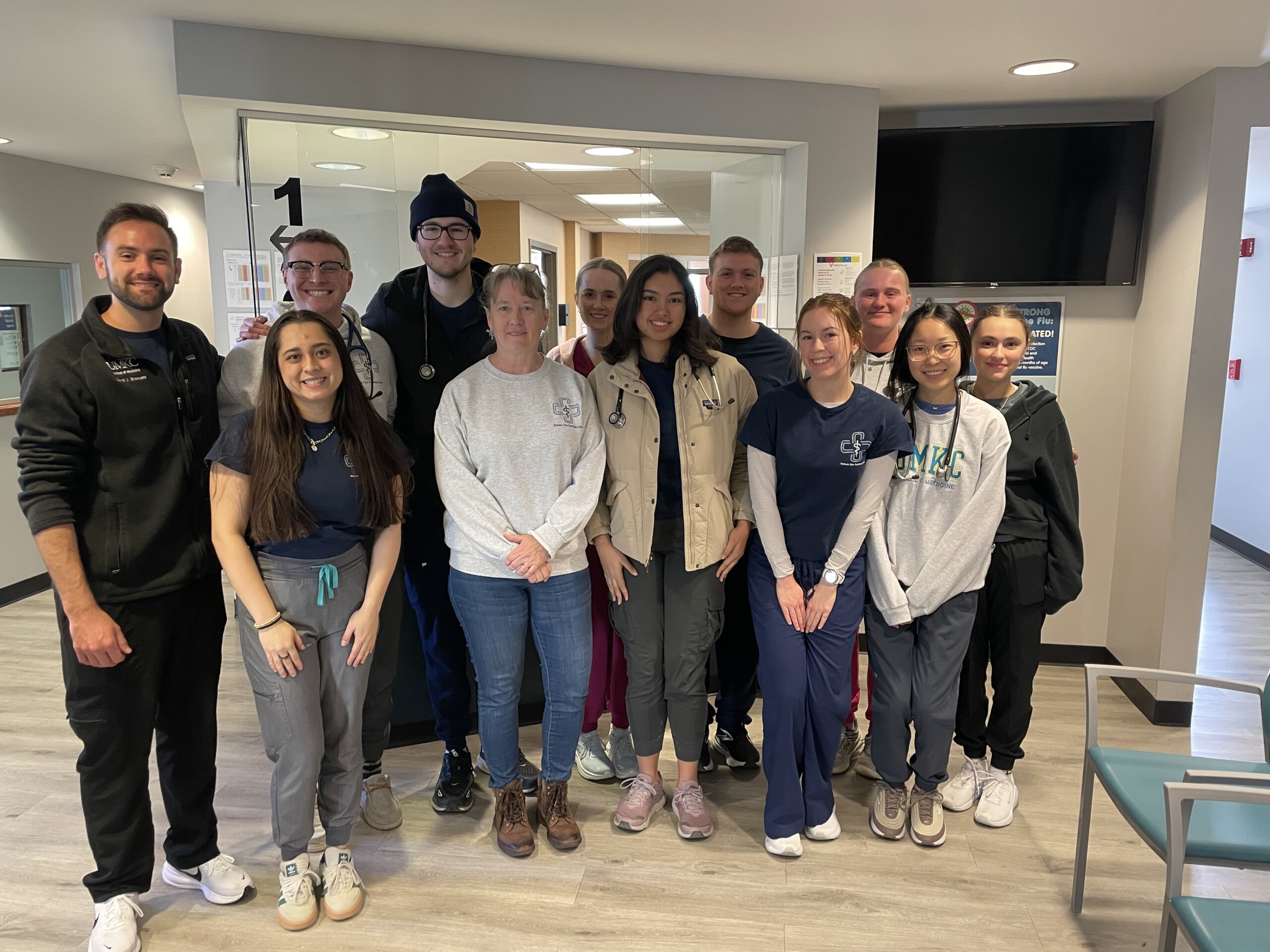
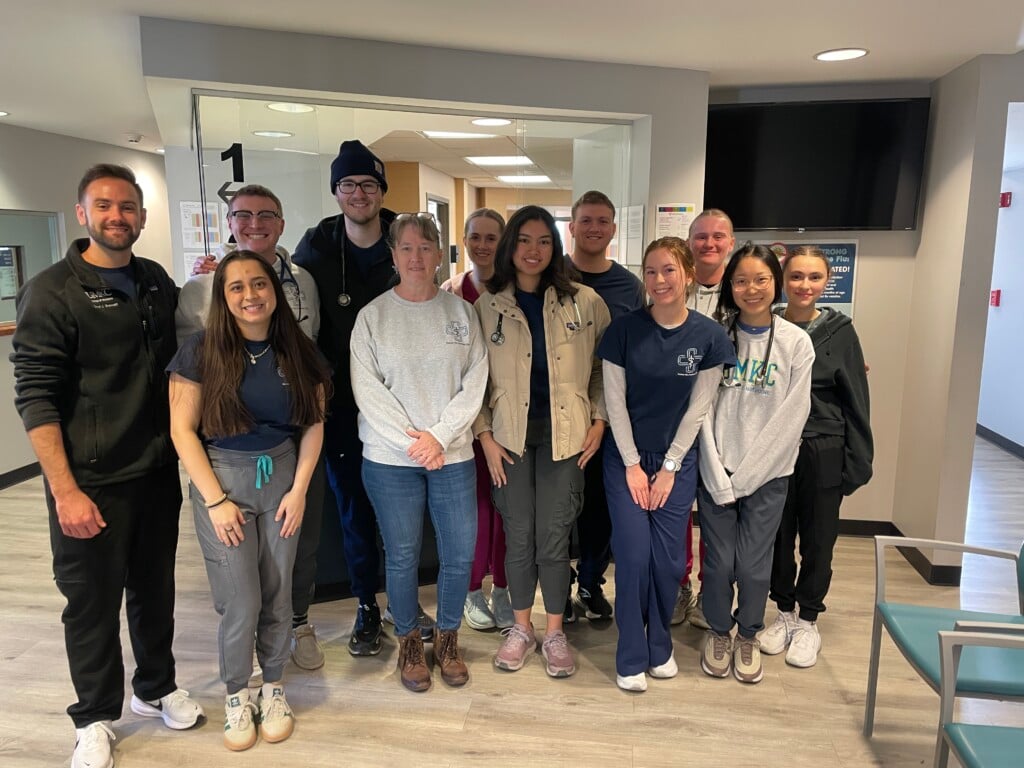
The KC Teaching Clinic on Saturday, January 17.
If you are a college student, a typical Saturday in January may look like sleeping in to avoid the onslaught of cold weather and homework; however, for the college volunteers of the Kansas City Teaching Clinic, instead of oversleeping, they are spending their Saturday mornings in -5 degree temperatures to give free medical care to Kansas City locals.
“No documentation, payment, or insurance is needed here. We ask for your name and date of birth, then do our best to get you the best clinical care possible,” explains Alex Gerken, a third-year student in UMKC’s accelerated MD program and the community outreach lead. Similar to a traditional clinic, patients are encouraged to come for a routine physical, vaccinations, or a nagging ailment they hope to cure. Dr. Alison Scholes, with help from experienced practitioners or retired physicians, leads the medical student volunteers in efficiently taking vitals, diagnosing, and prescribing medication at the bi-monthly clinic. However, of all the services provided, Dr. Scholes explains that the most important is listening.
Many of the services, including food and additional clothing, are aimed at helping unhoused patients in the area – yet transportation, locational stability, and, most prominently, trust stand as the obstacles to providing free healthcare. “The barriers to care are completely different from what I was used to. A lot of the unhoused community does not trust medical institutions, and who can blame them? People are chastised for getting themselves into these positions instead of listening to them,” describes Griffin Schenk, a UMKC student and board member at the Kansas City Teaching Clinic. The volunteers recall accounts from patients who are hesitant to receive treatment due to impersonal interactions and a lack of understanding. This has led to extremely sparse clinic numbers. Dr. Scholes intends to change this by instilling in people early in their careers what donning a white coat means. “Our biggest challenge is getting people in the door. We want people to know we are a resource – so we approach this from a non-judgmental standpoint. This is most important to teach when future doctors are young and impressionable – this work is not a business, it should be seen as a service.”
To see that service in action, step inside on a frigid Saturday. “The message doesn’t come from my mouth, it comes from the work we do.” Dr. Scholes explains as student volunteers jump into action early Saturday morning, prepping food, extra clothes, and exam rooms.
The Family Health Center, owned by Vibrant Health, on the corner of Southwest Boulevard and Rainbow Boulevard, offers full use of its facilities to the KC Teaching Clinic on the first, third, and fifth Saturday of each month. However, before you even walk into the clinic, community partners with mobile service vehicles offer aid in the parking lot. The clinic on Saturday, January 17, partnered with Team Jesus to offer a mobile showering unit for anyone to utilize. These partnerships with other non-profit groups make the most of a three-hour window for free health care.
From inventory to business administration, the volunteers are in charge of every aspect to keep this clinic operational – and the scope keeps growing. Last year, CURA, the Community Uplift through Rehabilitation and Advocacy, began operating at the KC Teaching Clinic on the first Saturday of each month, expanding free physical, occupational, and speech therapy to anyone facing barriers to healthcare.
If it weren’t for the name and the suspiciously young physicians, the average patient wouldn’t be able to tell that student doctors surround them. Alex Gerken explains his reasoning for being one of the board members, ‘Three years ago, I wanted to start working directly with people. Hands-on patient interaction, with the support of more experienced staff, forces you to step up.’ No pay and no hours required by the medical school, these students described their passion for service as the reason they keep returning every other weekend.
Dr. Alison Scholes herself is an experienced emergency medicine physician at Saint Luke’s Hospital and a docent for early students at the UMKC School of Medicine, where most of the staff are from. For this seasoned vet, the organized chaos of a Saturday clinic does not faze her. As questions are hurled her way, she manages to keep interactions lighthearted while encouraging medical judgments she has previously taught. Preparing young physicians for a better healthcare future.
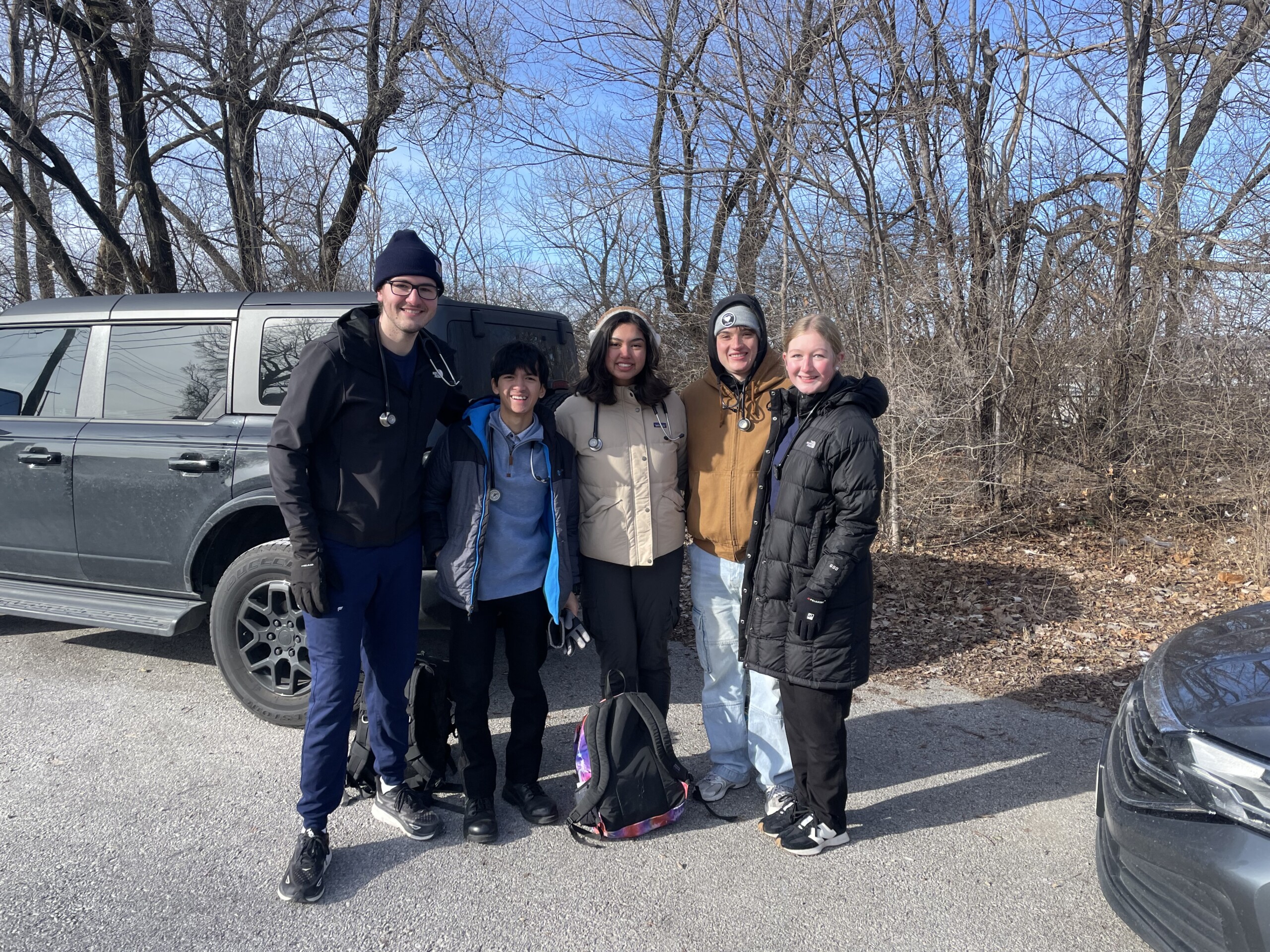
The KC Teaching Outreach team on Saturday, January 17.
“Our outreach team visits several unhoused camps in the area, providing things like primary care, wound treatment, and basic medication administration under the supervision of Dr. Scholes through Telehealth. Since the city has been clearing out camps quite a bit recently, we are currently only visiting one site,” explains Gerken, on what a typical Saturday looks like. KCMO has a long history of unhoused camp relocations and forced migration – recent reports show the city is actively disbanding camps. In November, Wyandotte County passed an ordinance banning outdoor public sleeping. The team is finding that even providing healthcare directly to residents is at risk of being cut off – yet KC Teaching Clinic continues to be available.
Over a 3-hour timeframe, the outreach team reconnected with familiar faces from previous visits. Medication was distributed in the cold, while unhoused individuals reported harsher conditions and more aggressive city opposition. The group encountered harsh realities of these circumstances – early stages of frostbite – and were able to work with local paramedics to provide aid just in time before the worst may occur. The teaching clinic enables these students to confidently take action while calmly explaining their thought process to newer students, helping them learn the “whys” of medical care. After each busy morning, the volunteers gather to reflect on their experiences and discuss the latest medical journal, a reminder that teaching will always be tied to the profession.
Both the clinical team and the outreach team are keen to answer questions, no concern too small. Physicals, medication inquiries, and injuries – the long list of medical needs is the exact reason students are deciding to spend their Saturday mornings being part of the community. The KC Teaching Clinic encourages as many people as possible to use them as a resource – an opportunity experience-hungry students are excited to embrace. If you know any members of your neighborhood who could benefit, the KC Teaching Clinic operates at the Family Health Center (340 Southwest Blvd, Kansas City, KS 66103) on the first, third, and fifth Saturdays of every month. In addition to helping spread the word, donations can be made through this link.