Tarpley Hitt dishes on knockoffs, legal warfare, and the doll who outlived them all in new book Barbieland

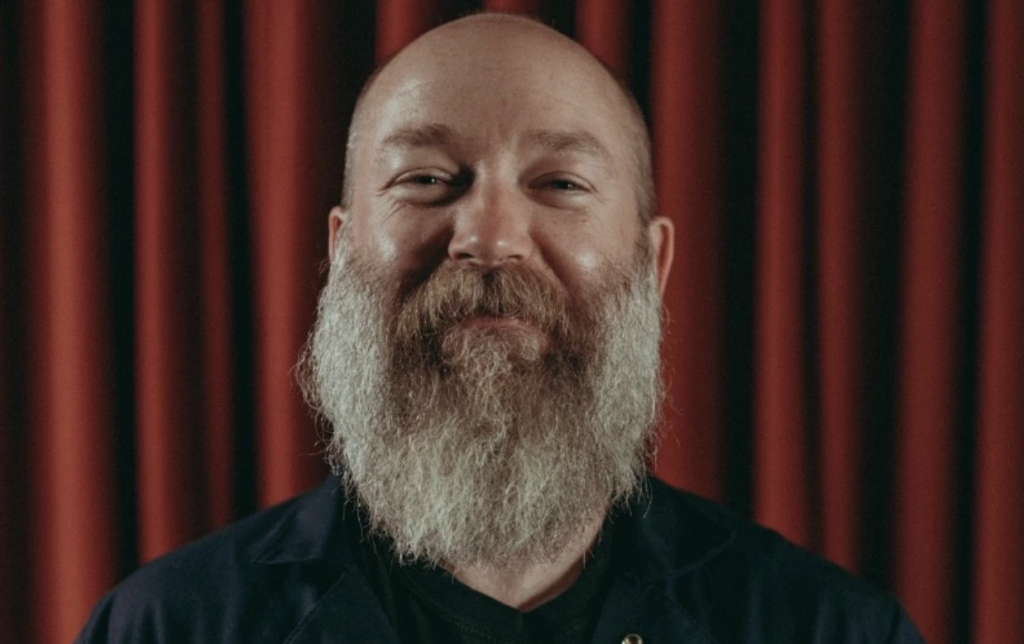
For more than six decades, Barbie has remained a best-selling toy and cultural icon. A figure onto whom generations have projected fantasies, anxieties, and political tensions. In Barbieland: The Unauthorized History, journalist Tarpley Hitt digs beneath the glossy pink veneer to uncover the messy, surprising, and often contradictory forces that built Barbie into a global phenomenon. Hitt, who is noted for her incisive cultural reporting and thorough investigations, views Barbie as a window into American capitalism rather than as a symbol of pure empowerment or nostalgia — from Reagan-era deregulation to the rise of brand licensing and global soft power.
Hitt’s book traces Barbie’s lineage back to her little-known German predecessor, Bild-Lilli, a doll born from a comic strip created by artists with Nazi Party ties. Then it follows the doll’s American reinvention by Mattel cofounder Ruth Handler. Hitt traces the brand’s rise through savvy marketing, political connections, and aggressive legal maneuvering, drawing on copious archival research, court records, and interviews. The end product is a tale of imitation, image-making, and the fine line separating corporate control from cultural influence.
In advance of the book’s release on Dec. 2, I spoke with Tarpley Hitt about why Barbie endures, what her legal battles expose about Mattel’s culture, and what she learned from a cast of characters ranging from Cold War marketers to Bel Air eccentrics. What follows is an edited Q&A.
The Pitch: Barbie is such a ubiquitous part of American culture. What made you choose her specifically as the subject of such a deeply reported and investigative history, and was there a moment when you realized there was a bigger story hiding under the surface?
Tarpley Hitt: I’ve always been interested in dolls — in this impulse we’ve had for millennia to make replicas of ourselves. There’s something a little narcissistic about it, something memetic. In college, I wrote about “Reborn dolls,” these hyper-realistic baby dolls that cost thousands of dollars. They’re made from special silicone, so that they feel when you touch them, they feel like baby flesh, and they’re being painted so you can see veins on their skin, and they have these special glass beads in them, so that when you pick them up, they genuinely feel like a child. They’re so lifelike that they bypass the uncanny valley entirely, and because of that, the women who make or collect them end up following this whole set of etiquette rules. If you leave one in a hot car, someone will call the police. If you take one out in the cold without a sweater, people glare at you. They inspire genuine emotional reactions. That level of investment in inanimate objects has always fascinated me.

So I was already thinking about doll culture. Then the Barbie movie entered development, and it became clear early on that it would be a significant cultural event. Greta Gerwig was attached, the marketing ramped up a year in advance, and one could feel the momentum. That made me wonder: What is it about this doll that has made her the best-selling doll in the world for six decades? What’s the secret sauce?
While I was working on the rebooted version of Gawker, I was also watching this broader cultural exhaustion with reboots and remakes — everything felt like a familiar name. Yet Barbie, an adaptation of a brand, was generating real excitement. As I researched, I learned about Bild-Lilli, the German doll Barbie was modeled on. And I realized Barbie was essentially a knockoff, a repackaged, more successful version of another doll that most people had never heard of. That was the spark. Why had America embraced the knockoff so thoroughly that it eclipsed the original?
In the book, you trace Barbie’s rise to power through a mix of marketing savvy, government connections, and, later, aggressive legal maneuvering. What did you find most surprising or unsettling about the lengths Mattel went to protect the brand?
The Bratz lawsuit was the wildest part to research. Mattel’s investigators created fake credentials with elaborate fictional backstories — not just fake IDs, but faux tax returns and entire life histories. Some of it read like acting exercises from my performing-arts high school: “What kind of toy store would this character own? Where? How big would it be?” It was theatrical.
Mattel was famously litigious, and no Barbie-related target was too small. People were running tiny fan blogs in the ’90s with a couple of hundred readers who still got sued. One of my favorites is a woman in Calgary who owned a leather shop called Barbie’s Leather. Her name is Barbara. Let the woman sell her latex in peace!
But the Bratz battle takes the cake. Mattel invested enormous resources into a case that ultimately produced awful press, consumed years, and didn’t even earn them the rights to Bratz. In the meantime, the company weathered multiple crises, from the 2007 lead-paint scandal to financial pressures, but kept pouring money into litigation.
That period marks a turning point. Afterward, you see fewer dramatic lawsuits and more strategic PR and licensing decisions — like letting Greta Gerwig include a few jokes at Mattel’s expense, or partnering with OpenAI rather than cracking down on people making unsanctioned “Barbie box” filters. They went from suppressing criticism to finding ways to monetize it.
Barbie has long carried cultural baggage, including stereotypes of femininity and womanhood. After researching her seven-decade history, what new or underexplored idea do you think your book adds to the conversation about Barbie’s role in shaping gender expectations?
One thing that surprised me was how deliberately Mattel distanced Barbie from feminism. Many women who worked at Mattel in the ’70s through the ’90s didn’t identify as feminists, and Ruth Handler certainly didn’t — at least not until she had breast cancer and formed close friendships with women that shifted her perspective.
There’s an argument that Barbie is feminist because she debuted in 1959 as an adult woman with her own money, not a homemaker or a mother. And there’s truth to that. But Ruth’s genius was making Barbie appeal to both progressive and traditional parents simultaneously. For every university-bound Barbie in a cap and gown, there was a family-oriented “togetherness” Barbie that aligned with the McCall’s-style domestic ideal. She took steps forward and backward at the same time.
The biggest revelation for me was Ruth’s record on workplace equality. In 1973, right before she was forced out of Mattel, she sat on a Nixon White House committee on women in the private sector. When the EEOC recommended treating maternity leave like any other temporary disability, meaning employers should offer paid leave, Ruth literally crossed that line out in red pen. She had benefited from a workplace that allowed her to return after childbirth, but she wasn’t inclined to extend that support to other women. That tension between her own ambition and her unwillingness to make structural changes for others runs through her whole career.
The Bratz rivalry nearly brought Barbie to a breaking point. What did the lawsuit reveal about Mattel’s corporate culture, and what do you think it says about the changing landscape of girlhood in the early 2000s?
The Bratz case is a window into a certain era of Mattel — aggressive, muscular, deeply protective of its legacy. Barbie herself began with a legal battle over whether the creators of Bild-Lilli owned the rights to the original design. From then on, Mattel litigated constantly against competitors, artists, satirists, and even Aqua over “Barbie Girl.”
The Bratz lawsuit, though, exposed how entangled Mattel had become in surveillance and intimidation tactics. Isaac Larian, the CEO of MGA, received threatening letters; employees who left Mattel for MGA reported surveillance of their families. By the end, Mattel had lost the case, sunk millions into legal fees, suffered reputational damage, and allowed Barbie to stagnate during a cultural sea change.
Because that sea change was real, Bratz embodied a different kind of girlhood. Multicultural, fashion-forward, bratty in a way Barbie never was. They resonated with kids in a way Barbie wasn’t at that moment. The lawsuit became a symbol of a legacy brand struggling to understand a generation that didn’t see itself reflected in its blonde, blue-eyed icon.
Afterward, Mattel shifted tactics. Instead of fighting critics in court, they embraced irony, nostalgia, and self-awareness as branding tools. You can clearly see evolution in the Barbie movie. Barbie laughing at herself is now part of the sales strategy.
Your book features unexpected characters from ex-Nazi toymakers to a club-kid Barbie collector. Which figure surprised or fascinated you most?
It’s hard not to love Jack Ryan. He’s eccentric in every conceivable way. He went from designing missiles to designing toy guns to making millions off Barbie thanks to an incredible royalty deal. Then he built a literal castle in Bel Air and threw parties half the year.
His home had a giant treehouse dining room, hundreds of intercoms, each with unique bird calls, and an endless cast of guests. He was married briefly to Zsa Zsa Gabor; she wrote in her memoir that on their honeymoon in Japan, he hired a male prostitute to take his place in bed and went out partying. They divorced quickly; he had too many girlfriends to give up.
But underneath the absurdity, he was lonely. Every interview he gave touched on loneliness and the need to surround yourself with people. For all the opulence, he struck me as deeply isolated.
You describe Barbie’s story as one with “secrets” Mattel has carefully managed. Was there a particular piece of information or archival discovery that felt like the book’s biggest revelation?
The Nazi affiliations of the Bild-Lilli creators weren’t widely reported. Anne Barrelclaw had written about it in an Australian paper, but beyond that, the details were buried in the fog of war. If you look at their catalog from the late ’30s and early ’40s, they were producing exclusively Nazi memorabilia — then six years later, they were making the Mickey Mouses of postwar Germany.
Axel Springer, who published Bild, wasn’t officially in the Nazi Party, but he was in a motor corps linked to it. By the ’60s, he’d become a far-right media mogul. After socialist organizer Rudi Dutschke was shot, many Germans blamed Springer’s paper, Bild-Zeitung, for stoking anti-left sentiment. Protesters marched, chanting, “Bild shot, too.”
I was also stunned by how many prominent public figures intersected with Barbie’s history: Michael Milken, Kevin O’Leary, Bill Clinton, and NAFTA policymakers. Watching Barbie pop up in these unrelated corners of American life reminded me of Zelig; she’s this shapeshifter appearing at every major event.
You write about Barbie not just as a toy but as a tool of American soft power, comparable to Coca-Cola or McDonald’s. How does understanding Barbie in that geopolitical context change the way we see her influence worldwide?
It goes back to Bild-Lilli. Axel Springer was obsessed with German reunification and the defeat of communism. Lilli became a marketing tool for his paper with an actress who toured Germany as her, and they even made a one-minute propaganda film starring Lilli about reunification.
Barbie followed a similar pattern. After the Berlin Wall fell, she flooded into the former Soviet bloc, where she became a symbol of perestroika. In both cases, the dolls served as cultural ambassadors of Western capitalism.
In the U.S., Barbie also became entangled in political battles over regulation. In the ’50s and ’60s, groups were petitioning the FCC to expand its authority. Conservatives looking to push back against the regulatory state seized on children’s advertising as a wedge issue. It was easier to rally people around opposing “nanny state” limits on kids’ TV ads than around defending cigarettes or unsafe cars.
Ruth Handler was directly involved. She argued that companies needed to self-regulate to prevent federal intervention. These debates about sugar, vitamins, and toy safety all fed into a larger conservative backlash that helped shape the deregulation of the Reagan era.
So Barbie’s geopolitical footprint isn’t just about where she was sold. It’s about how she functioned as a symbol in political battles far beyond the toy aisle.