Swiftynomics tracks the fiscal impact of gender and inequality (Taylor’s Version)

Swifties, rejoice. There’s new reading material, and it’s from a local author.
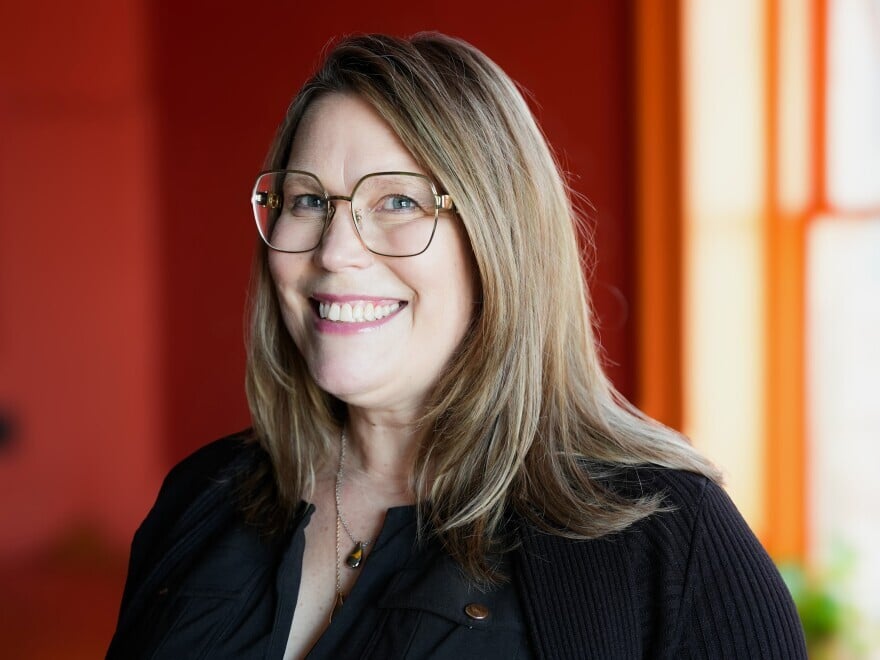
Swiftynomics: How Women Mastermind and Redefine Our Economy is brought to you by Misty L. Heggeness. She’s a professor at the University of Kansas and a renowned economist whose work focuses on gender and inequity. Her expertise appears in news outlets across the country.
While much of the book follows the career trajectory of Taylor Swift, Swiftynomics also serves as an accessible introduction to economics through pop culture, personal narrative, and women’s history—specifically, how women of all walks drive our economy beyond what the mainstream has tended to acknowledge.
Accordingly, Heggeness describes herself as being inspired by female artists who unabashedly chase their careers, women like Madonna and Dolly Parton who haven’t been torn down by a hostile entertainment industry. It was only natural that she’d find her way to Swift.
This began in 2019, when Heggeness worked at the Census Bureau. Her colleagues, she says, were mostly older white men.
Then, Swift dropped the music video for her song “The Man,” where she plays a toxic male executive. It was a callout to Big Machine Records exec Scooter Braun. 
“I was in a leadership position, and the lyrics kind of spoke to the deepest, darkest inner core of my being in terms of being relatable,” Heggeness told The Pitch.
During the stall of the COVID-19 pandemic in 2020, Heggeness continued to be impressed by Swift’s productivity with the release of Folklore and later Evermore. At the time, Heggeness had also written one of the first research papers on the effect of pandemic closures on mothers’ and caregivers’ labor supplies.
”I felt like there was a mismatch between what was actually going on with women and what we were saying was going on with women,” Heggeness explains.
That’s when she realized she wanted to write a book about women in the economy.
Swiftynomics was released Jan. 27. With it, Heggeness will have an Eras moment of her own, with nearby book tour stops at Monarch Books & Gifts, Rainy Day Books, and Central Resource Library. In the meantime, The Pitch spent a morning with Heggeness to talk about the book and what she hopes it can do for future readers.
The Pitch: Kansas City has had a big Taylor Swift moment among others for local women in pop culture, with the Chappell Roan shows, the KC Current—which you include a section on—and our first women’s sports bar opening. What was it like to work on the book in proximity to all of this?
Misty L. Heggeness: It’s been so much fun. So, I had season tickets for the first season of the KC Current because I wanted to be able to have that experience and then translate that experience into the book.
It’s so fun to watch what women are doing today, and I think the owners of the KC Current have done so spectacularly. They really said, “Okay, it’s women’s time.” And, you know, women deserve their own space. And so here it is.
If you walk through the halls of the stadium, you really feel like you’re in a stadium that was built by and for women. They have spaces for caregivers. They do this, which I don’t believe is unique to KC Current, but they do the Lion King song, and people hold up their babies, and they show them on the screen. It’s very inclusive.
I forgot the goalie’s name—she’s no longer with KC Current, but in the first year they were in the stadium, she would get off the bus with her daughter every time. It felt like a space that was acknowledging the caregiving role that women have and then incorporating it into their daily life, of blending their profession with their roles as caregivers. That’s just fun to see, and I think we need more of it.
And then, having Taylor Swift go to Chiefs games. I went to my first after she started going, with some sort of naive hope in my brain, of like, maybe I’ll be able to slip her a note or something. Of course, that never happened, but you know, Kansas City is such a wonderful community.
There’s so much going on here these days in terms of women’s economic agency and supporting the lives of women as they are. And I think that the community has been really welcoming of the Taylor-Travis relationship, so that’s been fun to see. To be close with all that’s going on, it really has been great, writing the book from here.
Intergenerational relationships between women seems to be a big theme in the book, too. Is Swiftie culture something you share with your daughter, too?
Oh, that’s such a great question. It was at the time when the Eras Tour started, I was the only Swiftie in my household. I have a daughter, a son, and a spouse, and I ended up bringing my daughter to the Eras Tour and she had a blast.
I think it was her first big live tour concert. She was probably 15 at the time, and I know it’ll be forever ingrained in her brain, that experience. Then I also went to London in 2024 to the Eras Tour night six, and I took my daughter with me as well. A friend of hers from school and her friend’s mom went with us. So, the Eras Tour experiences are definitely experiences that we have shared together and that we’ll always have.
I’m not sure about my daughter’s musical taste generally, but I mean, you know, it’s one of the amazing pieces about Taylor. She’s been around long enough, and moms who used to listen to Taylor when they were teenagers now have younger daughters and sons who they can share that with. I think the Eras Tour was a shared, generational experience for lots of families. And I think that’s really cool.
Similarly, how has being a KU professor and working with students who have taken or will take your Taylor Swift-related courses shaped your insights in the book?
Writing the book was a really fun experience for me, and something that honestly gave me a lot of joy was interacting with students in these courses.
Talking with them about some of these themes just adds to the pot of joy, especially because I think a lot of times when we think about Taylor Swift and any of the other kind of artists of today—so the artist of today that I like to speak a lot about in parallel, because I think they have similar career trajectories, is Taylor Swift and Beyonce.
A lot of times, when we think about them as artists, we just think, Oh, here’s these female singers. And if you don’t pay attention, there’s a tendency to kind of brush them off, like we generally tend to do with young women, especially when they don’t shy away from their girliness.
But talking with students in class about the layers of depth that exist within the careers of Taylor, and the Taylors and Beyoncés of the world, it’s really fun to watch their brains kind of open up to the realization that these aren’t just people who write songs. They’re actually people who move pop culture and write about experiences that—what we think of a lot of times with them being singers—are not relatable, either because they have lots of money or lots of fame. But when you look at the lyrics, they’re writing about their personal lived experiences.
And their own personal lived experiences tend to be very common human experiences. We’re having conversations in class about how their lived experiences get adapted into their music, how that then transfers out into culture, and how that becomes relatable to other people’s lived experiences—and what that does in terms of their fame and their marketing.
Those conversations with students and helping them understand the way in which Taylor and Beyonce have harnessed their talent into economic power and agency to advocate for themselves within their profession is something we can all learn from. Moving away from “oh, this is just a pop singer” to “oh, this is somebody who was very strategic in their thinking, and honed in on their authenticity and believed in themselves,” and “this is what they were able to accomplish by doing that.”
It’s inspiring, I think, for a lot of youth today, and it’s fun to see students in the class get inspired by that.
Yeah, as someone who got a D in ‘Intro to Microeconomics’ a lot of the book clicked for me as you processed ideas through the human side of economics, like the sections on your personal experiences. What was it like to put that vulnerability on the page?
Well, as someone who got a C in microeconomics, I’ll just say that I don’t think I could have written the book without doing that.
So I think that’s just a part of my personality, but I also wanted to in the spirit of honoring Taylor Swift. She writes about a lot of her own personal experiences—although in her lyrics, they’re written in a very vague way. But she has a song about her grandmother, Marjorie, the song “Marjorie.”
She has a couple of songs that she’s written about her mom or her experiences with her mom. And so one thing that I did in the book—which maybe doesn’t make sense, just as a general book writer, but made a lot of sense for me—was to start the book by talking about the women in my family, and end the book talking about them as well.
The preface and afterword are stories about the women in my family, who have been crazy, economic in nature, whether or not they were captured in economic statistics, is another story.
But also, I have a chapter on misogyny, and I talk about Taylor Swift’s experience with a DJ grabbing under her skirt, grabbing her butt and how that ended and how she defended herself in that way. And, you know, I also have an experience with sexual assault in college. I write about it in that chapter.
For me, I felt like it’s not a story that needs to live in my head or with the handful of people that I’ve told before. It’s a reality that happens to women all the time, and one of the ways this cycle continually repeats is through silence and not talking about these events, not, you know, having discussions in the broader community about how common these events are.
So for me, I just wanted to put that on the page and get it out of my head and into a public sphere. So it’s no longer my story, but it’s a story that you know can be discussed in a public forum as it should be. I would have never put that on the page like 20 or 30 years ago, because I had too much shame around it and, you know, it was too personal. But time heals lots of things.
And I just felt like those of us who are at the stage in life that I am, we owe the next generation as much as we can in terms of creating spaces to have these conversations. Because if we don’t, then the silence again keeps the cycle going.
I think the world is a very violent place for women, even with all of the advances in educational attainment we’ve had, even with the increases in women’s income. I think we need to talk about that. And so that’s really what my intent was, and why I wrote the book in the way that I did.
One chapter of the book describes the tension between women who create their own unconventional career paths versus women who kind of pull the ladder from other women after they find success. What do you make of criticisms from fans of other female artists on Taylor allegedly blocking them from charting with releases of multiple song/album variants, not to mention criticisms of her private jet?
So I get these questions a lot, actually.
I mean, there are two things: the economics of it, in terms of marketing and selling your goods. Economists wouldn’t have any issues with the way Taylor is selling and marketing herself, mostly because there’s supply and demand, and if there’s not enough demand, people aren’t going to buy it. And you know, she would stop, or her team would stop, selling albums or her product in the way that they do.
So you know, as long as people want the content and are willing to consume it and purchase it, they’ll continue to behave in this way. And that’s something you would expect in any sort of market.
In my opinion, Taylor gets extra criticism about it because she’s female, and that’s because we have these expectations of women that they should be nice, should be docile, should put others ahead of themselves. You know, if you were to kind of describe the gender stereotypes we have for men and women in a business setting, you would say, “Oh, women should run a nonprofit,” and men then would run businesses.
I think a lot of the ways in which Taylor’s content is produced is very male in character, and I think people are uncomfortable with that. So there’s always this question coming up about, like, is she taking advantage of her fans? Is she closing out the market so that other singers cannot, you know, get at number one?
It’s all competition. You know, most things are fair in competition. If these strategies didn’t work for her. She wouldn’t do them. They wouldn’t work for her if her fans stopped purchasing her content, and to the extent that they don’t, I’m assuming her fans don’t have tons of issues with what she’s doing. Otherwise, they would stop. So, I find this critique incredibly uninteresting, and I see zero problems with how she comports herself in her business.
And for the second part of the question, I don’t have anything to add. Other than just to say, again, in terms of how this relates to Swiftynomics, I think we’re really uncomfortable with highly talented women. What ends up happening in the cultural, societal sphere is when women have a little too much talent, you know, are a little bit too successful. We start looking for things to criticize around them in ways that we wouldn’t with men.
And I think that these two issues, the airplanes and the selling of variants to stay up at number one, are two of the most common criticisms of Taylor. And I think we should all ask ourselves if we would criticize her in that way if she was a man.
All of that said, I appreciated the conclusion’s list of actionable policy changes to more broadly support gender equity in the economy. What did it feel like to envision and construct that list?
I’ll start by saying I’m an economist, but I worked in public policy and the federal government for 12 years. Now I’m at KU, my home department is the School of Public Affairs, and so I’m used to developing policy solutions. That’s what I’ve done for most of my career.
I think oftentimes, folks will ask for these types of policy prescriptions. And, you know, one can struggle to think about what could they be, or what would they be? For me, the thing that draws my attention the most of that list is that nothing is rocket science.
You know, these are all easily implementable policies that we could have if there was just the will within society to value women’s contributions a little bit more and value caregivers’ contributions a little bit more, so that we decide it’s in our best interest to invest in those appropriately. Coming up with the list was easy, but the most kind of surprising thing about coming up with that list was that, you know, these are all very feasible, attainable goals, if we just decide to value and prioritize them.