Singer-songwriter Peter McPoland reconnects with his roots ahead of Truman show

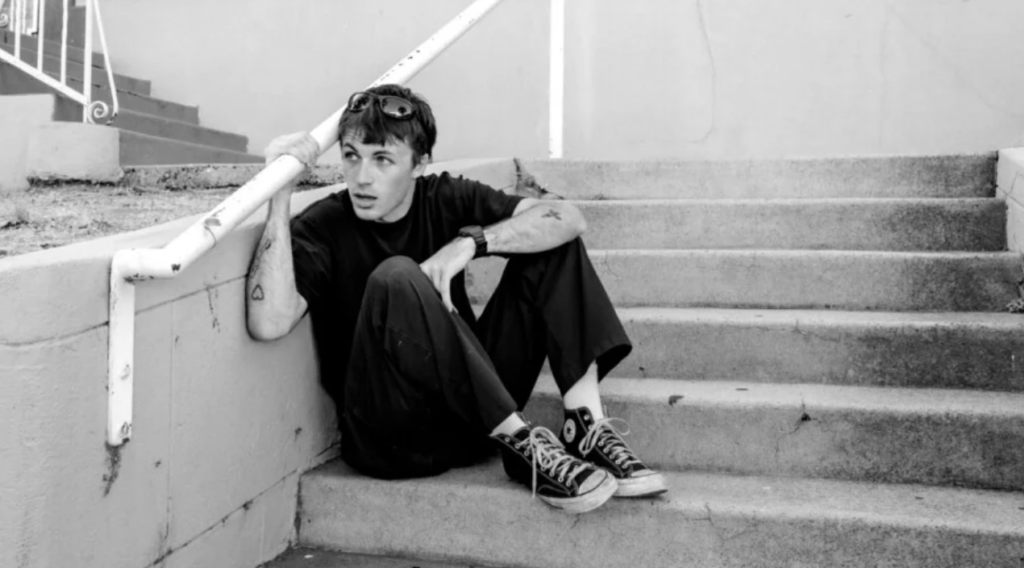
Peter McPoland. // photo by Juneau Janzen
Peter McPoland’s most recent album, Big Lucky, is the fourth release from the singer-songwriter and sees the “Romeo + Juliet” musician returning to his roots, both musically and literally. The Texas performer not only wrote and recorded the whole thing himself, but reconnected with longtime high school friends to bring together the band, which is touring in support of it.
Peter McPoland plays the Truman on Tuesday, March 10, with Girl Tones. Details on that show here.
Ahead of McPoland heading out on the road for the second leg of the tour, we hopped on Zoom with the musician to discuss touring, making the new album, and maintaining longtime connections.
The Pitch: You’re pretty early in your career, but you’ve gotten to do opening slots for big artists. What does opening for artists like 21 Pilots or Imagine Dragons teach you for your own tours?
Peter McPoland: I think the 21 Pilots one especially, ’cause we were there for, I think it was 23 shows. Our opening slot was 30 minutes, and our setup was so quick that we’re really only hung up for two hours out of the day, basically, and then the rest of the day you’re just walking around the arenas, and you’re seeing a band that has basically succeeded further than they could have ever. They’re amazing.
That was a life-changing experience, really. I think it informed a lot of things. It also it made me second-guess everything, in a good way and in a bad way–in every way. I think the biggest thing that I learned is that what I’ve been passionate about for the longest amount of time seems to be the through-line in bands that are very successful.
Learning about in-ear monitors and tracks and all this stuff, and it’s–you grow up with just playing in a band, so it’s confusing for a second to get acquainted with everything. I’m back to playing with my band from high school, and we got a noise complaint yesterday, playing in the house for seven hours. We used to play in a band in high school and we would play upstairs in my house and be super loud and it’s the same thing. My neighbor chewed out my mom for practicing too loudly. I just moved to Austin, too.
We had one day of rehearsal, and I feel more ready than on the last tour and more ready than on the tour before that.
You’re out on the road with people you’ve known for over a decade. Does that help with the comfort level and or just make things even more exciting because you get to show these dudes what you’ve done?
It changed everything for me. I think the biggest thing is, when you first start playing, you’re the sum of everyone around you, and when I moved away from Texas, and I went to New York, and I went to LA, I did a lot on my own. I’ll write a lot on my own, I’ll produce a lot on my own, but it’s it’s the last 10% that is all of them.
It changes it completely into something that’s bigger than just me thinking about it, which is really nice. It feels very homey, and you don’t feel like you’re away from home forever. It was comfortable.
You wrote and performed everything that’s on Big Lucky. Where have these songs gone now that you’ve got other hands and ears as part of the equation?
When we did the last leg, I was coming off of producing it. I had basically just finished producing the album and had just put the album out, and then we were practicing for the tour. The mindset then was like, “All right, we should just do it like the album,” ’cause it was there and I hadn’t even had time to process it, really.
In between then and now, the biggest thing is that what I think was missing on the previous leg and what we get to do–luckily, we had this break and we get to figure it out– is pretty obvious, but it doesn’t have to sound like it does on the record, and we can do whatever we want, and I think that also goes to making some of the songs that aren’t on the record sound the record and you make the record sound like some of the older songs. There’s this nice combination and dance that everything does. That’s been a huge change.
The songs on Big Lucky have this dichotomy between them because you’ve got these songs that are very introspective and emotional, and then you have these other songs that are fun and playful, and I feel like that’s how you could describe Peter McPoland’s music.
Thank you. That’s good. I like that a lot, actually.
You’ve put out so much music in such a short period of time. What’s the well you’re pulling from to go to these different places within this same time on this album?
The big thing for me was, when you first start writing, you’re doing it for you. I think listening to music, too–you’re listening because you like it. When I first started writing, I was writing because I needed to write, or I liked to do this, so it’s all from my perspective. I think that the switch that I had to make or the thing that I figured out and why it hops between it is that the well that I pull from for a while was, “Whatever you’re feeling.”
After a while, though, it can’t just be about you all the time. I think that’s what it really started to get to me. It’s Peter McPoland, and then you’re up there, and you’re playing the songs, and Peter McPoland’s my real name. You don’t have a stage name. I feel transparent up there, so the well that I’m pulling from, going forward, the passion now is on the quality of the song. I want to go forward on that.
I feel like it was Hank Williams, but it might have been Kris Kristofferson, but he was saying, “There’s always something to write about.” I think writer’s block only happens when you’re writing from your perspective, but when you’re looking outward and you’re not part of the equation, it really is an endless well of just whatever it is.
My mom was in town in Austin and we’re in a hurry and everyone’s high stress. I just moved yesterday. I got into my house and now we’re playing the show and going on tour. But my mom woke me up this morning–came into the house with all my friends there, too–and she was saying, I left the truck door open and I left the U-Haul truck open and all the gear was open all night. My mom was saying like, “What if an animal had gotten in there?”
I was sitting down, and I was like, “My whole life, you’ve been waking me up with this worry of a what-if equation overnight,” and when I was talking to her about that, I was thinking there was something in the poetics of that. I was thinking that there’sa little song in everything, in a way, nd I think I’m just trying to be more in tune with those little moments, whereas before it would just happen and I would just say it.
I’m trying to be really actively listening for everything around me, if that makes sense. That was a weird tangent and hard to explain.
The idea of writing songs that aren’t from your perspective is writing what-ifs. Rather than things that have happened to you or things that you’ve done, it’s things that might happen to someone else or might happen to you in the future. You’re spinning new stories as opposed to telling stories.
Yeah, exactly.
Also, I love the fact that the day you leave for tour, you’re getting woken up by your mom.
All my band members are in the house. She’s sitting in the house. Crazy. I literally moved in last night, unpacked my whole house, and my mom woke me up this morning. We Ubered to the venue. There’s something cool about it.
I have to imagine that means you have a really good relationship with your mom.
I do have a good relationship with my mom. She’s gotten me here, so it’s nice having her around.
I’ve read interviews where you’ve talked about the fact that a lot of your musical influences come from your dad and things like that, but what else have you gotten from your family that’s gotten you to this point?
I think the biggest thing was, right when I got signed–I’ve talked about this a lot, but right when I got signed, my parents had gotten divorced and there was this interesting thing where I don’t know, I was trying to make it in music for so long and you’re trying to figure it out and everyone around–just the kindness of strangers.
So many people had given me a guitar or given me a tape machine. I got the gift of that tape machine from my uncle just ’cause it was sitting in someone’s basement, and I did an album on it. I’ve been playing with these guys for so long, and my mom used to work from home, and we would play for hours and hours every single night while my mom was sitting there working downstairs.
I think the kindness of strangers has gotten me here and then, when my parents got divorced, you lose yourself in a way. When I got signed, it was like everyone around you disappeared for a second. Everyone’s trying to figure out what to do, and I think from then until now, it’s been this collecting of everyone back up. after the divorce, after you, you lose, you gotta figure it out again.
I think that learning it and learning, “What’s the most important to you?” It’s having my friends around and it’s having my family around and having my mom involved. That’s what makes me. It’s everyone that isn’t me.
Peter McPoland plays the Truman on Tuesday, March 10, with Girl Tones. Details on that show here.