Pianist and bandleader John Beasley has Unlimited Miles to go before he sleeps
Beasley brings his "Unlimited Miles: Miles Davis at 100" tour to the Folly on March 29. It's just one piece of a larger project.

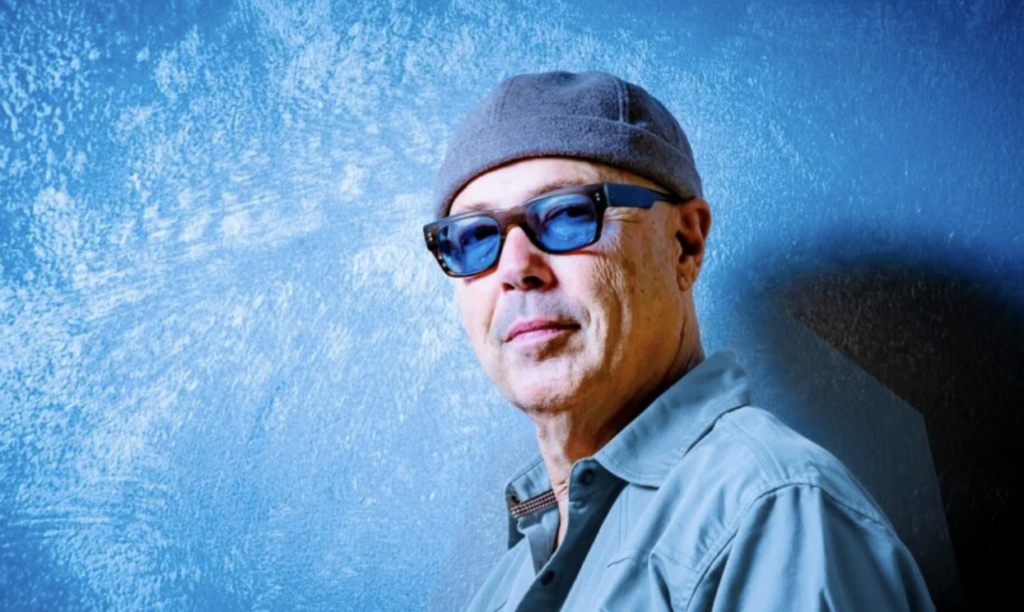
John Beasley. // photo credit Roberto Cifarelli
Unlimited Miles: Miles Davis at 100, featuring John Beasley, Sean Jones, Marcus Strickland, Kurt Rosenwinkel, Ben Williams, Terreon Gully comes to the Folly Theater on Sunday, March 29. Details on that show here.
When the Pitch talked to John Beasley in early March, the pianist and bandleader was in Amsterdam, preparing for two concerts celebrating a pair of late-career albums by trumpeter Miles Davis: Tutu (1986) and Amandla (1989). Working with Marcus Miller, who produced, played on and wrote most of the material on those records, and the pop/jazz orchestra Metropole Orkest, Beasley arranged new interpretations of the songs for a very large band.
When he stops in Kansas City with his “Miles Davis at 100” project just a couple weeks later, he’ll be doing something completely different–paying tribute to the long arc of the legendary trumpeter’s long and brilliant career with a small group.
“The question is what not to play,” Beasley says, when asked about song selection for the concert.
Indeed, the span of Davis’ work is both daunting and inspirational. He helped define cool jazz at the end of the ’40s and melded it with modal jazz on 1959’s Kind of Blue, an indisputable contender for one of the best albums ever made. He rewrote the rules for post-bop with his Second Great Quintet, practically invented ambient jazz on In a Silent Way, put fusion on the map with Bitches Brew and even anticipated drum ‘n’ bass on On the Corner. After a foray into live improvised funk, he went into seclusion, only to improbably remerge in the ’80s with several albums of slick, emotive jazz-pop, works whose importance is still being discovered even now. How do you sum all that up in a single concert?
“We’re going to do a lot of medleys and mashups,” Beasley says. It’s a method that, besides allowing Beasley and his group to over a lot of ground in a short amount of time, also uncovers intriguing connections between the vastly different eras of Miles’ career.
“We’re going to do ‘Moon Dreams,’ into ‘Sanctuary,’ Beasley says. Leaping from the acoustic midcentury chill of a Birth of the Cool track to Wayne Shorter’s abstract, electric Bitches Brew anthem would seem like a whiplash-inducing shift, but Beasley finds links between them and other Miles tracks separated by decades, methods and stylistic approaches. Another unlikely pair: Charlie Parker’s bebop chestnut “Ah-Leu-Cha,” from Miles’ Columbia debut Round About Midnight and the title track from Milestones, the album on which Miles first began working out his new modal sound.
“A lot of these songs have similar turnarounds and chord progressions,” Beasley says. “There’s a common thread.”
He also plans to shake things up, changing the tempo of Kind of Blue banger “All Blues” and even introducing some South Asian elements to one or two tunes, drawn from Beasley’s time with Bob Belden’s Miles From India project. “We’re going to use the teental pattern,” Beasley says, referring to the Hindustani rhythm structure.
All this will ensure that Unlimited Miles will not be a dutiful historical survey or a slavish tribute, but instead a reimagination and reconstruction of a wide swath of Miles’ music. It won’t be comprehensive (how could it?), but it will attempt to evoke some of Miles’ restless creative energy and sweeping, idiosyncratic vision. Beasley worked to avoid “over-arranging,” instead looking for “ideas in grooves” and “between grooves” while leaving room for improvisation. To help bring his vision to life, he recruited a killer band, including guitarist Kurt Rosenwinkel, bassist and former Pat Metheny sideman Ben Williams, and drummer Terreon Gully.
“We’re going to play things our own way,” he asserts. “It’s a chance for us to really stretch.” After Beasley returns from Europe, the musicians will assemble to rehearse the material and “get to know each other” before hitting the road. It’s a tight schedule, but Beasley isn’t worried. “Miles hated rehearsal,” he says. “It’s important to keep things loose.”
Beasley had direct experience with the man whose music he’s celebrating, touring with Davis in the spring of 1989.
“I had a lot going on,” Beasley recalls. “My wife was having a baby, and we’d just bought a house,” but a call from Davis proved impossible to resist. “I learned a lot about being an artist,” Beasley says of the experience. He remembers Miles as “being all about art, 24/7. He was always listening to tapes of the shows and thinking about them.” When Davis wasn’t immersed in music, he was busy painting, with “canvases on the floor” of the rooms he stayed in.
“Every waking moment was about art for him,” Beasley says. “It’s remarkable the time he was putting into it.”
Beasley feels an affinity toward other Miles alumni. “It’s a kind of fraternity,” he says. Beasley has played with several Miles graduates live and on record over the years, including Bennie Maupin, David Liebman, Lenny White and Buster Williams.
“We all have our stories and jokes about ‘the chief’–it’s what we called him.” It’s the sort of connection that can last a lifetime, just as Miles’ listeners form a deep relationship with his music. Beasley will continue to explore his bond with Miles throughout the year. Next month, the Unlimited Miles band will travel to Tokyo for a three-night stand at the Blue Note, which will be recorded for an album to be released on the Mack Avenue label.
“Hopefully, we’ll be in good shape by then,” Beasley says with a slight laugh. Later in the year, he’ll be staging a revival of the 1960 fabled Miles/Coltrane concerts at the Konserthuset in Stockholm (“the venue kept a copy of the setlist,” Beasley says) and doing another Miles album tribute, this time Filles de Kilimanjaro, with the NDR Big band at the Elbjazz Festival in Hamburg.

John Beasley. // photo credit Roberto Cifarelli
And, somehow, he has found time for his own endeavors as well. He has an album of his own material, Invisible Piano, coming out in May on the O-Tone label. A work for big band and the Steinway Spirio, a high-tech player piano that can record and play back live, it has a surprisingly simple genesis: “I like to visit museums. When I look at paintings, I usually hear music,” Beasley says. “I sing melodies into my iPhone,” recording them. Invisible Piano began with those museum-born snippets.
Alas, Beasley says that his demanding schedule won’t allow for a museum visit here in KC. The band’s driving from St. Louis for an afternoon show at the Folly, before heading out for a few nights at NYC’s storied Birdland club. “But I love Kansas City and hope to stop here longer when I have more time.”
Unlimited Miles: Miles Davis at 100, featuring John Beasley, Sean Jones, Marcus Strickland, Kurt Rosenwinkel, Ben Williams, Terreon Gully comes to the Folly Theater on Sunday, March 29. Details on that show here.