Missing is crime novelist E.A. Jackson’s attempt to fix Criminal Intent

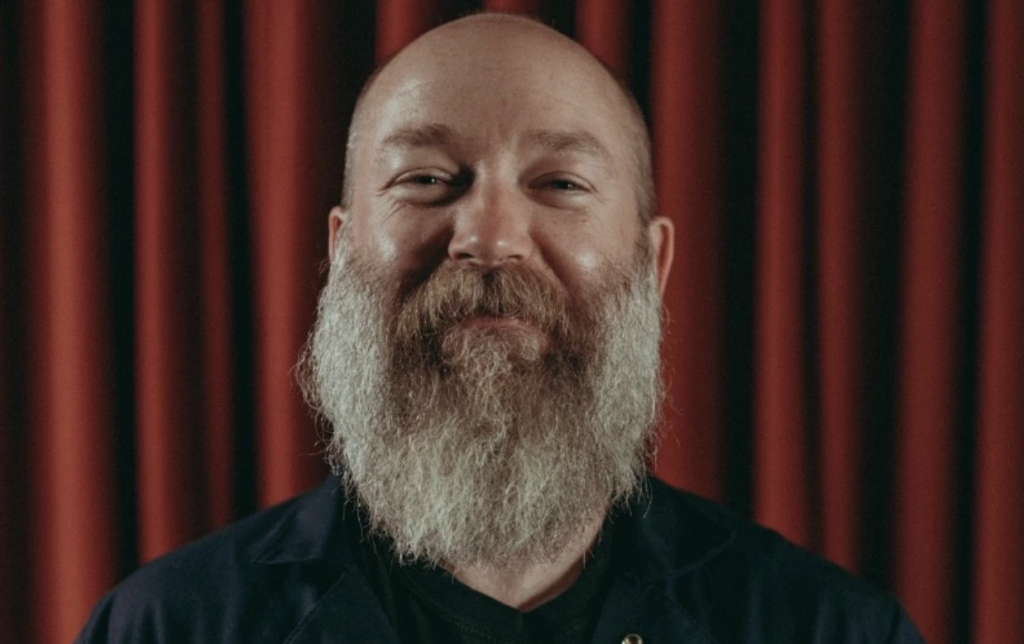
E.A. Jackson. // photo credit James Aitken
In writer E.A. Jackson’s new novel, Missing, we meet Detective Inspector Martha Allen, 30 years after the big case that made her career.
In the summer of 1990, during a London heatwave, a baby is snatched from the open window of a hotel room. Days later, a young woman walks into a police station with what she claims to be the baby and the case is closed, but Allen has her doubts.
Three decades on, that woman is now dead, and the now-superintendent Allen has a chance to return to the case “that has haunted her entire career and now may jeopardize her future.”
Jackson’s book is utterly un-putdownable, bouncing between Allen’s past and present, and showcasing the protagonist’s skill at every step of the way. A bracing mystery for those who want the perfect whodunit, with Martha Allen, Missing introduces a new sleuth with whom we can’t wait to go on more adventures.
Ahead of Missing‘s release from Atria/Emily Bestler Books on Tuesday, March 17, we hopped on Zoom with E.A. Jackson (along with her cats Robert Southey, Humphry Davy, and Chairman Meow) from her home in Exeter, to discuss how an American-born author crafted a very British novel.
The Pitch: How’d you make your way across the Atlantic?
E.A. Jackson: The simple answer is they offered me a job. In academia, you have to go where they offer you a job. The longer answer is I knew for a long time that I wanted to move to England, and so, I first managed to carve out a paid-by-the-hour job for myself at Cambridge. It wasn’t grand at all. I was an hourly supervisor, and then I just applied for every job in England.
I should put in a plug for job counseling because I didn’t get any of the jobs that I applied for until, finally, I went for an interview practice at Cambridge. They were very helpful there at their job center, and they gave me practice, and they recorded me, and then I got the very next job.
 Missing is a very British book. It is not a book told through the eyes of an American in the UK. How did your move to England affect the approach you took on this book?
I think part of the answer has to be it didn’t, because by the time I’d written it, I’d lived here for nearly 10 years. For example, I grew up in Philadelphia, but I would have been seriously worried about writing a book set in Philadelphia because it had been so long since I lived there. That’s part of the answer, I think.
It’s funny because when I first showed it to my agent, she said, “It’s a very English book,” and I was like, “That is not what I was expecting anyone to say.” I had moved here. I had really put my heart into being here. I had become a British citizen. I felt that it would be risky for me to try to set it in America. It just seemed natural, and I was so partial to London and by that time, so familiar with it, that it also seemed natural.
If there was a city where I was gonna be able to go, “And then she turned left onto such-and-such a street,” that was going to be London.
I’ve talked with British authors who’ve written books set in America, and frequently they set them in New York, and the explanation is, “Everybody knows it. You’ve seen it in so many films and television shows that you can write three books before you’ve ever been there.”
When we were trying to sell the book to a US publisher, I very briefly considered rewriting the whole thing so that it was set in Manhattan and Philadelphia, keeping everything the same and just moving it to America, and then I thought, “Emily, that is insane.” That would take so much work that it just was not conceivable. I consider myself very fortunate in that way because it would’ve taken a trip or two, but I’m smooth enough in both the UK and the US that it would’ve been a lot of work, but just the fact that I thought about it seems to me to suggest that it could have worked, perhaps.
Given how different the British policing and judicial systems are, what research did you need to do, or had you just picked some stuff up from being in the UK for so long?
That seems like the kind of question where I should say, in a weary voice, “I’ve had a lot of experience with the English judicial system,” but I have not. [laughs] First of all, as you may have gathered, I’m originally an academic, right? And I love research for that reason. I love it. I did unimaginable amounts of research. I read police training manuals.
Oh yeah. I don’t mess around. I read something that the English have called the Police and Criminal Evidence Act, which is basically informs you how you should act with witnesses and what you can do in a search. I learned, for example, which I did not know, that in the UK the police are not allowed to lie to suspects or witnesses to elicit information as they are allowed to do in the States. I found that very interesting.
I read a lot of books about what it was like to be a female police officer, especially in the ’90s. I like forensics anyway, but I treated myself to a couple of forensics textbooks, and there’s a wonderful website over here called legislation.gov.uk, which gives the text of essentially all English legislation. In terms of looking up what the actual legislation was, I used that, but parts of it were–I wouldn’t say they were difficult, but there was a lot of adjustments.
One thing I had to learn was what the ranks are, which are not the same as in America. Wikipedia did become my dear friend, but the most interesting thing is that I watched Prime Suspect, the English TV program with Helen Mirren. The first season of Prime Suspect is set in 1990, which is also when my book is set, and Helen Mirren obviously is a female police officer amongst many male officers.
I decided to watch it for research purposes, took notes, used what I had found, and then, when the book was all finished, we had a policeman read it; he made very few changes. Basically, what I took away from that is Prime Suspect got everything right, so that I could get everything right, too.
For the new book, which is set in the ’60s, I’m doing research, and I think I’m just lucky because I really like it.
 I recently read Kate Summerscale’s book, The Peepshow: The Murders at Rillington Place, which is about the Christie murders, and it’s so interesting because it’s set in the ’50s and you think about where we were in the United States post-World War II, and then you get this look at the UK and you realize what the war did and how much it set them back and how very different it is. You can see that even in Missing, just how behind things were. It’s London, and it’s 1990, and you’re equating it to maybe where New York City or something like that would be. You still have these hotels that feel like they’re in the ’60s.
Oh yeah, I just read that myself. I have been visiting England as an adult since 1985. I used to think to myself that the best way to think about it was that they were roughly about 10 years behind the US, and then, when Tony Blair got elected in 1997, all of a sudden, they were roughly 10 years ahead of the US.
For example, everybody here had a mobile phone before they were popular in America and now we’ve evened up because of the internet. The internet has changed everything. But I think also what’s very important is that the UK is much fonder of tradition than the US is and they see much more value in it–which is not a value judgment. It’s just a difference.
I think for that reason, they’re not as eager to shake off the past as we are. If they think that if things are okay, there’s no reason to change them, and there is justice in that, after all. And that’s not the American way, by any means.
I lived in the UK in the ’90s, and I still had to do things like look up what a bus ticket looked like, and it was a strange entrance into where I was like, “Oh, yeah!” although that seems so long ago now.
Was there a case that influenced this or was this pure fantasy on your part?
Of all my stories, this is probably my favorite story to tell because, while there wasn’t a case, there was an impetus, and that impetus was an episode of Law & Order: Criminal Intent. I’m a big fan of Law & Order, and I’m a big fan of Law & Order: Criminal Intent. Not so crazy about SVU, but that’s a personal choice.
There was an episode of Criminal Intent called “Folie à Deux,” which was about a missing baby, and I was very dissatisfied with the end. I just thought, “That doesn’t feel right,” and then I thought if I was gonna end it, how would I end it? And I thought I would end it like this. Then I was like, “Okay, there you go.”
That was the beginning. The blossoming.
Apparently, I owe my whole career to Prime Suspect and Criminal Intent. I should write them letters.
What about Martha Allen made you decide from the jump that this is going to be more than just a one-off with her?
It has a mildly complex answer. The first level of the answer is that I liked her. I’m not usually attached to my characters. I recognize that they are fictional constructs. But maybe because I was trying harder with her than I’d ever tried before, I had a fondness for her. That was the first reason.
The second reason is she’s not very much like me. That’s deliberate. How often do we get to spend time in the psychology of someone who is different from ourselves? I just thought I’d like to find out more about this person. Obviously, I’m creating that more, but I just thought, “I’d like to hang out here and be a different version of myself for a while.” I was also very fond of Duxbury, I have to say. I genuinely felt like I just wanted to hang around with them more.
I feel like this is something that I probably shouldn’t say about my own work, but she’s a complex woman, and in some ways, she’s quite contradictory, and I think I just want to see what’s down there, in a way. I’ve never believed that characters jump out and start doing things, thereby astonishing their authors–at least that’s never been the way that I wrote–but I do believe that, if you create a character and give them an interior, then often they act in concert with their interior, which means they act in ways that–if you’re being true to them–you were not necessarily expecting that hey would act.
Martha Allen is a character that feels so fully realized, and I think that’s what really made me unable to put down the book, because you really get a sense of her motivation and why she does things, and her changing as Missing goes along. It’s not just the 30 years difference–it’s also the fact that she’s at a point in her life where decisions have to be made and she seems to decide that she’s tired of making the same decisions.
Yes, I think that’s true. Yeah. I was listening to the radio today about a radio program on midlife crises. This man, who was a therapist, said he’d never actually had a client with a midlife crisis, but he had many clients who came to him with midlife stress, and one thing he had realized was that nobody tells you how to be a grownup. So, often what happens is you are a grownup basically by being the grownups that you saw before you, but then your parents die, and all of a sudden you don’t have a map.
You’re like, “Wait a second, now I have to be the grownup that I actually am,” and people have a sort of break. It’s really quite jarring because suddenly you’re not being someone else. You have to be yourself, but you don’t really know who you are as an adult. I think that might be part of what’s going on with Martha Allen.
She’s reached the top of her career. She’s had 30 years of men snickering at her. She hasn’t been allowed to sort out this one mystery that, in some way, was central to her. I think yes, she is, “Okay, this is my moment,” and she sees it very well.
E.A. Jackson’s Missing is out Tuesday, March 17, from Atria/Emily Bestler Books.