Mark Pellington’s This Is Buzz explores a lost era of MTV

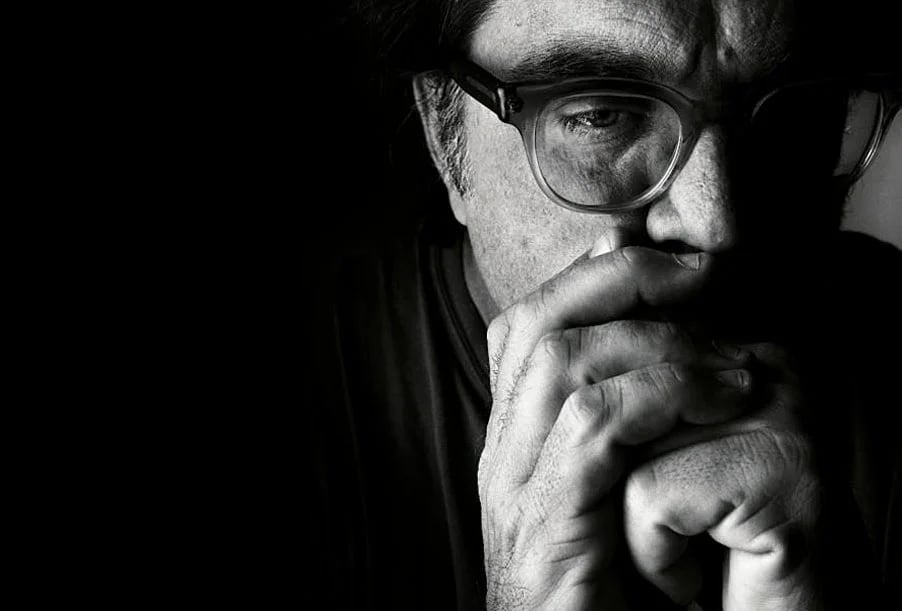
Mark Pellington. // image courtesy the artist
This Is Buzz screens on Thursday, September 24, at Atlas9, and a Q&A with Mark Pellington follows. Details on that screening here.
Watching director Mark Pellington’s new documentary, This Is Buzz, feels like being reminded of something you’d totally wiped from your memory. Discovering that Pellington’s 1990 MTV News program, Buzz, was, in fact, not a half-remembered fever dream, your immediate response is something like, “Oh, I’m so glad that I didn’t imagine this.”
Thanks to its airing before the seminal Sunday late-night alternative video show 120 Minutes, Pennington’s Buzz likely had more viewers than it otherwise would have. The show, lasting just 13 episodes, 13 episodes, “took an experimental approach to uncovering often undiscussed corners of global life. With fast-paced edits giving the show an avant-garde feel, the series would tackle specific subjects with each entry.”
It’s not unlike the remix culture you find in Everything is Terrible or in particularly clever video artists on TikTok and Instagram these days, especially as the show unfolds in a series of cut-and-paste segments and voiceovers, recontextualizing everything from news to music videos around one encompassing theme.

Pellington, who started 120 Minutes alongside Dave Kendall, sees Buzz along similar lines, as he mentions when we speak with him via Zoom ahead of a roadshow presentation of This Is Buzz at Atlas9 this Thursday, September 24.
“I watched one of them on an air check,” Pellington explains. “It was a 120 Minutes air check that I got, and it was a long thing. It had Buzz on before it, and it was just downright strange; it was just beamed in from some other place.”
Taking vintage sounds, visuals, and words and using them to comment on current affairs–even though Buzz was very analog, it still feels very modern 36 years later. The documentary unfolds in much the same way, with the style and flow taking from the show itself.
“The invisible statement was, ‘What if I made the film like a lost 14th episode?’” says Pellington of This Is Buzz. “Like it was a lost relic from another age, which it really is, and so, I wanted the style of the film to mirror it and have it be a flow and where the only distinction you make in the show itself is 4:3, and the film is 16:9.”
This Is Buzz has played festivals, but Pellington’s Kansas City stop at Atlas9 is part of a roadshow tour which pairs the film with a Q&A, and the director says the response has been interesting, especially as not that many original viewers of the show are out there.
“It’s not like a huge audience of people that all were there back at the time,” offers the director. “We were in Palm Springs, and there were like five or six people that had seen it, that remembered it, a couple that were rabid, had great memories.”
But most of those seeing This Is Buzz, it was just a curiosity, and so they were watching it basically for the first time, which slots in nicely with the whole idea of lost media. In addition to a very active subreddit, there’s a very active online culture around people trying to find things, make sure what they saw was real, and re-see what they saw at a formative time.
Speaking of formative, making Buzz was certainly that kind of experience for Pellington.
“I had done maybe six or seven videos before we did Buzz, and we were doing them on the weekends,” Pellington says of his work on early videos for De La Soul and Information Society in the mid-’80s. “But Buzz was the culmination of my seven years at MTV. Moving from 10 seconds to 30 seconds to 60 seconds to two-minute pieces, to put them all into one program kind of felt when it was canceled, that was the culmination.”
From Buzz, Pellington would leave MTV to work on more music videos, from Pearl Jam’s seminal “Jeremy” to Foo Fighters’ “Best of You,” before moving on to direct feature films like the conspiracy thrillers Arlington Road and The Mothman Prophecies.
“It took a few years to do movies, but it was a natural evolution because even Buzz in its frantic form was still storytelling,” Pellington continues. “It was just storytelling done by theme and fragments. But it was still a story being told.”
Maybe it leaned a little bit into the recontextualization of current events, themes, and humanity told through the prism of collage, meaning the stories are associative, not plot-driven, but stories nevertheless, Pellington says.
Arlington Road and The Mothman Prophecies are maybe two of the most nihilistic feature films major studios have put out, but watching This Is Buzz and going back to Buzz, you can definitely see the same person behind both.
“Yeah, I’ve always been drawn to dark themes,” agrees Pellington when we point this out. “Certainly, ‘Jeremy’ was very dark and many of the videos were dark. I just liked stories that weren’t afraid of diving into angry or painful situations.”
As part of the roadshow tour, Pellington has occasionally screened a selection of his music videos, and “Jeremy” is certainly one which gets a big response, even 30-plus years on. As the director puts it, he thinks there’s a specific era of videos in the ’90s that speak to people.
“Over the years, constantly I get, ‘I was 12 when I saw Jeremy,’” Pellington recalls. “I think that video spoke to a primal, archetypical youth coming of age, alienation that transcends genre and race, and people knew where they were when they saw it, they knew how many times they saw it, endlessly drilled into their head, and that became part of their growing up, right?”
As Pellington says, MTV from the late ’80s to the end of the ’90s was that sweet spot where music videos were, in a way, as important as films to people. As someone who grew up right in that sweet spot, your writer agrees: R.E.M.’s Automatic for the People and Radiohead’s The Bends were important records, and the videos surrounding those albums are loaded with import or portents, depending on how you want to look at it. Every emotion you feel is the best or worst thing that’s ever happened to you, because at that point, it is.
“Very much so,” Pellington concurs. “When I wrote the treatment for ‘Jeremy,’ I tapped into that part of me at that age, at that middle school age, and how I felt.”
As the director explains, he wasn’t necessarily bullied, but definitely had frustration with his parents and definitely felt that way deep down, so he was able to really go into what he describes as “that kind of unconscious and ostensibly surreal place of, ‘Yes, I feel alone in a forest.’”
“That piece was edited frame-by-frame by me, and every piece was in there for a certain emotional impact,” says Pellington. “I find it remarkable seeing people watch that video now on a big screen. It’s almost like where I put it in the flow of videos is very important ’cause it contextualizes everything. Sometimes I just put it last, and just leave that image of the bloody girl there. It’s like, ‘Yep, that’s the last one. That’s the last shot. That’s the Arlington Road shot.’”
This Is Buzz screens on Thursday, September 24, at Atlas9, and a Q&A with Mark Pellington follows. Details on that screening here.