Lucas’ State of the City 2026 highlights infrastructure, parks, and planning; sidesteps more pressing concerns

Photo by Brock Wilbur
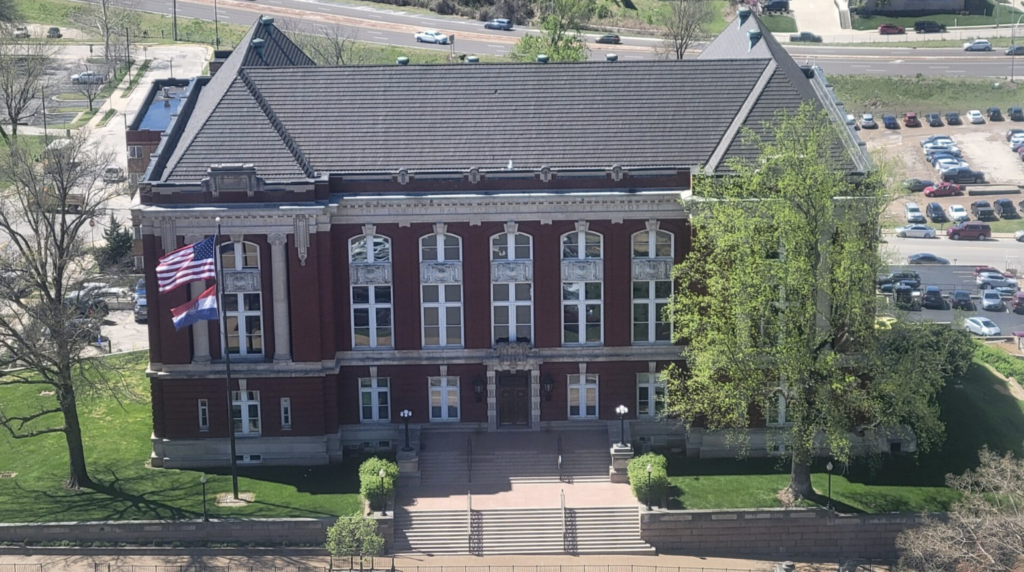
On Feb. 11 at City Hall, Mayor Quinton Lucas’ 2026 State of the City Address began with a sharp prayer.
“We confess we fly the red, black, and green in February atop City Hall, while white household wealth is 10 times that of Black households in the city,” said Reverend Dr. Vernon Howard, among other observations of growth amid ongoing inequity.
He concluded: “Make us one city where all people prosper.”
It was a striking introduction that set a political, progressive tone—one that the main event did not rise to match.
Mayor Lucas used his address to emphasize investing the upcoming fiscal year’s $2.5 billion budget for a city both affordable to locals and welcoming to visitors as a soon-to-be World Cup host. The highlights included major funding towards KCPD, housing initiatives, infrastructure/transportation, and workforce benefits—not to mention, keeping the Royals in Missouri.
The $2.5 billion budget and the KCPD
Lucas touted his role in increasing city-wide funding from the initial $1.7 billion budget when he first took office in 2019.
The relationship between the public and private sectors was emphasized. Private money along with prosperous growth and economic development were proposed as the primary means of funding public projects—not a raise of the taxpayer’s dollar.
Lucas expressed, “At the core of the $2.5 billion budget for the next fiscal year is our people.”
Lucas highlighted community public service members, including Aaron Poke (the speaker who introduced Lucas). Poke serves with Kansas City Public Works as a crew leader for asphalt repair and has been with them for 29 years.
Over $930 million of the budget goes towards paying salaries and benefits for government workers like Poke. Lucas stated, among other improvements, that “the 911 calls will be answered a bit faster”—a dig at our current emergency service response times.
“As with past years, public safety investments will form the core of our general fund expenses, constituting 75% of our general fund budget.” (“Oh,” exhaled an audience member.)
Lucas stated firefighters’ benefits before addressing the police department. He critiqued KCPD, citing their requested $17.8 million, 5% budget increase while other city departments’ experience cuts—especially as those figures exceed the state’s mandated 25% allocation of the city’s total revenue.
KCPD isn’t actually under the city nor Lucas’ purview. Rather, it’s the State of Missouri that controls the department and its budget. This makes KC the only major U.S. city without local oversight of its police.
With the proposed budget increase, he called on the State Board of Police Commissioners to fulfill their pledge to add 50 officers and 20 dispatchers, as well as deliver on officer pay increases. It should also be noted, however, that last year KCPD hired its largest recruiting class since 2007.
Lucas also requested the department to reduce the millions of dollars spent on incurred liabilities, stating, “The current trajectory of litigation costs is unsustainable for the police department’s budget.”
Another key pillar of the day was outlining a plan to retain the Kansas City Royals: “We will get a deal done in 2026 that’s fair and transparent for our taxpayers, our future, and our team.” Mayor Q highlighted that the sole area of interest for our favorite boys in blue will be Downtown—an inevitability that has now become a promise. A promise that hopes to continue furthering the economic center of the city while focusing on union labor in any potential construction.
However, Lucas emphasized that this will not leave the historic Leeds Neighborhood in the dust (a topic that he mentions is near and dear to his own mother). This already overlooked area may soon be home to two former professional sports stadiums in addition to a current food desert. While the address does not offer specifics, Lucas wants the residents to know they are not forgotten.
“Over the next year, we will continue our work with the owners of the Truman Sports Complex, Jackson County, neighboring communities in Independence, Raytown, and the eastern edge of our city to ensure we bolster our neighborhoods, the Blue River valley, and workforce development opportunity in an area that has known greatness, crowned champions, and will see rebirth again.”
The region’s financial growth will be supported by efforts to modernize development codes and by continued work by the Small Business Task Force to reduce red tape and expand access to funding opportunities. Lucas capped discussions of developments by referring broadly to egregious tax incentives that divert resources from public services, and urged that taxpayers’ needs will not be ignored.
Paving, Parks, and People Close the Mayor’s Address
As one of the leaders in freeway miles per driver, Kansas City’s annual statement focused on maintaining infrastructure and improving safety. The ongoing Street Preservation Program is on track to resurface 40% of the City’s streets from the beginning of the mayoral term to the end of the current fiscal year (almost 2,500 miles of roads).
The champion of traffic safety during the address was a 6th grader, Russel Dorn. His appearance elicited thunderous applause as Lucas highlighted his efforts before the council to eliminate right turns on red in school zones. It helps that the elementary student’s cause is supported in 2026 by $4 million in funding for the Vision Zero campaign, which focuses on pedestrian safety in the deadliest road corridors.
From streetcar extensions to “functionally free fare buses”—although daily riders may dissent— the mayor made sure to celebrate the city’s recent transportation successes.
“Stripped down to the basics,” Lucas summarized, “our budget, all $2.5 billion of it, is about our people.”
While reaffirming the goals of the city’s fiscal plans, he also stated: “If you are working your level best to survive, to take care of your kids, to send money and support to family perhaps in another country or far away, you are welcome here.”
As local headlines continue to follow Platform Ventures’ likely sale of a South KC warehouse that could become an immigrant detention center, it’s difficult not to ask for a more concrete answer regarding the safety of vulnerable Kansas City residents—especially as the city anticipates the arrival of international tourists by the hundreds of thousands.