Kyle Kinane sees stand-up as a weapon for clowning on the world’s horrors
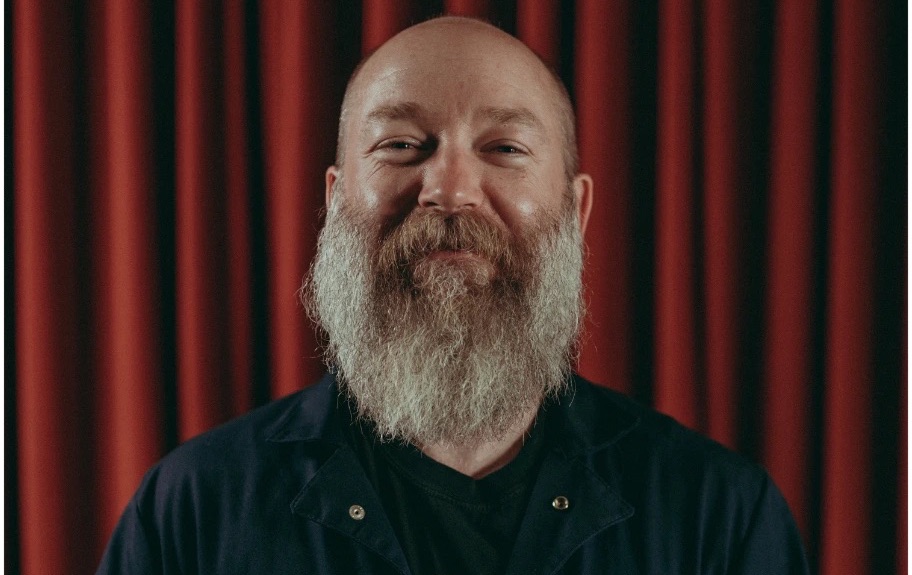
Courtesy of Kyle Kinane
If you’re in the mood to laugh at the misfortunes of others, now’s your chance.
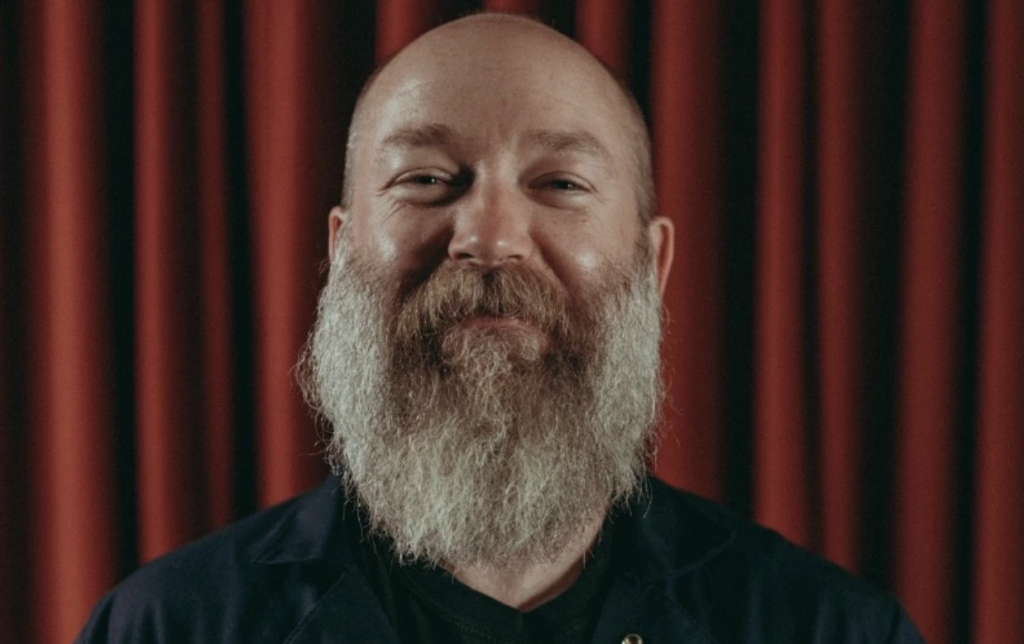
Stand-up comedian Kyle Kinane is coming to the Comedy Club of Kansas City with shows on Mar. 19, 20, and 21. He’s a little gruff, extremely Midwest-coded, and has made appearances on The Tonight Show, Conan, and other cobbles that include episodes of “Hey Girl” and “Drunk History” (where his Comedy Club bio says he “wasn’t acting”).
What Kinane’s really known for, though, are specials where he becomes the butt of his own jokes—from mishaps like drunkenly slipping in the shower to the consequences of making an office in his partner’s dead mother’s old bedroom.
We decided to unpack this over a Zoom call.
The Pitch: This isn’t the first time you’ve performed in KC. Do you have a particularly memorable moment or interaction from those other times performing here?
Kyle Kinane: I had a great time out when I was there last, and I got introduced to the comedy of Aaron Scarbrough. He’s one of my favorites right now. And Midwest sensibilities—I get to go back, and that’s my roots, and that’s where I’m from, and I don’t think I’m shaking that too much, so it’s nice to go back and be around familiar sensibilities.
What do you mean by those sensibilities?
I think, being self-deprecating or inward with the comedy and understanding that—I mean, just to reflect, an example is if sometimes I’ve played Miami before. Miami is filled with a lot of pretty people who don’t understand self-effacing comedy. They’re all beach body ready and attractive. I’m like, ‘Oh yeah, I don’t do comedy for these people.’
I do comedy for people who understand that they could be the butt of the joke, and that’s the funniest subject to me, making fun of myself. And I should clarify, I’m not going and saying that all Midwesterners are uglier. The idea of self-deprecating humor sometimes doesn’t translate to certain places.
You know, when you get to the middle of winter, we’re all covered in coats, and you can laugh at the tougher things and some of the misery, right?
Are there any other expectations you try to keep in mind when you work on new material?
No. Because I’m not talking about current events or politics, it’s all mostly very personal. So it’s just a matter of living life, but being attentive to something happening that, even if it’s not funny in the moment, going like ‘Oh, that’s something.’ I’m going to write that down, and that’ll turn into something later. Like, still being curious and enjoying the whimsy or absurdity of stuff that’s going around.
Not the grand absurdity of what’s happening now, unless it’s an outward bit or some current event thing where I think it’ll be funny for a week. But the 24-hour news cycle that we’re punished by, everybody’s writing those jokes, so I can guarantee uniqueness by going, well, this is about me and not anybody.
In the process, do you feel like you’ve observed anything interesting about different crowds’ reactions to your shows, and if you have, has it influenced you in any way?
I mean, it’s really a high school debate class, where regardless of your personal belief, to take a subject and argue for—and I always screw up my terms of like information bias with confirmation bias—where if you believe in something, you’ve got to find all the information that supports that belief and tune out anything that goes against it.
Well, that’s the fun thing about comedy. Like, if I feel so strongly about this way, why? I should figure out if I can defend my position by researching the other side of it, and then I might find out about myself. Like if I’ve been lying to myself and actually learn that there are things I agree with on the opposition, and that’s helped me to be a better person. That helps with comedy, too, because if you’re one-sided without acknowledging that there might be another viewpoint, you’re isolating some of the audience.
You had also mentioned earlier that empathy has more longevity in comedy, rather than stuff based on oppositional grift. How would you say you try to make empathy present in your shows?
It goes back to desperately trying to make sense of whether I’m talking about an issue—political or public—like, ‘Well, why would somebody be pro-Trump?’ At risk of people not buying tickets, I’m not interested in trying to find a common ground with certain people, especially with what’s going on right now. I’m not interested in you liking what I do, I don’t need your money, and I don’t want to meet you halfway on a lot of things.
I’m pretty staunch in a way, but I think empathy comes in where we’re going, ‘Hold on, there’s so much more nuance and a gray area.’ I disagree with you, but I don’t hate you. And right now, everything’s very divisive, so even if I say something pointed about what I believe in, I do try to go ‘But hey, I’m a clown up here.’ I still want the jokes to be funnier than the point I’m trying to make, even if you disagree with me. And I’m not offering platitudes to get the side that agrees to clap at the end of the joke. That’s trash.
But the mindset is: all right, there are a lot of horrible things happening in the world right now. I’m still gonna do the comedy show. The majority of it is, ‘Let’s take a break from the horrors of the world.’ The clown’s here to give you a break.
Showtimes and tickets are available here.