Independent Project Records is curating the best releases you’ve never heard of

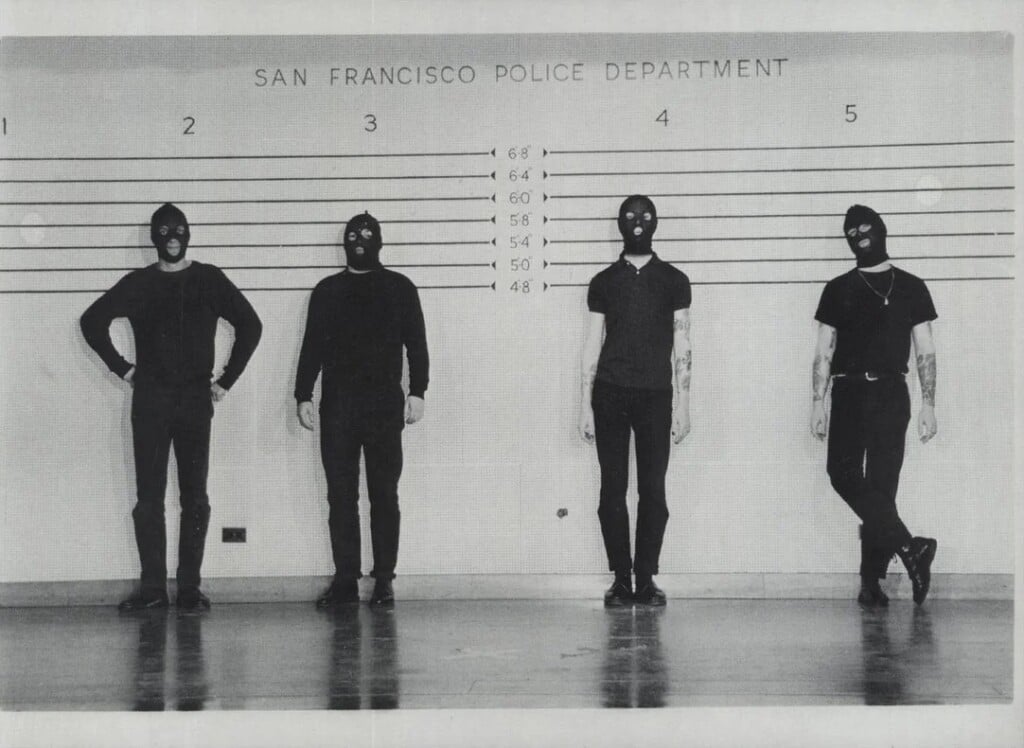
IPR’s Bruce Licher. //Photo by Bruce Willey
Independent Project Records’ latest release is David J’s Tracks From the Attic Revisited. You can find that and their entire digital catalog on Bandcamp, along with more at the label’s website.
California record label Independent Project Records has been quietly releasing some of the best records in alternative music for nearly five decades. Founded in 1980 by Bruce Licher, the albums IPR puts out are known just as much for their distinctive letterpress jackets and sleeves as they are for the iconic music pressed to the vinyl within.
In addition to a slew of music from Licher’s own Savage Republic, the label released Camper Van Beethoven’s debut full-length, Telephone Free Landslide Victory, along with albums by For Against, Woo, and Stereolab before going mostly dormant for the first 20 years of the 21st century. Relaunched in 2020 by Licher and partner Jeff Clark, the revitalized IPR’s output has seen the label putting out deluxe reissues of previous releases, as well as amazingly curated albums like the soundtrack to Louder Than You Think: A Lo-Fi History of Gary Young & Pavement and Faces to Hide, the complete discography of Los Angeles post-punk band Afterimage, along with new work by David J of Bauhaus.
Each release is an embarrassment of riches, including massive booklets of liner notes, bonus flexi singles, and jackets made on Licher’s vintage two-ton hand-fed letterpress. They’re a sight to behold, allowing fans of this music to immerse themselves within the world of whatever they’re listening to. The return of IPR and its continued schedule of releases came about because of a film screening Clark put on as part of the Nevada City Film Festival in 2018.
“One came across my attention which was called Desolation Center,” Clark explains one morning over Zoom, talking about the documentary which told the story of ’80s punk artists putting on shows in the California desert. “It was just a film submitted to the festival, and I started watching it to be the jury for it and see if it was gonna be in the festival, and immediately noticed that it was a documentary about a bunch of people I know, including Bruce.”
Clark reached out to Licher, remembering him from his time in the Los Angeles music scene, and Licher made the trip to Nevada City for the screening and Q&A which followed.
“He stayed as a guest at my house that weekend, and we just started talking about the good old days and the label and the music,” Clark recalls. “We just agreed that maybe it was a good time to get back to the work of putting out vinyl records of the quality that Bruce has always put them out with.”
Licher had started the label as a college student in 1980. The first release was actually done for an independent project course at UCLA where the student could design their own class, create a project, and find an instructor to work with who would oversee what they were doing—hence its eventual name.
 “I decided I wanted to make a record as an art piece and that was something I called Project 197, which was the course number in the catalog,” says Licher. “And I just thought, ‘This was fun. I’m gonna keep doing it,’ and so I just kept making more records from there.”
Licher kept doing it for a little over 20 years, where he put out his own music and the music of other people who he cared about. However, it finally reached a point where Licher couldn’t afford to do it all himself anymore, eventually putting IPR on the back burner to focus on his letterpress printing and graphic design business. While there was the occasional release here and there in the early ’00s, Licher didn’t have the focus or the resources to do it the way he wanted to do it.
“It basically just sat there as a catalog until Jeff and I started talking and thought this would be a fun thing to do,” Licher notes.
“I just felt like it was a good time in many ways to think about what had happened and what might go forward,” clarifies Clark. “Because I recognize that there’s a whole new generation of people that are interested in vinyl.”
Clark had noticed a lot of the young people he knew were attracted to music from the ’80s and early ’90s, specifically the post-punk and shoegaze genres of which Licher had a solid back catalog.
“We just started talking about some projects that we might wanna put our energies into,” Clark continues, saying that it was a matter of, “Not only do we wanna do this just ’cause we can, or what would be involved with it, but also ’cause it seemed like it was a good time to do it.”
IPR’s releases–in addition to being art objects and very fun in a tactile and visual manner–are not so much time capsules as they’re historical documents. They’re modern, but retro, but also historical. It’s all of these things operating simultaneously. The balance between this being music worth hearing now, not just because of what it was then, is a delicate one, and Licher and Clark walk it well.
“We want people to have fun with the record,” says Licher, and Clark agrees.
“It’s just part of the whole thing,” he offers. “People who grew up with vinyl—that’s one of the main reasons why the format has some legs, because it’s a fun format. It’s tactile. I can think of getting records as a kid. The Beatles were great at this: putting things in there that you just go, ‘Wow, what’s this?’ and you get a poster, little cutouts, all these things, so that was part of the appeal of getting a vinyl record.”
Clark thinks everybody gets a little thrill from opening up one of those packages and holding it in their hand, and Licher made sure that continued on with IPR’s compact disc releases. Rather than go with jewel cases or cardboard digipaks, their CDs are housed in pocket folders, replete with booklets, extras, and screenprinted sleeves for the discs themselves. It’s a rare thing for a CD release to be as cool as this.
 As to what comes out these days, there is a definitive guiding ethos behind what Clark and Licher do release. Because they both have so much other stuff going on, they make sure that everything they’re putting out is worth the very valuable time it takes.
“We both have to agree that this is something we wanna release,” says Licher. “We both have to feel like there’s something in the music that speaks to us.”
That guiding principle dates back to when Licher started the label. One of the reasons for putting out other people’s music was that he wanted a record of a band; nobody else was doing it, so he had to do it, and in a way, that’s a similar thing going on in 2026.
“Jeff and I both think, ‘What records would we wanna have in our collection?’ and ‘Let’s make it happen,’” Licher continues, with Clark adding that the A&R part of the job is, basically, “Do we both really like this? That’s about it.”
That shared appreciation of the music being released by IPR is the thread that runs through it all. It’s not a particular sonic aspect. It’s just the fact that a listener can tell these all fit together and, while you can’t quite put your finger on it, the joy of the world in which we live now is the fact that there are people such as Licher and Clark willing to put the time and effort into curating collections and releases such as these. Even if you don’t know what an IPR release is, you know you can trust the people behind it.
In the age of so much material being available online, the challenge for Clark and Licher is to be discerning and think about what they’re putting out not just in a “Do we like it” sort of way, but what it says about what they’re trying to do.
“Back in the ’80s, I know there were labels definitely that if I saw something on that label, I would give it a chance,” Licher recalls. “Factory, 4AD and then, into the ’90s, Creation or Sarah Records, for the indie pop stuff. It’s nice to find good curators of labels.”
“That’s what kinda holds it all together somehow,” agrees Clark, noting that while it’s hard to put in words exactly what that is, he looks back to the labels about which he felt that same way. “If you got a 4AD record or whatever back in the day, you may not be familiar, but you’re willing to take a risk.”
Independent Project Records’ latest release is David J’s Tracks From the Attic Revisited. You can find that and their entire digital catalog on Bandcamp, along with more at the label’s website.