H is for Hawk fails to take flight because a bird’s performance is the only memorable part

Courtesy Roadside Attractions
It’s not every day that you get to praise an animal performance in a film. It’s rarer still that you’re praising a bird.
H is for Hawk, Philippa Lowthorpe’s adaptation of the well-loved 2014 Helen MacDonald memoir of the same name, is mostly forgettable, Mabel—the goshawk trained by Claire Foy’s Helen, is incredible. For one, goshawks are incredibly pretty; the film’s opening credits play out against a glowingly-lit closeup of Mabel’s impressive plumage. More than that, the bird is smart. She’s fierce, playful and curious.
If only the film around the bird could say as much.
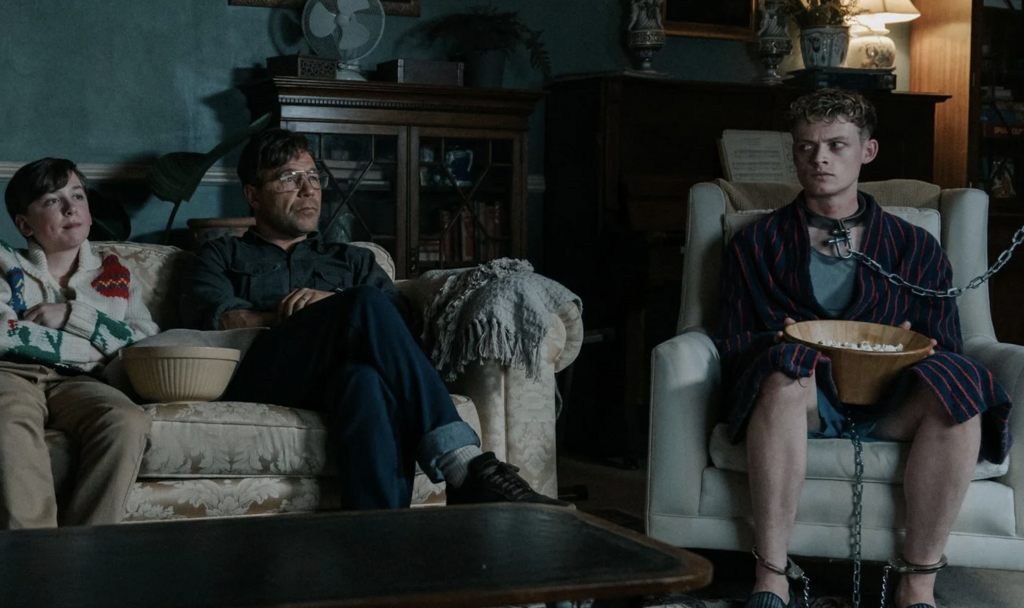
Like the novel it’s based on, H is for Hawk follows Foy’s Helen, a Cambridge academic, as they recover from the loss of their beloved, eccentric photographer father (Brendan Gleeson) by getting back into their childhood pastime of falconry. Helen’s intense relationship with Mabel helps her process her father’s death, but it also distracts her from the more practical concerns of her day-to-day life (i.e. her job, taking care of her house and herself). Helping Helen pull herself back from the brink are her mother (Lindsay Duncan) and friends (Denise Gough, Sam Spruell).
Lowthorpe’s film does make some interesting choices worth pointing out. After Helen gets Mabel and starts to train her, the film’s sound mix during scenes set outside of Helen’s house gets amped up to reflect the way Mabel would experience the world—cars and bicycles whizz by constantly, and light footfalls feel more like loud clomps. As Helen starts to identify more with her raptor than human beings, that sound element is foregrounded in scenes where the bird isn’t even present.
Unfortunately, most of the rest of H is for Hawk follows an overly familiar, not-terribly-interesting trajectory. Helen has difficulty connecting with people after her dad’s death. Who wouldn’t? She has a number of flashbacks that show how special (but not unique) their relationship was.
Even potential bird-related drama is pretty tame.
We’ll be treated to a scene of Mabel hunting, but then quickly cut to the bird devouring her prey. Early on, Helen struggles to get Mabel to come back to her consistently. On one occasion, Mabel stubbornly stays in a tree for “hours” according to Helen. Helen exasperatedly looks at Mabel happily sitting on a branch, then Lowthorpe cuts to goshawk and falconer back at home, safe and sound. Any actual conflict in the film happens off-screen.
It’s possible that the lack of outward drama is a problem of adapting a memoir that mainly consists of an author expressing their feelings inwardly. How poorly, then, does it reflect on Lowthorpe and co-writer Emma Donoghue’s inability to make the internal external—particularly Donoghue, the author of Room, who absolutely knows how to take a character’s inner world and make it expansive.
That there are a few remarkable elements in H is for Hawk (i.e. the titular Hawk) make it all the more disappointing that the rest of the film can’t reach the same consistency. The film contains moving themes and a committed performance from Foy, but it leaves almost no impression behind. You may as well go out in the woods and watch actual birds diving for prey (though maybe do it on a warmer weekend).