Bill and Ted’s Alex Winter on Freaked, Broadway, and convention adventures ahead of his Planet Comicon appearance

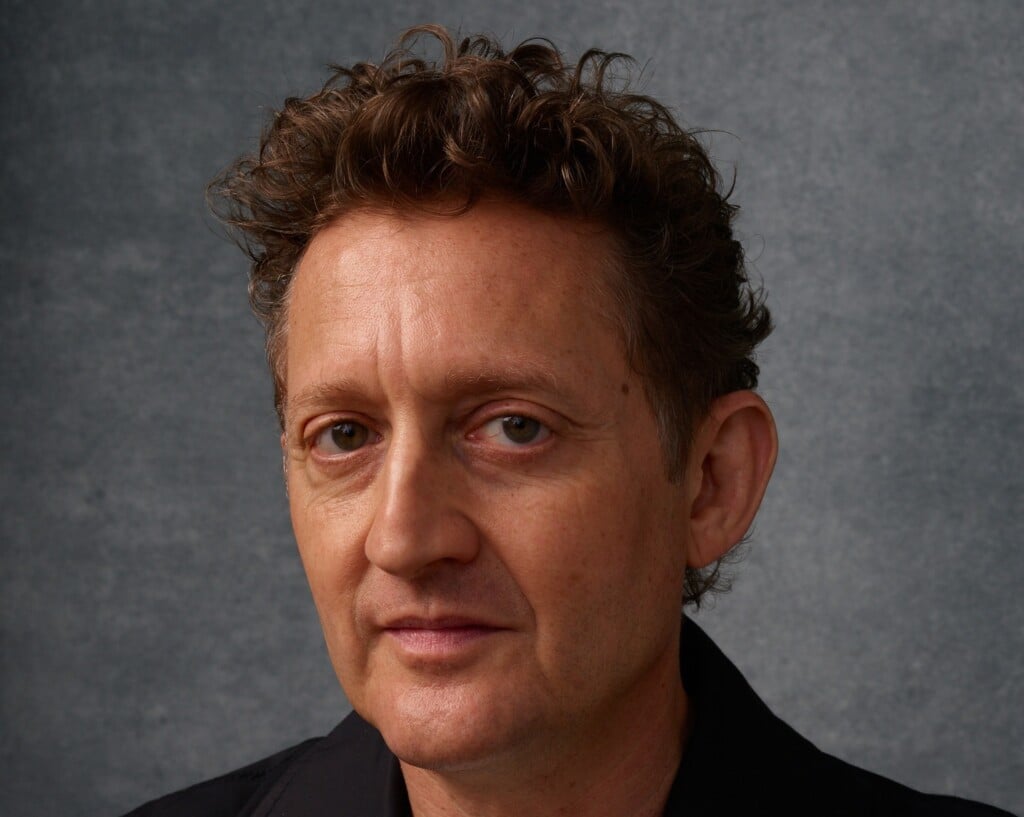
Alex Winter. // photo credit Rick Wenner
Alex Winter is one of many pop culture guests as part of Planet Comicon Kansas City, which runs Friday, March, through Sunday, March 29, at the KC Convention Center. More information is available on their website.
Writer/director/actor Alex Winter is best-known for his roles in the ’80s films The Lost Boys and Bill & Ted’s Excellent Adventure (as well the latter film’s two sequels), but real heads know that Winter is more than just those performances from nearly four decades ago. He’s also one of the masterminds behind MTV cult sketch show The Idiot Box and the psychotronic mind-melter that is the 1993 film Freaked.
Both Freaked and The Idiot Box saw deluxe Blu-ray releases courtesy of Umbrella Entertainment and Severin Films, respectively, while his first non-documentary directorial project in nearly a decade, Adulthood, hit Prime Video at the end of the year. All of that and he returned to the Broadway stage for a revival of playwright Samuel Beckett’s Waiting for Godot with longtime friend and fellow actor Keanu Reeves, to boot.
Suffice it to say, 2025 was a big year for Alex Winter, and so we were very excited to hop on Zoom with the multi-hyphenate about all of that and so much more ahead of his appearance at this weekend’s Planet Comicon.
The Pitch: 2025 was like a really good year for you in terms of projects. You had this absolute gem come out. [holds up Blu-ray of Freaked] The Idiot Box came out on Blu-ray. You were on Broadway.
Alex Winter: It was a crazy year.
How long in the works were these video releases? 2004 was when Freaked originally came out on DVD.
Yeah, and the Anchor Bay release is amazing, and we were very grateful for it, and they packed it with all kinds of good stuff. But no one had ever gone back to the internegative. No one had ever gone back to the Fox vault and gotten the original internegative and struck a proper master so that you could make a very hi-res–there was a Blu-ray out there that wasn’t real, really true Blu-ray, ’cause it was not from the master. I’d been working for many years to get this thing out of Disney, and then Fox was bought by Disney. As many people know, we made the movie for Fox.
And at the same time, I was trying to get The Idiot Box out of MTV. At one point, Tom [Stern] and Tim [Burns] and I–almost as a way to try to get them to give us The Idiot Box or put it out, we were like, “Why don’t we make a new one?” So they commissioned us to write a pilot for a new Idiot Box.
I don’t even think it was that long ago, maybe 15 years ago, and of course, we wrote something as violent, as insane as what we had written. It was exactly The Idiot Box as if you just closed the door, waited 30 years, and then opened it again, and we were just standing there waiting to keep going, and they were mortified.
They were like, “What the hell is this?” We’re like, “It’s The Idiot Box.” I don’t think they knew what The Idiot Box was, so there was no way they were doing that.
It was just coincidental that I had luck–this is several years ago–with both Disney and Viacom. The same year I finally got through to some fans of Freaked within Disney, who I just worked with very assiduously for a long time and with legal and struck a deal that allowed me to then go and set up a distribution deal with Giant, who I had a relationship with, and Drafthouse.
They’ve released several of my films and then we’ve brought Umbrella on board and they made this whole massive package. It was very lucky that Disney was so open by the time I got them on board. They released the vaults for us and gave us full access to all the original negatives and everything they had, so what is released is really very meaningful to me, Tom, and Tim. We’re feeling very grateful to have both that and Severin’s release of the Box out.
And then, obviously, Godot was like four years of work leading up to it, too, so it just all collided at the same time, and my film, Adulthood, which I directed last year, was released the week before I started my first previews on the play. So it was a very strange year, but I’m a freelance artist, and I have been my whole life, and that’s the way it is: when you’re free, you have these incredibly quiet years while you’re working feverishly, and then if you’re lucky, you have a year where stuff comes out.
Your career is so interesting, because I love like the idea that you make these very weird, visceral genre pictures–be they Freaked or even as recently as Destroy All Neighbors–and then you make these very in-depth, politically-themed documentaries. I think it demonstrates that everybody contains multitudes.
Yeah, that’s what I completely feel. And the thing is, it’s been easier for me to contemplate how to have a–I wouldn’t call it a career, just a life, an artistic life, doing different things. I always hate that term “career” as if someone who doesn’t have those things doesn’t have anything. It always seems obnoxious to me.
But, because I started as an actor, and when you’re acting, no one says you can’t–your agent may say this, but no one in your acting class would say you can’t go and do this dramatic part now because you’ve only been used to doing comedy. As an actor, you do all kinds of things, and you do them with whatever you have within you.
What I loved about doing Beckett was that Beckett allowed you to do everything in one play. You’re crying, you’re making jokes, you’re being asinine and slapstick, and then you’re being very heady and philosophical. But yeah, we all contain these multitudes, and I think you just end up having to commit to doing things that interest you, and that’s been my impetus.
How was it for you returning to the stage after so long? That’s how you got your start and then coming back in this big way? I think anybody who knows theater knows that Beckett play and knows it’s all in the performance because there’s nothing else.
Really, nothing there. And he was right. Part of my life for a long time, when I was young, I did two long-running Broadway shows back to back, and then some off-Broadway and eight shows a week all the way through high school and a chunk of middle school.
I certainly had a lot of muscle memory and just factual memories for that experience, but it wasn’t like riding a bike because his play is so fricking hard, but it was familiar in a way that was helpful to me to do this play. Keanu, I felt for him because he had the sort of stress of doing Beckett and the stress of a Broadway debut, and I kept saying to him–which I think eventually he just started getting irritated with, was like, “It’s just another stage,” and he was like, “Fuck you. It’s not just another stage, it’s Broadway.”
But then, once he started doing the show, he was like, “Yeah, it is just another stage. There are people out there, the stage is there, and you go out, and you do the thing,” so it was helpful to have had a background with it.
Yeah, he’s in a band. He knows what it’s like to be on stage.
I said that to him, and he’s in a band that’s performing right now, so it’s like they’ve been doing shows and venues that are similar to the size of the theater that we’re at. So it was like, “Just imagine you’re doing a Dogstar show, only please don’t do that.”
Your acting output on screen is very genre. I’m just curious as to what your relationship with those sorts of movies was before you started making them.
I tend to wanna do the things that interest me and the things that I find the most creative tend to be like that. I come from a dance family and I came up doing Broadway and theater and that’s just been my interest from the jump.
I think as I got older, I found, like when I was doing Lost Boys and when Tom and I were writing Freaked and doing The Idiot Box and stuff that I enjoyed doing–this kind of extreme, prosthetics-oriented acting–it wasn’t that dissimilar to the theater character work that I had done, but it wasn’t all I was doing. I was doing serious off-Broadway plays. I was doing a Simon Gray play. So again, internally, I know the public sort of knows me for genre.
I love that. That’s why I went back and did Destroy, and I had the best time. But it’s just one string in the bow. It’s just one thing that I like to do, but it’s not the only thing I like to do.
So, you get to do all the things. You get to write, you get to direct, you get to explore all these different facets, and then you get to do conventions, which is why we’re talking. What appeals to you about going and sitting at that table?
It’s not dissimilar to what I do with the documentaries. When I make docs, I tour around with them to festivals and I talk to audiences. That’s a big part about making docs, especially, as you said, politically-oriented or topical docs, which is what I tend to do, you end up doing social impact stuff. I toured [The YouTube Effect]. I toured the whole world with that doc and, I toured Cambridge and MIT and Berkeley, and then I went into high schools and then we just did film festivals.
Cons are when you do genre stuff. The fans are really interesting and pretty great and people have often said to me, who are not in the business, “It’s great that you’re in these movies that were so successful”– largely meaning Bill and Ted–“But it must be a pain in the ass. Is it a millstone around your neck that you have this Bill character?”
I think it really isn’t, because the fans are so lovely. It’s cool to have this thing that people like all these years later. I feel grateful for it. A) I don’t feel cynical about it and B) The fans are cool. So, with the cons, it’s the only chance you get as an artist to really interface with anyone who’s seen your stuff and actually knows it.
And then also, greedily, I like seeing the other artists at these things. I used to know Sam Raimi really well. I never see Sam. I see Sam there. I see people that I really dig quite a bit, and it’s very communal and a very even playing field, and it’s very friendly. I like mixing with the fans. I like the interaction with the people who dig that work and other work that I like. It’s not just my stuff–obviously, they’re there for a bunch of things.
What I really enjoyed about the Freaked Blu-ray is that there’s so much behind-the-scenes footage presented as is. How was it for you, going back and watching this raw footage of things as they happened?
It’s a journey I don’t think most folks get to take. Not at all. And it was a long time ago. We made that movie in ’92, and it was a lifetime ago for me. Obviously, I have a lot of behind-the-scenes stuff, and some of the video was mine. The lion’s share of it came from Tim Burns, who was very good at collecting this stuff.
It was, in a way, like watching a home movie of yourself from summer camp when you were 13 and all these memories come flooding back at you. That’s how it felt. It was like a memory flash, remembering all of the camera tests we did on Keanu for Ortiz and I have very strong memories of all the work I did with [makeup artist] Bill Corso on developing Ricky and with Steve Johnson and all that. But still it was fun to see and we were all so goddamn young, it’s crazy.
That’s what strikes me about Freaked that is so odd to me. We were in our mid-20s, and it was a big movie, and I’d acted in big movies. Lost Boys was a big movie. But I never directed a big movie. It’s very different, and I look back at it and think, “Gosh, how lucky were we that anyone gave us that much money to make that movie at that age?”
It’s just bananas. They were crazy. People are always like, “Oh, are you embittered because of what happened to the distribution?” I’m like, “I was wondering every day that we had that money, when they were gonna wake up and realize what they did and kick us the eff off their lot,” and one day they did, and it was it so expected. Of course, they didn’t wanna–it was insanity. We made this punk rock Butthole Surfers movie basically for $12 million.
Alex Winter is one of many pop culture guests as part of Planet Comicon, which runs Friday, March, through Sunday, March 29, at the Kansas City Convention Center. More information is available on their website.