Justice Amplified calls musicians to continue the legacy of local protest concerts

Before Dr. Martin Luther King Jr. spoke at the March on Washington for Jobs and Freedom in August 1963, Mahalia Jackson sang.
She had traveled an improbable distance to reach the Lincoln Memorial. Born into poverty in New Orleans, motherless at five, Jackson grew up in a three-room house once shared by thirteen people. She never finished elementary school. Moving to Chicago as a teenager, she carried north a voice cultivated in church and became America’s preeminent gospel singer. She had sold millions of records and sung before presidents, but that afternoon, before some 250,000 people gathered, she chose to summon an old and defiant spiritual about endurance, “I’ve Been ’Buked and I’ve Been Scorned.”
What she sang and how she sang it—“magisterial,” one commentator put it—hushed the vast crowd.
Then Dr. King approached the microphones. Jackson knew him well. She had traveled with him through the South and heard him preach variations of a vision he called ‘the dream’. As he worked through his prepared text, she sensed more was needed in that moment.
“Tell them about the dream, Martin,” the singer called to the preacher. King looked up from the page, changed his direction and tempo, and began to tell the world about a dream he had.
Itis hard to imagine a more consequential confluence of music and justice: a gospel singer, shaped by poverty and segregation, nudges history’s most famous civil-rights address toward immortality. The March’s organizers—King, Bayard Rustin and others—had also called other musicians to join Jackson: Marian Anderson, Joan Baez, Bob Dylan, Odetta, and Peter, Paul and Mary. Dylan, just 22 and channeling Woody Guthrie, sang “Only a Pawn in Their Game,” his searing response to the murder of Medgar Evers that traced the killing beyond the man who pulled the trigger to the politicians and institutions that cultivated racial hatred.
Their voices carried along the Reflecting Pool through a newly installed, state-of-the-art sound system powerful enough to reach the immense crowd gathered between the Lincoln Memorial and the Washington Monument. Their music helped a nation hear injustice and racial discrimination for what they were: vandals of lives and communities.

Wikimedia Commons
What happened with music and activism on the National Mall that day would be repeated, in different forms and for different causes, for decades to come. When South Africa’s Nelson Mandela approached his seventieth birthday in 1988, still imprisoned after more than a quarter-century under apartheid, 72,000 people packed Wembley Stadium to hear Stevie Wonder, Whitney Houston, Sting, Dire Straits, Tracy Chapman and others call attention to his cause. When America’s family farmers lost their land and livelihoods in the farm crisis of the 1980s, Willie Nelson, Neil Young and John Mellencamp created Farm Aid. When famine devastated Ethiopia, Live Aid raised stages in London and Philadelphia and turned a humanitarian catastrophe half a world away into a global event.
Such spaces multiplied through the decades. Some held tens of thousands; others took place in a church hall, a bar, a mercantile, or a clearing in a hayfield. The causes grew, the geography spread. Many of those spaces and stages have appeared in Kansas City.
Care enough or pissed off enough to organize? Want to remind the world that the power is with the people? Consider music. Find a space. Call the musicians. See who shows up and what they might do together.
Music cannot, by itself, desegregate a school, end a war, ward off a data center, or shut down a detention camp. We also have to be vigilant that the sensation of being inspired through music doesn’t substitute for the harder work of change. Yet music can turn sympathy or empathy into solidarity, isolation into community and, sometimes, an audience into a movement.
Attending the 1963 March took courage; participants faced threats of violence. But they came, stood together, and the movement helped propel the Civil Rights Act of 1964 along with the landmark laws of 1965 and 1968. Those laws changed America like few laws before them. My own three-decade career as a housing rights lawyer has relied on the 1968 Fair Housing Act to fight housing discrimination, and I’ve seen it used by countless people, families, and communities to fight back. The March’s music gave emotional vocabulary to a movement whose organizing, litigation, protest and political labor won those laws. A set list cannot do that work, but it can embolden the people who do.
But courage is only one of the things music can give a movement. The demands of civil rights and social justice work are relentless: lawyers burn the midnight oil and then make their arguments in courtrooms; organizers knock on doors and build trust person by person; nonprofits confront intolerable conditions and then marshal the grim statistics to prove they exist. Music bears no such burden. A song need not prove its case. So it can do what briefs and fundraising appeals rarely can. It can lift our burdens for a moment and let people feel invested in one another, giving us a shared feeling or inspiration before we have a shared plan.
Often the musician herself provides the inspiration, and Kansas City’s Abigail Henderson offers a poignant example. Since at least the 1920s, musicians like her have given Kansas City its soundtrack and much of its identity. Yet many do so without the economic security others take for granted. Irregular income and the high cost of housing and health care can leave working musicians especially vulnerable when illness or injury strikes.
Kansas City’s Midwest Music Foundation (MMF), which addresses that problem, traces its beginnings to a tour stop in New Orleans, where Henderson fell ill and received treatment at the New Orleans Musicians’ Clinic. She returned home determined to build something similar for Kansas City musicians.
But then Henderson was diagnosed with Stage III inflammatory breast cancer and her plans might have ended there. Instead, Kansas City’s music community rallied around one of its own. For Abby and her dream, they called the musicians—they called themselves.
Apocalypse Meow began in 2008 as a benefit concert for Henderson. The gathering also helped her and her husband and bandmate, Chris Meck, turn her idea into the Midwest Music Foundation, now led by Rhonda Lyne. Henderson died in 2013 at just 36, but her organization and concert lives on. Through Abby’s Fund for Musicians’ Health Care, MMF continues to help local musicians cover urgent medical expenses.
Abby returned from New Orleans imagining a community that would care for Kansas City’s musicians. When illness overtook her, those musicians cared for her—and then helped make her vision real. Over the years, scores have contributed their time to MMF and Apocalypse Meow, from Split Lip Rayfield and Bob Walkenhorst to Calvin Arsenia, Katy Guillen and the Drive, Kadesh Flow and Nathan Corsi. Danielle Anderson, who performs as Danielle Ate the Sandwich, has previously served as MMF’s media manager. The musicians who rallied around Abby and her cause kept playing for those who came after her.
In 2020, nearly a hundred Kansas City musicians answered that call from their own homes, recording David George and Kadesh Flow’s “When We All Come Together” to benefit MMF. They sent in parts recorded on phones and computers, turning their isolation into a chorus. All proceeds went to MMF: the title was also the method and a promise.
Jackson Browne, a veteran of benefit concerts himself, is not a Kansas City musician but he captured their promise in his foreword to Sing Out for Seva: 40 Years of Music for Social Change: “Music has always been good for raising us up. Raising awareness, raising money, and raising expectations.” Annie Lennox, whose causes have ranged from Live Aid to Amnesty International, has said music can “galvanize” people and “amplify situations” that had been unheard.
Dave Grohl skipped the sociology when announcing a January 2026 Los Angeles benefit for people without housing or enough food: “This ain’t just a big ass rock show,” he proclaimed, “it’s a big ass party with a heart.”
Both music and the parties with heart have driven and sustained my own work as a civil rights lawyer. When the march of cases leaves me exhausted or empty, it might be Johnny Cash singing for people the country prefers not to see, Dylan exposing the machinery of racial hatred, or Rhiannon Giddens restoring buried Black histories to American music that sends me back to work. Those songs are more than background music for drafting briefs. Their voices and stories renew my sense of why the work matters, bringing the people behind the legal arguments back into focus. 
That inspiration has also drawn me into justice work beyond the courtroom and in the tradition of the 1963 March’s music program. As a law student at the University of California, Davis, I joined and then led the Davis Refugee Aid Project which recruited local bands to play benefits at bars. One relatively unknown Sacramento band, Cake, played for Central American refugees—a different Motorcade of Generosity before most of America knew their name or their debut album.
That impulse lives on at Silofest, the gathering my wife, friends and I have hosted since 2015 at our hay farm outside Warrensburg. Numerous musicians and acts such as Starhaven Rounders, PettyChavez, and Noah & The Professor (JP Coffin) have followed a long gravel road to the ruins of our century-old silo to support the Midwest Music Foundation. Two of Kansas City’s biggest supporters of live music—our friends Alice and Phil Jaggard—have helped us curate and host these Silofest benefits, bringing musical discernment rooted in something no algorithm can replicate: friendships and attending a lot of shows. Over the years, justice and live music have become two ways of answering the same call.
The March for Jobs and Freedom has another claim on me. Since June 1, I have been executive director of Kansas City’s Heartland Center for Jobs and Freedom. Our name’s final three words come from the March, binding our present work to that historic gathering. Sixty-three years after King spoke and Jackson sang, Heartland defends the rights of low-wage workers, low-income tenants, and their families through eviction defense, class actions over unfair employment practices and uninhabitable housing, and other legal advocacy and organizing. We also take on the machinery Dylan cited, including some of the largest corporate landlords and employers. The work unfolds in Kansas City courtrooms and on front doorsteps, far from the Lincoln Memorial but close to its unfinished work.
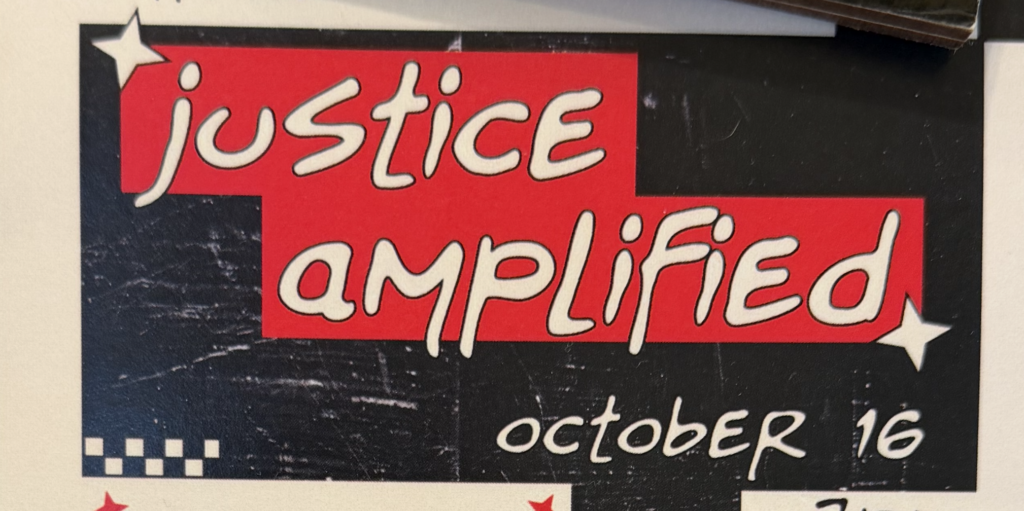
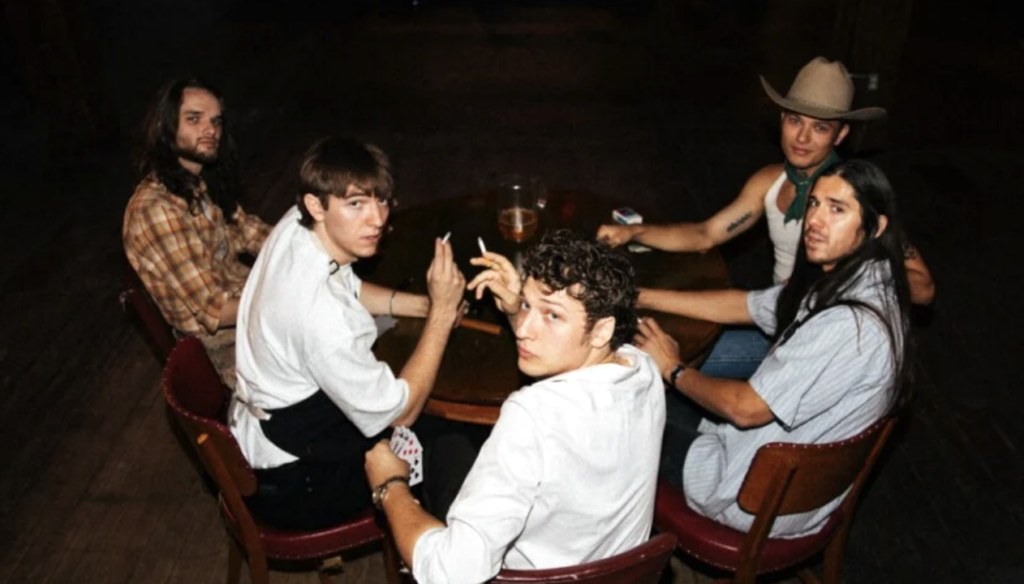
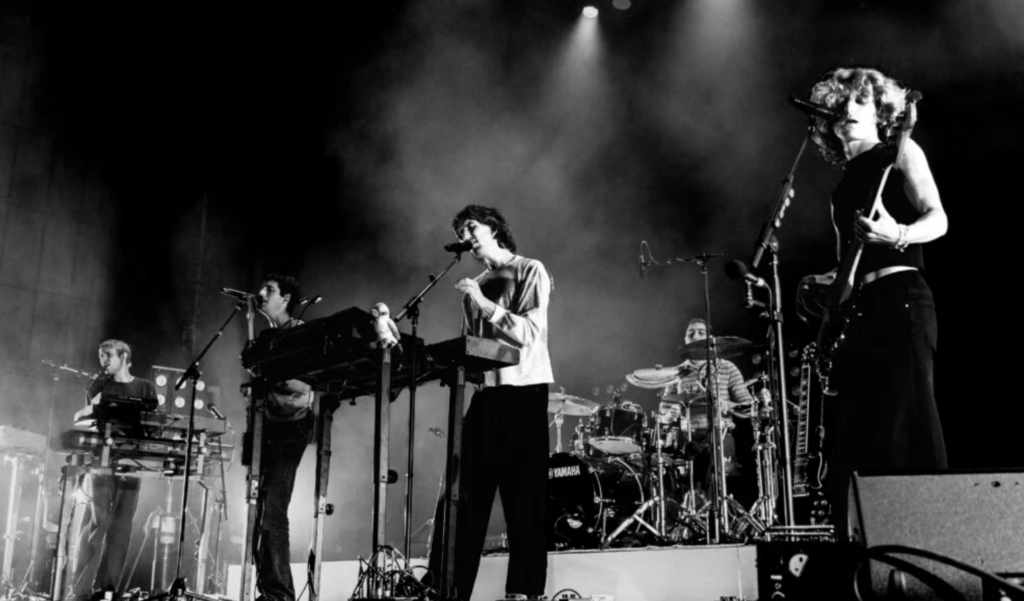
So when the Heartland Center for Jobs and Freedom planned an October 16 fundraiser, what did we do? We called the musicians. Some of Kansas City’s best answered, beginning with the aforementioned Danielle Ate the Sandwich and then also Vietnam-born singer-songwriter THAOVY and the young femme-punk trio Teazers. They will play this Friday at Sk8Bar, where lawyers, tenants, organizers and musicians should make for a lively assembly. With microphones, amplifiers and a lineage reaching back to the Lincoln Memorial, we named it Justice Amplified.
In 1963, Rita Moreno marched to and then climbed the steps of the Lincoln Memorial. She had won an Oscar the year before for West Side Story yet feared that publicly embracing civil rights and nonviolence might end her career. On the flight to Washington, her friend James Garner, an established white star, was so nervous about the consequences that, she recalled, he gulped Pepto-Bismol. They went anyway. Moreno was also a singer and dancer, joining a gathering where music and movement were inseparable.
Just feet from King, Moreno listened. She had become the first Latina to win an Academy Award, but this was another kind of stage. “I came home a completely different person,” she told CBS News in 2023. “And I have not changed since then.” She became a lifelong advocate for civil rights, women, and Latinos, and later criticized Donald Trump’s rhetoric about immigrants and his administration’s treatment of them. The Oscar showed Moreno what she could accomplish as an artist. The March showed her what she could do with her activist voice. 
She is still using it. In April 2026, at ninety-four, Moreno received Public Counsel’s Trailblazer in the Arts Award for her art and devotion to equality. The evening also celebrated legal advocacy for vulnerable families and immigrants and challenges to Trump administration policies. More than six decades after standing near King and Jackson, she said the times had her ready to polish her “protesting shoes.” The young woman who had feared losing her career had never really left the movement. And she was one of many thousands that day who were moved by Mahalia Jackson, Dr. King, Joan Baez, Dylan and the incredible group of assembled musicians.
Just last weekend, another call went out on a large stage. At the Power to the People Festival outside Washington, D.C., Tom Morello assembled Grohl, Baez, Bruce Springsteen, Public Enemy, Dave Matthews, Foo Fighters, Killer Mike and scores of others around music, justice and civic action. Baez—who had sung at the March on Washington sixty-three years earlier—joined Springsteen for Dylan’s “Chimes of Freedom.” Later, she sang Woody Guthrie’s “Deportee” with Matthews and Nathaniel Rateliff. Grohl performed Neil Young’s “Rockin in the Free World.”
Historian Heather Cox Richardson saw something elemental in the gathering. She said the musicians were pointedly exercising their freedom of speech, using both their words and their choice of songs to make political dissent heard. The night ended with the musicians gathering for Guthrie’s “This Land Is Your Land” and John Lennon’s “Power to the People.”
We call the musicians because they lend a cause their voices, and sometimes the risks they take to do so also inspire. Sometimes the cause returns those voices enlarged—more audacious, more independent, more enduring. From Dr. King to No Kings and then to Power to the People, the call keeps going out. And sixty-three years after our namesake March, the Heartland Center for Jobs and Freedom is calling. At Justice Amplified, the musicians will help people find one another and a reason to keep going. She was a gospel singer, but I believe that Mahalia Jackson would be among the first to applaud a young femme-punk band like Teazers closing the night at Sk8Bar, and that she would be the first to say that a party with the heart of music can leave us not just with songs but with new strength to carry on.