Higher Love KC struggles to get un-stuck from current cannabis purgatory
Small businesses fight for a spot at the table, and Missouri cannabis ownership remains a looming question.

While the state of Missouri avoids sharing cannabis industry ownership data, small enterprises like Higher Love KC have been shut out of the industry altogether. Cannabis users should be invested in the state of industry ownership because it ultimately determines how competitive the market is–i.e. are we getting the highest quality products at a fair price? When an industry is controlled by just a few powerful players, it creates a marketplace that doesn’t need to prioritize the consumer.
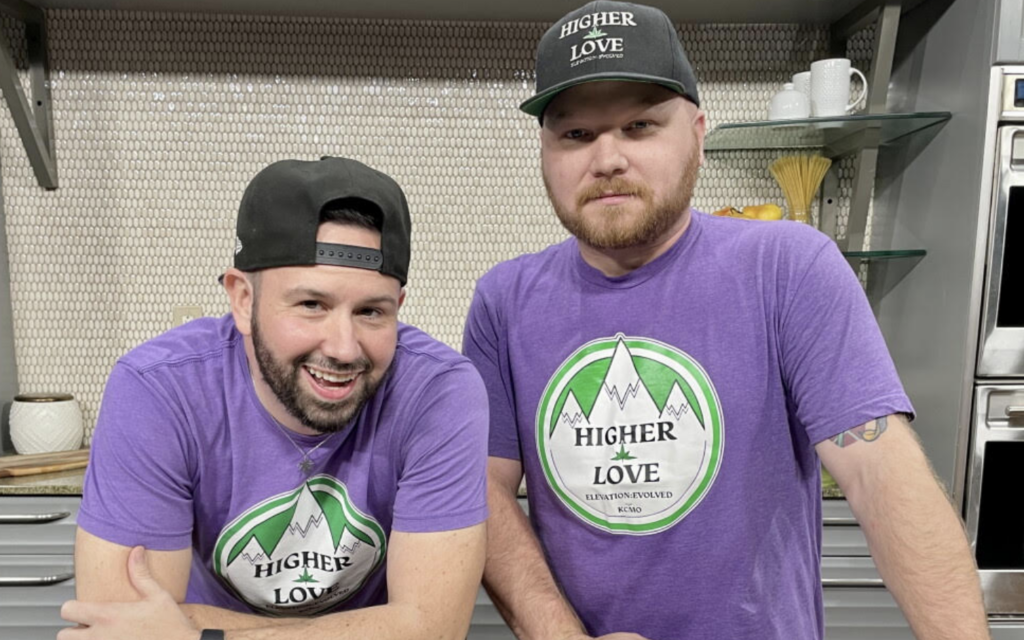
Higher Love KC was borne out of a desire to provide medicinal cannabis users with delicious and appropriately dosed edibles and baked goods. James Ryan wanted to help his mom try cannabis to ease tremors from a neurological condition, while Bill Wald was motivated by his sister’s breast cancer diagnosis, for which she is now (thankfully) in remission.
Both partners were disappointed by the edibles available in the medical market, which were primarily limited to gummies and, especially back in the early days of legal cannabis, only came in 10mg increments. Potency in cannabis has increased hugely since commercialization, with growers able to breed the strongest possible strains of weed. “The potency is crazy on this stuff. That’s one of the things I was really adamant about. The dosages don’t need to be huge,” Wald tells me.
The partners worked at private events for years, sharing their baked goods and honing their products, until August 28, 2023, when they won a lottery for a cannabis wholesale micro-license. Only 48 businesses across Missouri were awarded licenses (6 per congressional district consisting of 2 dispensaries and 4 wholesale licenses), so this should have been the start of something big. Instead, the state strung them along for months before ultimately revoking their license, never giving the small business a real opportunity to appeal.
For months after Higher Love won their license, the DCR said they needed some additional information, and then the license would be furnished–although Ryan and Wald note that the state was alarmingly unclear on what that additional information was. Instead, in January of 2024, Ryan received a notice of revocation.
Before the lottery was ever drawn, Higher Love had worked directly with representatives from the Division of Cannabis Regulation (or DCR, under the Missouri Department of Health and Senior Services) to ensure their application met all the requirements, which included having everything looked over by a lawyer. Just to apply for the micro-license, the partners had to invest $1,500, money that they’ve never gotten back.
The state decided that Higher Love didn’t meet the requirements to own a microlicense because Ryan’s previous non-violent cannabis-related felony was in Kansas instead of Missouri, something the Higher Love team had been reassured was not a problem before the lottery took place. Since the revocation, Ryan and Wald have spent another $2,500 on attorney’s fees trying to fight for their license, which has led nowhere.
After Higher Love’s license was revoked, the partners focused on producing edibles with hemp-derived THC. Hemp products became legal under the 2018 Farm Bill, but will become illegal again in two stages during November and December of 2026, shutting down operations like Higher Love across the country. While that mess gets sorted out, Ryan and Wald have put their business on the back burner.
Only 21 cannabis microbusinesses are operating in Missouri as of August 2026, with 77 more licenses set to be distributed starting in December in the final round of the program. In an industry rumored to be owned and run by just a few decision-makers, the microlicense program should have introduced new stakeholders and diversified the marketplace. Instead, those lucky enough to win the license lottery often haven’t made it to a full-fledged business venture, mostly because they lack the capital to outlast the lengthy bureaucratic process.
This story is more important than ever, with a recent study ordered by the state of Missouri finding there wasn’t enough ownership data to evaluate industry competition. The DCR responded to the study by saying they intend to incorporate ownership data in the future, although as the division that assigns licenses to owners in the first place, it seems like something that should be readily available.
Speaking of current industry ownership, Ryan said, “They’re here for greed, here for money. It’s just closing the door on local businesses that are trying to thrive and do the right thing.”