Surgical Precision: UMKC alum Gavin Brivik brings home an Emmy from The Pitt
 If you’ve seen HBO Max’s medical drama The Pitt (and given that the show averages 12 million viewers per episode, those chances are pretty good), you may have noticed a song featuring Andrew Bird playing over the credits of the show’s sixth episode, which aired February 12.
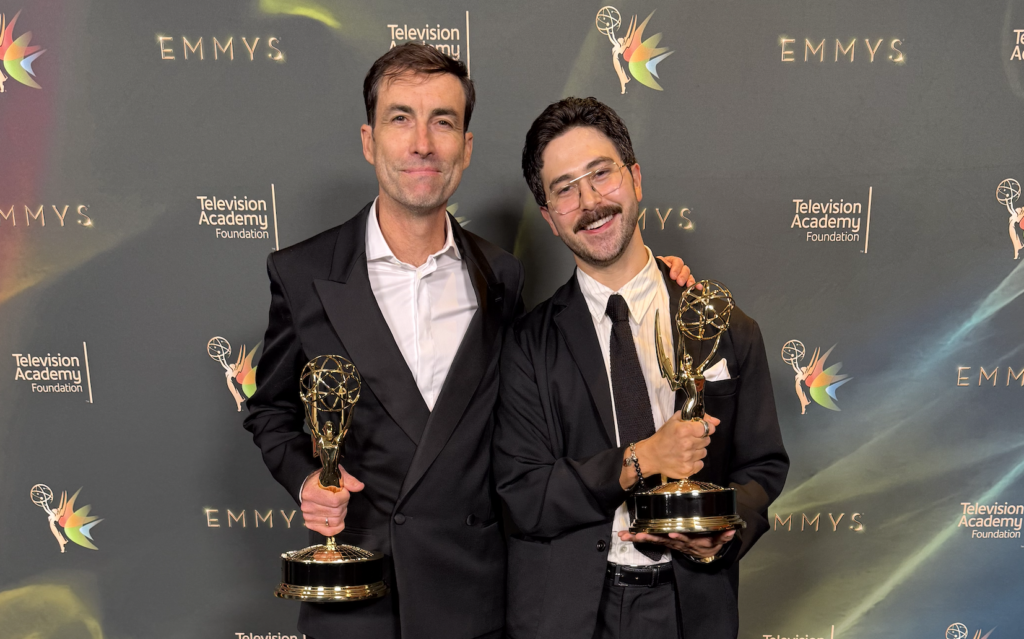
You may also have noticed the song recently won a Creative Arts Emmy for Outstanding Original Music and Lyrics. Billboard coverage called Brivik and Bird “giant slayers” in their headline because The Pitt track toppled a stacked category—beating out both Lady Gaga and South Park’s Trey Parker.
“Need Someone” was co-created with The Pitt’s composer, Gavin Brivik, a KC-area native and UMKC alum who’s probably a familiar name to Pitch readers by this point. We first spoke with Brivik in 2021, when he’d composed the score for the indie film Wild Indian. Two years later, we discussed his work for Daniel Goldhaber’s eco-thriller How to Blow Up a Pipeline. 
This year may prove to be Brivik’s biggest yet. In addition to his work for The Pitt, he’s composed the score for Sender, a trippy mystery with an impressive cast (including fellow Overland Park native David Dastmalchian) that premiered at this year’s SXSW in Austin and will show at the Sitges Film Festival in Spain in October. In April, Brivik’s music was on our screens and in our ears again with the long-awaited premiere of Goldhaber and Issa Mazzei’s Faces of Death (the film marks Brivik’s third collaboration with Goldhaber—he also created the music for 2018’s Cam).
With so much going on, it seemed like it was time to check back in. Brivik talked with The Pitch about the experience of working on The Pitt, his collaboration with Bird, Emmy win, and everything else he’s been up to.
The Pitch: So, you’ve been pretty busy lately! Congratulations.
Gavin Brivik: It has felt that way! Things are moving fast, but I’m very grateful for it all.
How does it feel to be an Emmy winner?
I feel like I’m still processing winning, especially since I really thought South Park or The Boys were going to win. It feels very surreal, and I’m just happy to know peers and fans love this song as much as we do! To be honest, I’m so happy that Ernest (Harden Jr., who won for Guest Actor in a Drama Series for The Pitt) won, and the crowd’s response to his speech brought tears to all of our eyes!
What is the campaign trail like for a music Emmy?
It felt like a very chill campaign trail. We didn’t go as hard as some of the other people; we just performed the song a few times and let the fans and Music Academy peers judge its merit for themselves. It does seem like campaigning can get very political and aggressive, but thankfully our category was very mild, and all the other nominees were friendly and respectful! I love their music.
You’ve been working mainly in independent films up to this point, but The Pitt is a change of pace from that. What’s the process like getting a job composing for a major show like this?
The Pitt showrunners had done a big call for composers, and my agents sent in my work for consideration. They were looking for a more experimental, innovative approach to the show’s music. I remember getting the text from them, and they were looking for found sounds or experimental ambient music. I sent them stuff from How to Blow Up a Pipeline and Faces of Death. I think they chose about 10 of us out of the applicants and had us watch episode one, write music to a few scenes, and interview with them.
My pitch to them…it was almost talking myself out of a job because I didn’t think the show needed a score, and they said: “We totally agree.” Basically, I thought, “What would it sound like if the medical equipment was making the score?” Our idea was for the music to embed itself in the hospital’s soundscape. Pitchfork and other outlets wrote about it like, “There’s no music,” which makes it feel like I’m doing what I pitched.
When I think of TV music, I tend to think of themes rather than scores, but in recent years that seems to have changed somewhat, in that shows now have full scores, not just themes, or in the case of The Pitt, no identifiable main theme at all.
It’s interesting because I think that still exists. Severance is probably the best thematic-based show I can think of right now. I almost think it’s genre-based. I love thematic TV shows like Severance and The White Lotus, which have prominent scores. But other shows, including The Pitt, have more ambient scores.
The Pitt is so in the moment, with each episode being one hour happening in real time. Keeping the score more sound-design based, when you listen to it on its own, it’s tense and almost ambient-aggressive, with weird machinery sounds. That stuff plays during intense surgery scenes. I think it’s them trying to do something fresh and original in that space.
I still feel like TV shows in general are oscillating between the two (thematic and ambient). Even shows like Task and Pluribus still have bigger scores, with some themes. I’m not sure if it’s a divided line, but I’m hoping shows go back to having more prominent themes. Same thing with film scores. We went too far in one direction where it’s rebelling against old-school themes and now we’re coming back to it.
How did you get to collaborate with Andrew Bird on a song this season? I’ve been a fan since I was in high school, so I think that feels like a pretty big deal.
It’s so funny; I’ve also loved him since I was in high school, right after listening to all those early albums. I’ve always dreamt of collaborating with someone like him, but nobody from The Pitt knew who he was. Everybody kind of gave me a blank stare when I told them about it.
I had written these instrumentals for the end credits, and I had lots of other versions and variations and other songs. For season one, I collaborated with a singer-songwriter named Taji for the credits song.
This season, I thought it’d be amazing if I could get an even bigger collaborator to come on, and I wrote a dream list to my agent. Andrew Bird was the top name. As a musician and instrumentalist, he does everything I love. He can play every instrument and sing and write beautiful lyrics. Amazingly, my agent was like, “I represent him.” He had signed with my agent to do film and TV work more recently.
My agent sent him my songs, and no joke, Andrew just responded directly to me with a voice memo of him singing on top of the song, and it was perfect. Legitimately, it brought me to tears; it was so damn good. The lyrics were so motivated by the scene it plays over and everything in the show. To have idolized this guy and hear him singing over one of my tracks was amazing. We booked a session at a recording studio and reworked the song together. He gave me a lot of creative freedom over his own stuff. He let me edit his whistling solo and orchestrate the song, and he would text me notes and feedback. It felt so cool to be producing the song with him and get his insight into what would make it better.
“I got to edit an Andrew Bird whistle solo” isn’t a thing a ton of people get to say.
It was surreal being in the studio with him, watching him do it. He’d do versions and be like, “What do you think of this one?” and I had to get over my imposter syndrome and put on my composer hat. He was so game for that. It was very cool and validating to have him like my choices. Also, he’s the kindest guy. He gave me a shared credit on the song, which was so generous. Sometimes when you co-write with bigger artists, they get all the credit. That says a lot about him.
The two of you have gotten to spend more time around each other the last few weeks in the run-up to the Emmys than you maybe expected to when you first recorded the song! What was that like? Do you think you’d work together again?
I truly am a massive fan of Andrew’s, and at first it was hard to see him as a colleague. I was fanboying over him, and I had to get past that mindset in order to work on the song as equals. Andrew is the best and most humble collaborator. He always presented brilliant ideas and thoughtful responses to any musical suggestions I put forward. I’d work with him again in a heartbeat and we’ve already discussed some potential ideas in the future.
You’ve got a lot of other work that’s also getting a spotlight this year. What can you tell us about Faces of Death?
I’m so happy that IFC and Shudder really love the movie. It’s going to be the biggest theatrical release in the company’s history, and it’ll be the biggest release of my own work theatrically so far. Musically, it’s one of my most experimental scores. It’s so different than The Pitt. This is high-energy, distorted hyperpop with artists like Cecile Believe, who’s a vocalist on Sophie’s albums, and Umru, who’s produced for Charli XCX. The score is so weird and crazy, I can’t believe I got away with it. I also got to bring in my former UMKC professor, Paul Rudy, and (KC-based musician and How to Blow Up a Pipeline collaborator) Morgan Greenwood to work on it.

And then there’s Sender, which premiered at SXSW and is about to hit Sitges. How did you get involved with that project?
This director, Russell Goldman, actually found me through a test screening of Faces of Death. He’s friends with Daniel and asked him, “Who did the score? I want to hire them for my movie.”
The cool thing is that Faces of Death feels parallel to How to Blow Up a Pipeline because it’s electronic. They share some inspiration. Sender is almost an acoustic score, using prepared piano and free-jazz drums. It’s a left turn from my previous work, and feels exciting.
I got to express a different side to my music. I’m not constantly doing the big synth thing, which I do love to do. That’s still there, but there’s free jazz saxophone, drums going crazy, piano with weird stuff stuck between the strings. It was fun to play with a different kind of color palette.
I give the director so much credit. It was his first feature. He used to be Jamie Lee Curtis’ assistant, and she really believed in him and knew he was trying to make this movie. He directed it like he was making his fifth film. The process was so eloquent and refined. I wrote music from the script before they even shot, and the actors listened to it on set, which was really cool. That’s rare for a first-time director to do that. It was a dream project on all fronts. He kept letting me go weirder and crazier without holding me back. I’m used to feeling a little put in a box, and Russell felt, if anything, so open-minded that it made it so exciting. I think it’s my best score.