Denise Kiernan’s Obstinate Daughters highlights badass women of the American Revolution

Courtesy Beowulf Sheehan
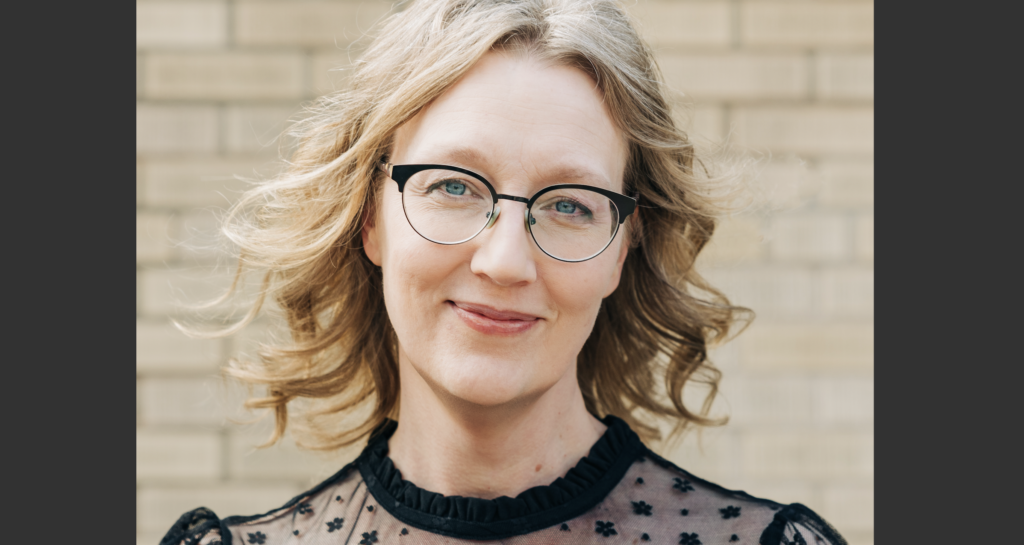
In her newest historical nonfiction bestseller, Obstinate Daughters, author Denise Kiernan brings audiences a look into the unsung heroes of the American Revolution: women. Switching between important female figures of the American Revolution and a mini travel log, Obstinate Daughters tells the story of and highlights writers, rebels, and obstinate women who shaped an era of revolution in the United States.
Ahead of Kiernan’s event on July 13 with Rainy Day Books at Unity Temple, we sat down with The Girls of Atomic City and The Last Castle author to speak with her about Obstinate Daughters and the inspiration behind this captivating novel.
The Pitch: Obstinate Daughters is coming out at kind of the perfect time, with the 250th anniversary of the United States of America. Was this timing intentional?
Denise Kiernan: No, it wasn’t. That was discussed at one point, but the book was going to come out last year. I initially didn’t want it to be in the middle of what I imagined would be a very busy anniversary season, but in the course of writing my whole schedule got turned upside down. That said, it’s turned out to be fantastic that it came out during the anniversary. I think it’s a necessary viewpoint during the anniversary.
This is obviously not your first historical nonfiction book. What did your writing process look like for Obstinate Daughters, as well as research-wise?
I went to a lot of archives, because some things are scanned, but most archival documents in the United States are not on the interweb. Not everything is on the internet. I did have to physically travel to some places and do on-site research. There is a 21st-century thread, these intermittent chapters where I go physically to some of the sites mentioned in the book and examine the legacy, or lack thereof, of some of the individuals mentioned in Obstinate Daughters.
Then, a lot of it was very old books, letters, and diaries, so all of that was a combination of items available online or at a library.
I really enjoyed the behind-the-scenes aspect of the book. Was this your first time including a travel log in one of your novels?
Usually, my introductions and my epilogues are almost always some version of that, and for The Girls of Atomic City and The Last Castle, especially, I would hear from book groups how much they liked those parts. They liked the books, but it surprised them that the introduction and epilogue were that labor-intensive because a lot of times introductions and epilogues are more “here’s how I researched the book instead of the author wandering around talking about inspiration.” It’s also an aspect of writing that I enjoy, so I haven’t done it to this extent.

Courtesy Penguin Random House
Naturally, I really appreciate the diverse stories of the women featured in Obstinate Daughters, from a British Loyalist Spy to a Cherokee leader to the first African-American author of a published book of poetry. Did you know of these women before writing, or did you find them along the way?
Some of them I had heard of; Phyllis Wheatley is fairly well known. I wanted her narrative to stretch out over a variety of chapters, but as I started to look into her, for example, the correspondence between her and George Washington was interesting because I had not seen that before. With stories like that, you’re starting off with a somewhat known entity, but you usually only read a snippet about Phyllis, so you just dig deeper.
Sometimes you just stumble on people. When I was looking into Elizabeth Freeman, somebody told me you should look into this research they are doing for this database they are trying to create over at Harvard, and that led me to Belinda Sutton. She was not somebody whom I had planned on having in the book, so sometimes you kind of come across someone as you are working on someone else.
Lorenda Holmes, whom I love, was mentioned in passing in a story about somebody else at the New York Historical Society or Gilder Lehrman, one of those archives. I was doing research and reading a short story, and saw her name, so then I ended up going to the online National Archives of the United Kingdom. It referenced some documents, but they were not available, so I wrote the archivist over at the UK and asked how much documentation there was, and they said there was a 16-page account that she wrote. Holmes wrote a 16-page-longhand description of everything she did while living in the colonies, and it was in incredible detail. The archivist scanned it all and sent it to me. It was a huge find.
The Girls of Atomic City and The Last Castle are a little more recent, historically speaking. What was the inspiration behind choosing the American Revolution?
My love for this time period does go back to the bicentennial, but I was an eight-year-old kid; I didn’t know I’d be doing what I am doing for a living. Years ago, my husband and I co-wrote some books on the signers of the Declaration of Independence and the Constitution. While I was researching some significant figures in the writing of the Constitution, I became obsessed with Eliza Pinckney, who was a botanist considered responsible for the resurgence of the indigo market in the colonies. I put her in my idea file, and over the years, kept my brain open to other women from that time period and what they might have been up to, and thinking what could possibly be the story here.
In a way, similar to The Girls of Atomic City, because that book tells the story of the Manhattan Project, which has been told many times but from a completely different perspective. For the American Revolution, it became clear once I started amassing enough stories that I wanted to discuss the American Revolution from the point of view and through the experience of the often marginalized voices.
One of my favorite parts of the book is in the beginning, where you talk about the Cherokee names. I think that starting the book off with stories of the Native Peoples and going into the Paleo-Indian era, it was the perfect way to introduce the book.
I start with the Cherokee and I end with the Cherokee. It’s hard to overemphasize the importance of Native Americans in the American Revolution. The British wanted alliances with them, the Americans alliances with them, and they were going through the constant erosion of their land, shifting borders, and the breaking of treaties. This was not the first conflict they had seen on this continent; they had been here close to 10,000 years. The role of Native Americans in the American Revolution, I personally learned so much when I was doing that aspect of the research.
I was reading some of George Washington’s letters, and the night before the crossing of the Delaware, which was, of course, one of the most significant events in his life, Washington was writing a letter to the Passamaquoddy Indians. That’s where his head was at. I had never even heard the word Passamaquoddy when I was a kid, and that is because that aspect of the Revolution was just not highlighted.
The emphasis on Native Americans and African Americans, not just white women, kind of going back to pointing this out during the 250th anniversary; it’s become a kind of protest to even mention all of this.
Yeah exactly. I was talking to my agent about what I was going to do next, and this was such a heavy book. I said I might just go finish this novel I started for fun, but then I thought about how writing American history from the point of view of women, enslaved people, and Indigenous people feels like an act of protest or defiance. It shouldn’t, but it feels like a moral imperative for the time being.

Courtesy Beowulf Sheehan
Talking about the historical figures, it’s not like a made-up character who you can assume the reasons they did things. How do you go about working with people whose motives might not be 100% clear?
I only go with what I have. In some forms of nonfiction, maybe for academic writers because they have to form a thesis, but I am just sharing what I found. I know that Esther de Berdt Reed was wondering why she felt like people in London had abandoned the Americans, but I know that because she wrote a letter that says, “where sleep our friends in England”. I don’t talk about what Esther thinks based on what I think she might have thought; I just quote the letter. My journalism background plays a huge part in what I do. I consider all of these to essentially be a bunch of large magazine pieces strung together.
I love the amount of literary female figures in this book, and as a female author yourself, was this part of the book you very conscious of while writing?
I was inspired by how women, especially in some of these writing circles, how they supported the writing of other women. I love that there were so many newspaper publishers and writers, and there were women writing satirical plays and accounts, and stating their opinions. I do think about whose voices we are amplifying today, whose thoughts, feelings, and writings are we making sure are preserved for somebody 200 years from now who wants to write about what was going on in 2026.
Why is it so important for you to highlight the unsung heroes, these women featured in Obstinate Daughters?
If you’re not talking about these experiences and incorporating these voices, you’re leaving out half the population. It’s not a complete way to preserve history, to just tell it from the point of view of the people in charge and the people in power, who more often than not were white men of a certain economic status.
I also find that including these voices allows more people to see themselves in history. These kinds of stories are more inspirational. Looking at what these individuals accomplished, despite the fact that society gave them virtually no voice. What they did to overcome that, to me, is a lot more inspirational.
If you would like to stay updated on the amazing writing that Denise Kiernan does, her newsletter, Denise Is Curious, comes out bi-monthly.