Nelson-Atkins hosts “Timeless Mucha” with art that inspired rock album covers, Marvel comics

Alphonse Mucha, Zodiac, 1896. Colored Lithograph. // Photo from the Collection of the Mucha Trust. © 2025 Mucha Trust.
What do Marvel comic creators and rock album designers have in common in terms of artistic muses? Czech artist Alphonse Mucha. Despite being dead for over a century, Mucha’s lines have inspired the work of countless recent artists across a surprising variety of artforms.
Mucha’s continued influence is why he’s still exhibited today, and a special show of his is on display at the Nelson-Atkins Museum of Art. Senior curator of European arts Aimee Marcereau DeGalan says this show is unlike a normal exhibit, which would simply show the works of the artist: “Timeless Mucha” highlights the ongoing impact of Mucha’s work on modern art.

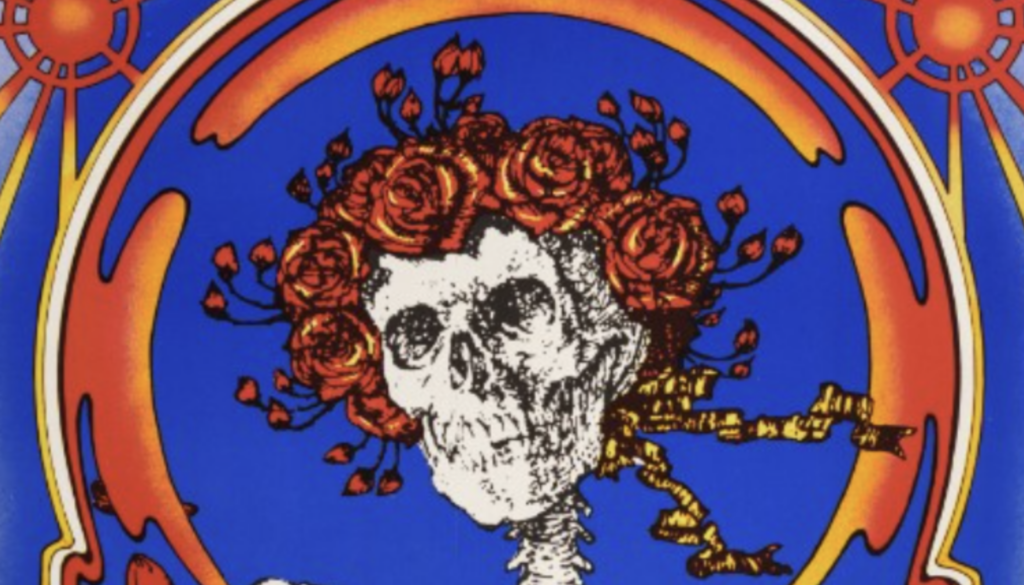
Alton Kelley. Grateful Dead, Grateful Dead Live: Skull and Roses, 1971. Cardboard LP sleeve cover. // Photo from the Collection of the Mucha Trust, courtesy of Warner Bros. Records.
Mucha’s style gained traction again within the midst of the 1960s counterculture movement—as his son Jerry advocated for his work to be exhibited in a time of push for freedom and liberty.
These themes were big focuses in Mucha’s work, specifically through his cycle The Slav Epic, 20 works on the plight of the Slavic people as they overcame oppression.
“Commercial galleries staged huge exhibitions of Mucha’s work, because the timing was right,” DeGalan says. “These long-haired women with flowy lines connected with hippie culture and freedom, this ‘60s counterculture looked like a lot of those things in Mucha’s work, and so when people saw these things, it caught on like wildfire.”
This led to the massive rediscovery of Mucha’s art style, which popular rock album cover designers began to utilize.

Joe Quesada. Ninjak, vol. 1, no. 3, published by Valiant Comics, April 1994, Comic book. //Photo from the Collection of the Mucha Trust.
“Covers like the Grateful Dead and some Pink Floyd, artists like Stanley Mouse were tapping into the line of Mucha,” DeGalan says. “That meandering, serpentine, sinuous line, the long whiplash curves in the hair, but through a lens of psychedelic color, they reinterpreted Mucha for the ‘60s.”
Decades later, Mucha again rose to prominence in a different field of art—with comic artists and Japanese manga artists pulling inspiration from his work.
“Joe Quesada, who was formerly head of Marvel Comics, and a lot of Japanese artists, as Mucha’s work circulated in Japan, looked at and were influenced by Mucha’s work,” DeGalan says. “Quesada even came to speak near the beginning of the Timeless Mucha exhibit to share this connection.”

Alphonse Mucha, The Arts: Dance, 1898. Color lithograph. // Photo from the Collection of the Mucha Trust. © 2025 Mucha Trust.
The exhibit presents more than 100 works from the Mucha Trust Foundation, showing his rise in prominence then continued impact on art, ending with The Slav Epic.
“Timeless Mucha” will run until August 30 at the Nelson-Atkins Museum of Art. You can buy tickets online or at the museum, but the exhibit is free for Nelson members.