Marie Benedict & Victoria Christopher Murray’s historical fiction shines again in A Pair of Aces
Author duo to appear at Unity Temple on the Plaza this Friday.

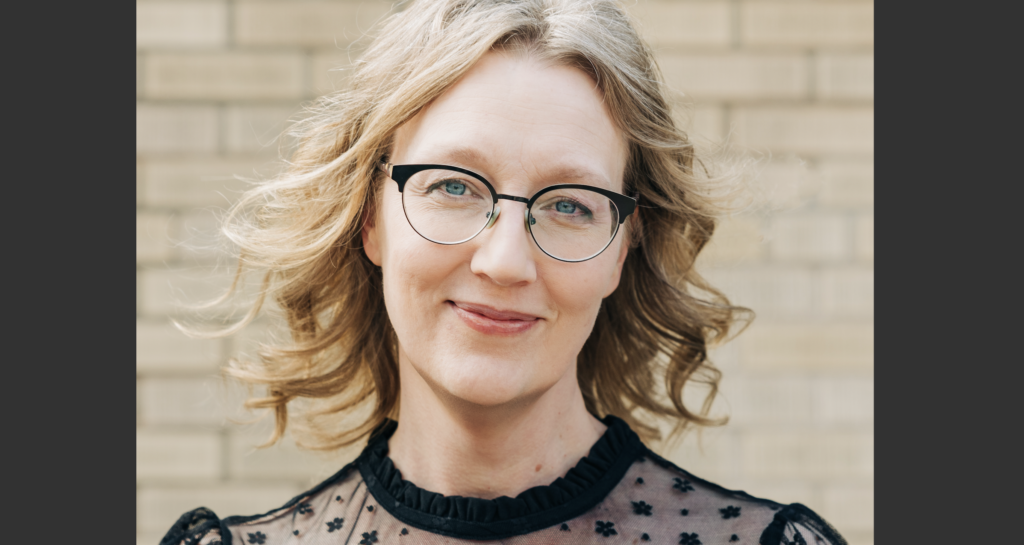
Marie Benedict and Victoria Christopher Murray. // photo courtesy Berkley
Marie Benedict and Victoria Christopher Murray’s A Pair of Aces is out now from Berkley, and the authors will be at Unity Temple on the Plaza for a Rainy Day Books event on Friday, June 26.
Beginning with The Personal Librarian in 2021, the writing duo of Marie Benedict and Victoria Christopher Murray has become a powerhouse in telling the stories of hidden figures in American history through their historical fiction. They followed up their novel about J. P. Morgan’s personal librarian, Belle da Costa Greene, with The First Ladies in 2023, tackling the partnership between First Lady Eleanor Roosevelt and civil rights activist Mary McLeod Bethune.
Now, Benedict and Murray return with A Pair of Aces, which highlights “the untold story of Eunice Carter—the first Black female prosecutor in Manhattan—and the crucial role she played in bringing down mob boss Lucky Luciano.” The novel intertwines Carter’s story with that of famed New York City madam Polly Adler in an imagined tale of two women working for justice.
Much as The Personal Librarian shot to fame when it was chosen for Good Morning America‘s book club, so has A Pair of Aces gained recognition when it was selected by actress Reese Witherspoon for her Reese’s Book Club ahead of its release earlier this month. Plus, Benedict and Murray will be bringing their book tour to the Unity Temple on the Plaza this Friday, June 26, in partnership with Rainy Day Books.
We were beyond excited to hop on Zoom with Marie Benedict and Victoria Christopher Murray to discuss their partnership, A Pair of Aces, and what book tours bring to them as authors.
The Pitch: I was talking with Victoria before you got on, and she referred to you as her writing soulmate. This began because you reached out to her, correct?
Marie Benedict: That’s true. Yes, I did. A Pair of Aces is our third collaboration, and many years ago– decades ago–I actually came across this incredible woman, Belle da Costa Greene, who was J.P. Morgan’s private librarian.
As I was transitioning from being a lawyer to being a writer, she kept inhabiting my consciousness. She was just somebody I wanted to write about. But it wasn’t until over a decade later that it was confirmed that she was a Black woman passing as white. And I knew that I wanted to have a Black woman tell Belle’s story too, because she deserved it, right?
She’d had to hide in the shadows for so long. Fortunately, Victoria was willing to join me on this journey, and here we are three books later, which is “pinch me.”
 This is a Big Deal release, not least of all because it’s the third book that the two of you have written together after two very successful previous ones, but it’s part of Reese Witherspoon’s book club. This is your second book club pick on, on this level. How important is that to you as writers or perhaps maybe to getting your book in front of readers?
Victoria Christopher Murray: Yeah, I think it’s a big deal. We still can’t believe it because we couldn’t believe it when The Personal Librarian was chosen for Good Morning America. That was like six months of just pinching ourselves and pinching each other. And then with this, we got a text from our editor saying, “Today, 2:00, on a call.”
It was that kind of thing. There was no preparation. Marie kept texting me, saying, “What do you think it is?” I was like, “It’s not a book club.” That was the first thing we said because no one gets to be chosen once, let alone twice, with three books. So I, we kept saying, “It’s not a book club. I don’t know what it is.”
It is a big deal because it gets your book in front of more people. It gives you a chance and we are over the moon, shocked, can’t believe it, and so grateful.
Marie: Oh my gosh. And everything ditto that Victoria said. What’s so wonderful about it is it–for us, who feel so strongly about writing these books, as a way to introduce people to the idea that we can come together, we can work together, we can effectuate great change, we can talk about difficult racial issues in a very warm and welcoming way.
The fact that two national book clubs have embraced that message and embraced that idea, and then given us more of a platform to bring readers into that experience is, it’s so wonderful reaching all these people, and then going out and meeting readers who’ve read these books and how it’s resonated with them is just, it’s amazing.
In telling the story of Eunice Carter I imagine that–based on your afterwords, there was a surprising amount of material available for her. But then you have Polly Adler. Most of the information available on her comes from her autobiography, which notably glosses over some things. What was some of the research that you did in order to fill in these gaps and make their relationship believable?
Marie: I will say, too, with Polly that there was a wonderful biography by Debby Applegate [Madam: The Biography of Polly Adler, Icon of the Jazz Age], as well. But that said, we really do try to do our own research. When you’re fortunate enough to have a phenomenal biography, of course, that’s a gift and in the case of Eunice Carter, her biography [Invisible: The Forgotten Story of the Black Woman Lawyer Who Took Down America’s Most Powerful Mobster] was a unique document ’cause it was written by her grandson [Stephen L. Carter], who is a very well-known author of fiction, and an esteemed Yale law professor.
So that book, in a way, was an unusual mix of biography and original source material because he could draw on family experiences, personal interactions, and oral history. It operated very uniquely. Polly? I am always thrilled when you’ve got an autobiography. In some ways there’s no better original source material, but my goodness, you do have to approach it with a grain of salt because that’s them telling their own story through the lens that they want other people to see it, right? How they wanna be perceived and viewed.
What I will say about Polly’s autobiography–it has a wealth of information. It became a really critical, unique immigration narrative and one of the only female-focused insights into the underworld in the 1930s. We have a lot of that from the male perspective, but it gave us her voice. Even though she had a ghost writer, you could hear her voice in that book, and that is a gift that keeps giving, right? That’s something that is so helpful. Of course, she does say in the autobiography that she knew nothing about this mob infiltration of prostitution and, which come on, like–
Victoria: Yeah, exactly. She wanted to stay alive. That was the smart thing to say.
Marie: The mob was still very much a thing when that book came out, when she wrote it, absolutely. And that’s the thing with Polly–she gave up a lot, but there was a lot of things she had to hold close. Eunice? Yeah, there’s an amazing biography of her but there’s no real record of how she felt about what went on in the trial. Even in the documentation that her grandson relied upon in the biography, I don’t remember seeing a wealth of letters talking about how it felt to be marginalized in the trial. And that’s really where the fiction comes in. We are inspired by real women, but we write fictional characters.
Is that the challenge and maybe part of the reason you’re talking to folks like me? I feel like some people get very involved in the book that they’re reading and want the characters to be real, and then when the character is based on a real person, that can cause issues.
Victoria: It’s interesting. I’ve seen several comments about this book, and somebody wrote to me personally and said that the book was so well-written that when they got to the notes, they were surprised that Polly and Eunice didn’t know each other. They said, “But since we don’t know the truth,” they believe this is exactly the way it happened. Readers, we have found, don’t mind taking this journey with us.
Marie: Yeah. I think part of the way in which readers are drawn in and–like Victoria said, they’re along for the ride–is that we do really try to hew as close to the historical record as we can, whether it’s a detail about a woman’s life, whether it’s the time in which she lives, the apartments, the incredible historical apartment building that Eunice lived in, the brothel that Polly created.
You really try and keep that setting and time period alive and yet very historically accurate. Keeping all that stuff as real and as close to the record as you can while filling in what you don’t know with fiction, I think, helps the readers come along with you. Would you say that’s right?
Victoria: Yeah. I say that even the fiction is based on our research. We know the real women by reading the biographies, by reading the autobiographies. Of course, we don’t know them personally, but as close as we can get to them because we want to honor them. Even in their dialogue, I wouldn’t want to put anything in there that I don’t think they would’ve said. I don’t want to do anything to change their character.
The two of you create such a vibrant sense of place in this book. I can feel the temperature changes. I can smell the environment. When Polly is constantly chain-smoking, it’s like I know what that room with the smoke and perfume is like. That’s such an important part of dropping the reader into the story. What are you looking at to really get that sense of time and place?
Victoria: The very first thing my first editor told me 30 years ago was, “Put the reader there.” I teach writing on Substack and I always say that setting is the sixth man off the bench. It may not be the main character, but it is one of the most important characters. I just think that’s just something we learn in the craft of writing: to use all five senses to make sure that the reader’s there.
Marie: Yeah, when you’re trying to put ourselves as the woman into the scene, we write in first person to make it more immediate, to really bring the reader there. You have to ask yourself, “What would she be seeing? What would she be smelling? What would she be hearing? What would be going through her mind at that time?”
Not just the setting itself, but the setting on a more macro scale. What’s going on culturally, politically? What sports games are going on? What shows are on Broadway? What is really part of the thrum of the city at that moment, and making the character enter that stream as well. It’s the immediate moment–what their five senses can tell them–and it’s also what’s going on around them, not just in that room, because all of those things are what impact the character and impact the story.
You’re going on a book tour for this, and you’re coming to Kansas City. What does an appearance such as the one you’re making for Rainy Day Books allow you as authors to do that you might not be able to otherwise?
Marie: Oh, geez. First of all, I wanna say shout-out to Rainy Day Books. This is not our first rodeo at Rainy Day Books, and super excited to be back. You have such a great community of readers in your city and I think that’s what’s wonderful about doing events is getting into that community. We’re lucky we have each other, but usually when you’re writing by yourself.
You’re hoping your words and your story and your characters are gonna land, but you don’t always know until you meet them and you hear what they have to say, and see the way in which your book impacts, and sometimes it can be ways you don’t anticipate.
Certainly, with our own books, we’ve seen so many readers talk about how that has made them want to engage in hard conversations. We were just at an event in New York with Reese’s Book Club on Wednesday night, and some sweet young woman came up to me and said she was reading some other book of mine, Her Hidden Genius. She was about to get into tears, and she was talking–[the book] was about a woman scientist and how reading that book when she was having a really tough time in her master’s program caused her to persevere, and now she’s getting her PhD.
Victoria: I was crying. It wasn’t my book.
Marie: It was hard. She couldn’t keep herself together. But that’s part of it. You don’t know the ripple effect of your words until you meet people and they tell you, right? For me, that’s the magic of those events. I don’t know. Do you feel the same, Victoria?
Victoria: I do, because one of the things that I learned very early on in my career–I thought I was just writing words on pages and telling a story, and everybody would receive it the way I wrote it, and that’s not what happens.
That’s not. I always say that God meets the people in between the lines, because people bring their own experiences, everything that’s going on in their life at the time, to their reading experience, and you don’t know who you will touch, even with a fiction book. I just love going out and meeting people because they are the reason we write these stories so that we can tell these stories about these women, and they are the reason why we’re able to still write these stories. Going out is our love trip to say, “Thank you.”
Marie Benedict and Victoria Christopher Murray’s A Pair of Aces is out now from Berkley, and the authors will be at Unity Temple on the Plaza for a Rainy Day Books event on Friday, June 26.