Missouri lawmakers return for final week with education bills, other items unresolved
The session has run relatively smoothly despite hangover resentments from partisan measures passed in 2025. One reason, a top Republican said, is because there’s no faction ‘just ready to burn the whole place down’ as in the recent past.

Missouri lawmakers return Monday to the Capitol Building to begin their final week of this year’s legislative session. (Rudi Keller/Missouri Independent)
After years of budget chaos, Republican infighting and historically low productivity, Missouri lawmakers are entering the final week of session with something that has often been missing from the Capitol: a sense of normalcy.
State Sen. Stephen Webber, a Columbia Democrat who served in the Missouri House from 2009 to 2017, said this year’s session is like many he remembers from that time.
“I’m not sure if it’s normal, but I think this is more of a typical year,” Webber said. “This has been a much smoother year.”
One example of the more regular pace was passage of the $50.7 billion state budget last Wednesday, two days before the constitutional deadline. In the past two years, dramatic fights, either between the House and Senate, or factional divisions among Republicans in the Senate, made writing a budget chaotic.
Another example is the sheer number of bills already passed. The 33 measures making statutory or constitutional changes is already more than were passed in 2024, which saw the lowest number of bills in recent memory at 28, and they are quickly approaching the number passed last year, 49.
The list includes Gov. Mike Kehoe’s top priority, a constitutional amendment asking voters to grant lawmakers the power to eliminate the income tax by expanding the list of goods and services subject to sales tax.

State Reps. Darin Chappell and Alex Riley confer on the Missouri House floor in March 2026 (Tim Bommel/Missouri House Communications)
“That’s the first time in my six years that I’ve been here that you haven’t had some faction or another that’s just ready to burn the whole place down by the time we get to the last week,” said House Majority Leader Alex Riley, a Springfield Republican. “There’s plenty of grumpiness around, but I don’t think that there’s just this group that’s hell-bent on burning everything down the last week of session.”
Like Webber, Riley said the session has had a different, and better, pace.
“One of the things that I’m most proud of is the fact that we’ve had a good reset this year with this building working the way it’s supposed to,” said Riley, who is seeking his fourth and final two-year term in the House in November.
The gavel goes down in both chambers by 6 p.m. Friday, ending the session. Here’s a look at what’s done, what’s dead and what’s might be done in the week ahead:
What’s done
The list of passed bills includes a ban on intoxicating hemp to take effect at the same time as a federal prohibition and a law clarifying that judges can finalize a divorce while a woman is pregnant.
Passage of the divorce law came a year after state Rep. Cecelie Williams, a Republican from Dittmer, shared her harrowing story of being denied a divorce while pregnant and experiencing domestic violence. Williams’ bill, co-sponsored by state Rep. Raychel Proudie, a Democrat from Ferguson and a domestic violence survivor, was the first non-budget bill to pass out of both chambers this year.
Lawmakers capped years of discontent with the Missouri State High School Athletics Association by creating a board to hear eligibility appeals. Another bill that has already been signed by Kehoe directs schools to develop policies to combat antisemitism.

State Rep. Cecelie Williams, a Republican from Dittmer, testifies before a House committee during the 2025 legislative session. (Tim Bommel/Missouri House Communications)
And in April Kehoe signed legislation aimed at cracking down on sex trafficking and providing training to help law enforcement and first responders identify and prevent the crime. And a measure banning the nonsensual distribution of intimate digital depictions passed the General Assembly as part of a wide-ranging public safety bill.
The bill also allows lifetime protection orders for victims of some felonies, prohibits cyberstalking and creates procedures for involuntary outpatient treatment of people with severe mental illnesses.
What’s dead
With the old Capitol saying in mind — “If I die, I want it to be on the Senate floor, because nothing is ever really dead there” — some of this year’s most closely watched proposals are entering the final week somewhere between dead and barely breathing.
One of the more dramatic deaths of a bill this year came last Wednesday when the Senate Select Committee on Gaming voted unanimously against allowing video lottery terminals in convenience stores and other locations.
The heavily lobbied bill passed the House narrowly and opposition from Senate President Pro Tem Cindy O’Laughlin, a Shelbina Republican, was key to its demise. The vote drew a response Thursday from state Sen. Jason Bean, a Republican from Holcomb, who said the machines would bring essential revenue to the state and support local businesses hosting them.
The bill could be revived in the final week but a path to passage would be narrow.
Efforts to extend an August 2027 expiration date for restrictions on gender-affirming care are over as lawmakers have appeared to abandon a proposal to permanently bar transgender minors from accessing cross-sex hormones and puberty blockers.
The House approved a bill to remove the sunset in February, but it has stalled in the Senate for a month as a Republican-led campaign to ban abortion emphasizes that its proposed constitutional amendment would also block children from gender-affirming medication.
In 2023, lawmakers passed restrictions on gender-affirming care alongside a law barring transgender athletes from competing according to their gender identity with an identical sunset. Legislation to remove this expiration has a narrow opportunity to pass this year in a bill that also includes provisions banning all-gender restrooms and sleeping quarters.
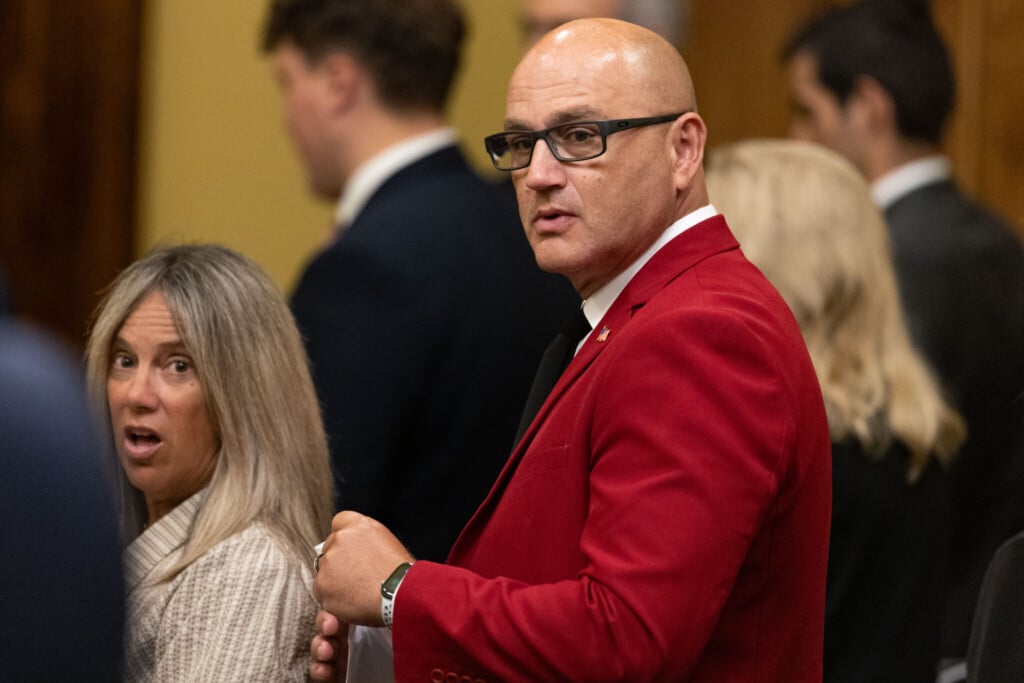
An attempt to move Cole County to Missouri’s Eastern District Court of Appeals was quick to pass out of a Senate committee early in session, but hasn’t been able to advance. Republican state Rep. Brian Seitz of Branson told The Independent his bill to give survivors of childhood sexual abuse longer to file civil claims is likely to die for the fourth year in a row.
Senate Democrats vowed to oppose a provision added to Seitz’s bill that would reduce the statute of limitations for personal injury and uninsured motorist claims, accusing insurance lobbyists of “holding these children hostage” by insisting on the addition.
Two of Kehoe’s education priorities enumerated in his State of the State speech also failed to find traction.
A bill Kehoe labeled “the next step in school choice,” allowing families to enroll K-12 students in schools outside their zip code, has not had substantial debate. This breaks the House’s five-year pattern of narrowly passing the bill.
Lawmakers also failed to debate legislation seeking to expand the state’s private school voucher program in either chamber.
Legislation to crackdown on kratom products has seen no movement and lawmakers stalled a proposal to allow driverless cars in some locations.
What’s to be done
The House has sent 197 bills to the Senate and received 69, which means that after subtracting 52 items that have passed — including appropriations bills and resolutions — there are 214 bills that could theoretically pass by Friday.
One element certain to be present is loading amendments on bills in a last-ditch effort to get a stalled idea passed on one approaching a final vote.
During debate on Thursday, Republican state Sen. Joe Nicola of Grain Valley asked Republican state Sen. Curtis Trent of Republic for an explanation of the changes made to one bill in the House.
Trent’s 37-page bill passed in the Senate expanded to 133 pages plus several additional pages of amendments as it passed through the House.

State Sen. Stephen Webber, a Columbia Democrat, speaks at a mid-session press conference after the Senate adjourned for spring break March 1 (Annelise Hanshaw/Missouri Independent)
Trent said the provisions added had passed on other bills, that the House revisions had been on Nicola’s desk all week and he should know that.
Nicola, who never served in the House and is in his second session as a state Senator, said he was overwhelmed by the avalanche of amendments on Trent’s, and other, bills.
“I understand I have it,” Nicola said. “But it’s not only this bill, it’s countless other bills you know, that we’re looking at that are all loaded up in these big old things at the end.”
One of the major areas where no bill has passed is education. Webber wants to pass a bill that would repeal the law passed in 2024 allowing a charter school in his district in Boone County.
And Riley said passing a significant education bill is his top goal for the final week.
“That’s one of the main areas that we haven’t really touched on anything just yet,” Riley said.
A handful of education proposals are lingering in the session’s final days, like a literacy bill that would require students struggling to read to repeat the third grade and legislation to expand screenings to identify gifted students.
Lawmakers are also still negotiating Kehoe’s request to create a system grading public schools on an “A” through “F” scale based largely on standardized test scores.
The House and Senate have passed differing versions of the legislation, disagreeing on pieces like a performance incentive program that would give schools additional funding when students get top standardized test scores or show strong growth from previous years’ assessments.
Bills with a major change to property tax levies by requiring separate tax rates for residential, commercial, personal, agricultural and infrastructure properties have passed both chambers. So far, however, neither chamber has taken up the other’s legislation for floor debate.
The change, known as siloing rates, would prevent tax burdens from shifting between property classes and provide relief when home values rise rapidly.
A bill that would establish the non-personhood of artificial intelligence, sponsored by Republican state Sen. Joe Nicola of Grain Valley, passed the Missouri Senate after weeks of talks between Nicola and White House officials to gain their approval.
Senators representing rural districts opposed the bill last month, pointing to President Donald Trump’s December executive order threatening to withhold rural broadband funding from states with “overly burdensome” AI policies.
The new version of the bill also requires operators of companion chatbots to report annually to the Missouri Department of Mental Health about cases of suicide or self-harm involving their products.
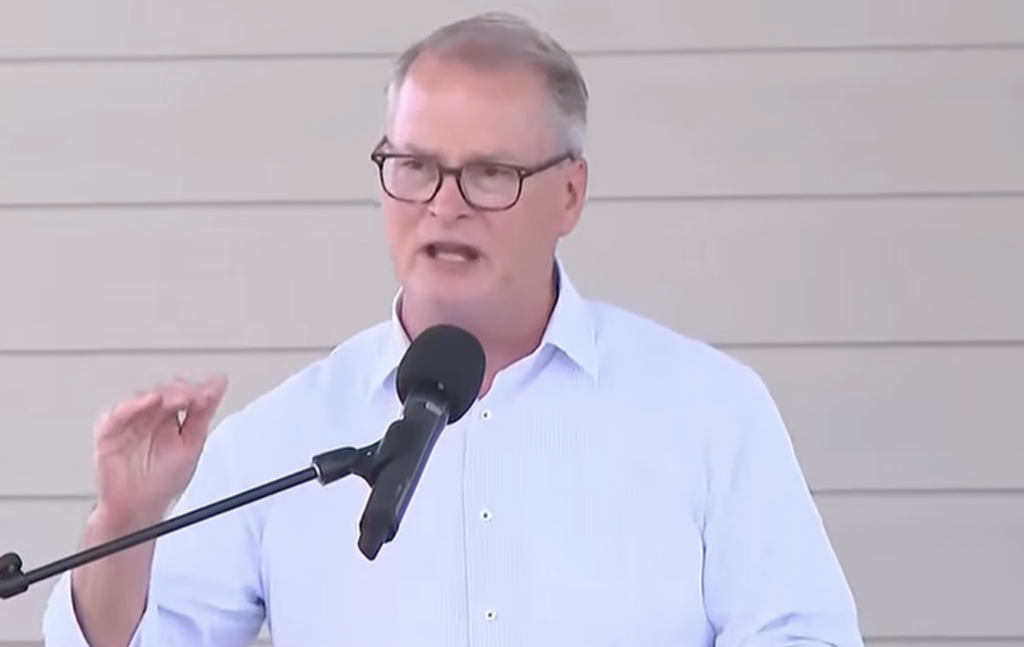
A plan by Republican state Rep. Darin Chappell of Rogersville to write Medicaid work requirements into the state Constitution was stripped of many of the prescriptive details that lobbyists for seniors, cancer patients and people with disabilities said would cause Missourians to needlessly lose health coverage.
Chappell said during House debate on the budget that the state will have to come to terms with the cost of Medicaid, describing the state and federal program as “the monster that will eat us.”
The Medicaid amendment is the top item on Webber’s list of bills he wants to defeat. The House-passed measure has cleared a Senate committee but has not been placed on a calendar for debate.
“I’m specifically watching over here for any attack on Medicaid,” he said.
Last year’s session ended with Democrats and Republicans at war because the majority used the previous question motion to shut off the Senate’s unlimited debate on two major bills.
At the time, Webber promised Republicans would feel some pain for those votes.
Republicans used the motion to shut off debate again in a September special session that gerrymandered the state’s congressional districts.
When the session began this year, Democrats forced lengthy debates on minor matters and held up consideration of Kehoe’s appointees until the last minute.
Democrats achieved their goals, Webber said, and then allowed the session to move at its regular pace.
“What we were looking for was a commitment to deliberation and to making sure that all Missourians had an opportunity to have their voice heard here in the Senate,” Webber said. “I think that, so far, this year has been a lot better than last year.”
Annelise Hanshaw, Anna Spoerre, Steph Quinn and Rebecca Rivas of The Independent contributed to this report.
Missouri Independent is part of States Newsroom, a nonprofit news network supported by grants and a coalition of donors as a 501c(3) public charity. Missouri Independent maintains editorial independence. Contact Editor Jason Hancock for questions: info@missouriindependent.com.