Swope Park’s Lakeside Nature Center celebrates a half-century of protecting KC’s wildlife
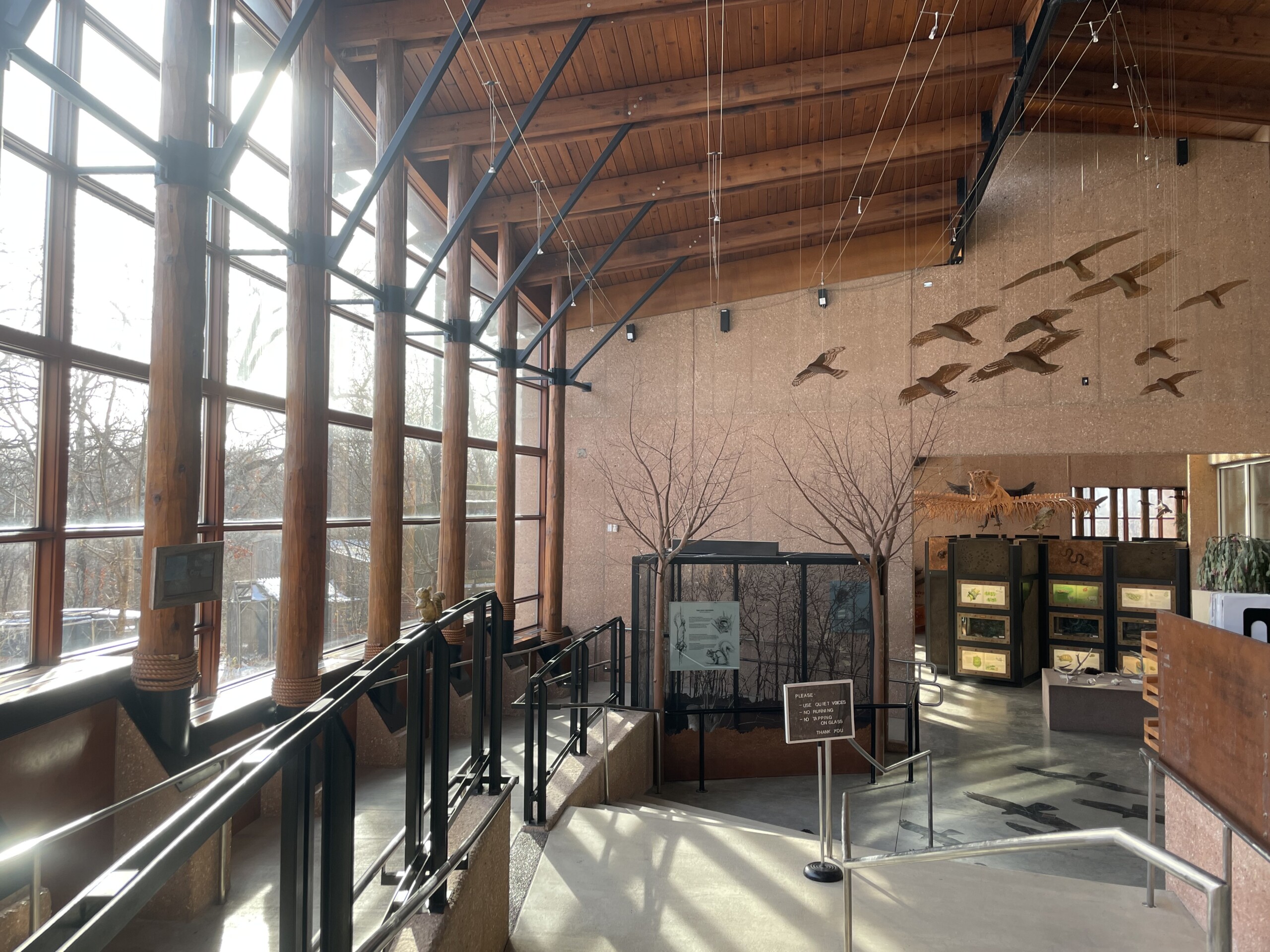
Lakeside Nature Center // photo by Cory Swieczkowski
“If we don’t have rehab facilities, then you don’t have education and awareness. Without education and awareness, how do you create compassion for people to care?” says Jacque Blessington, director at Lakeside Nature Center (LNC). She projects the team’s mission statement, trying to be heard over a noisy turkey vulture and crow behind her. Spreading knowledge begins with compassion for small things.
Since 1966, Lakeside Nature Center has been a Swope Park staple, helping KCMO residents understand, preserve, and restore native wildlife. Guided by a mission of education and compassion, the Center arms community members with knowledge to safeguard urban nature—a cause more vital now than ever.
This increased awareness is especially important as Kansas City faces new climate patterns.
Recently, the city experienced an ice storm followed by 70-degree temperatures within two weeks. While we adapt to the Anthropocene, it’s clear that armadillos have invaded, foxes and coyotes are becoming familiar neighbors, and animals are uncharacteristically having babies in winter months. It might seem bleak, but there’s no denying that humans have impacted wildlife habitats—including our backyards.
With spring here and Taganoxi doing its best to hold back the tornadoes, many people are likely to encounter abandoned or injured animals throughout the Missouri metro area. In these situations, the center is ready to help, providing step-by-step resources for animal care. Assisting wildlife requires following the right procedures—especially across state lines.
Before using services for injured animals, note that rehabilitation permits are restricted to the state where the animal resides: Lakeside can only take animals from Missouri; however, they partner with Operation Wildlife, which can assist on the Kansas side.
How do you assist animals you might find? The answer may be nuanced, but here’s where to begin:
What to do if you find an injured or abandoned animal?
The age-old response: it depends. Unfortunately, every species differs in its usual instincts, including how long offspring take to wean from their mothers and the typical hunting schedule of parents. This means that every guide on how to care for offspring is extremely customized to the specific animal. Luckily, Lakeside’s website features dozens of guides to assist with whatever you find.
First, observe the animal’s behavior. Is it acting normally for its species? In many cases, temporary separation from parents is natural.
Blessington notes that the recent “…warm spells in December, even though it’s not natural this time of year,” contribute to early newborns. This shift is changing reproductive cycles, with reports of baby foxes and squirrels being born much earlier in winter than expected.
A free ‘reunion box’ from Lakeside Nature Center offers temporary shelter for the animal. Always check the center’s website for specific resources. If needed, call for direct support and guidance.

owlets when found in 2024 // courtesy of Lakeside Nature Center
For smaller mammals—such as squirrels, rabbits, and groundhogs—note important details: injury type, time alone, size, and temperament. Use this information to decide if transport is needed, following the guidance on Lakeside’s website.
For larger mammals—like bobcats, coyotes, or deer—do not attempt to transport yourself (hopefully this was obvious). Instead, use safe hazing techniques, such as loud noises or waving your arms, to encourage the animal to move out of residential areas gently. If the situation requires further intervention, the facility will provide you with support or link you with the appropriate authorities.
When identifying birds, use online resources or guides to identify the species, as care steps differ for raptors and songbirds. Minimal human contact is ideal, but if intervention is necessary, consider nesting box options or species-specific rehousing steps. If you determine that transport is necessary, contact Lakeside Nature Center to confirm. Prepare a box habitat and bring the animal in for evaluation. This ensures the animal receives expert care as soon as possible.
While not every animal survives, Lakeside Nature Center’s mission remains clear: nurturing empathy and education to give wildlife the best chance and to help residents coexist with nature.
Unlikely Teachers
Walking into Lakeside Nature Center, you’re greeted by award-winning architecture and interactive media, but it’s the small inhabitants that make the trip memorable. The animals throughout the center are rehabilitated Missouri natives who can’t return to the wild. Through LNC’s care, visitors see real-world examples of their species and learn how to live alongside them. Each resident tells a different story of survival.
The largest enclosure is home to Cody the coyote. A Missouri resident illegally raised him from an eyes-closed pup. In 2013, the dangers of raising a coyote in domestic conditions were realized, and he was confiscated and brought to LCN. Now, the center has provided stimulation and an enclosure that mimics wild habitats, but ultimately cannot release Cody into the wild due to his imprinting on humans.

Cody the coyote // courtesy of Lakeside Nature Center
While most animals have a similar story of either injuries or imprinting being the reason they must be rai sed at LNC. Take Cheetoh, the American Kestrel ambassador for the facility. Raised for a few days on a non-optimal diet of the puffy orange snack that gave her the name. Due to the serious concern that imprinting on humans could negatively alter their native behaviors, the best chance of survival was to provide education as an ambassador for LNC. You can spot her during events and during staff-led outreach.
Even the very common Missouri turkey vultures are given a second chance at life. The resident vulture, Sam, came to the staff in 2011, and an examination determined that a previously fractured humerus had healed incorrectly. Sam could not migrate each season and therefore lived with other vultures at the center to maintain the social hierarchy typical of his species in nature.
Each species now provides Kansas City residents with an up-close view of animals they normally wouldn’t get to see in an intimate setting. The personalities of the rehabilitated animals shine through; however, at the end of the day, the goal is to keep nature wild to give them the best chance at survival.
Lakeside Nature Center’s Rehabilitation Center
Once admitted, animals at LNC receive care aimed at recovery and release. The rehabilitation team, working with veterinarians, makes quick decisions to return animals to the wild. Whether it’s turtles in brumation, navigating avian flu in birds, or newborns needing care, the team is ready for any challenge.
Overall, LNC taps into a network of resources, including NWRA (National Wildlife Rehabilitator Association), IWRC (International Wildlife Rehabilitation Council), and the Minnesota Raptor Center, among others. Equipped with the knowledge, the staff has been dealing with overloads, but still manages to give them a fighting chance. “If you left the animal out, it wasn’t going to survive… You bring it in, and we might be able to fix it and get it back out. But if we can’t, humane euthanasia is an option which is better than the alternative,” Blessington remarks.
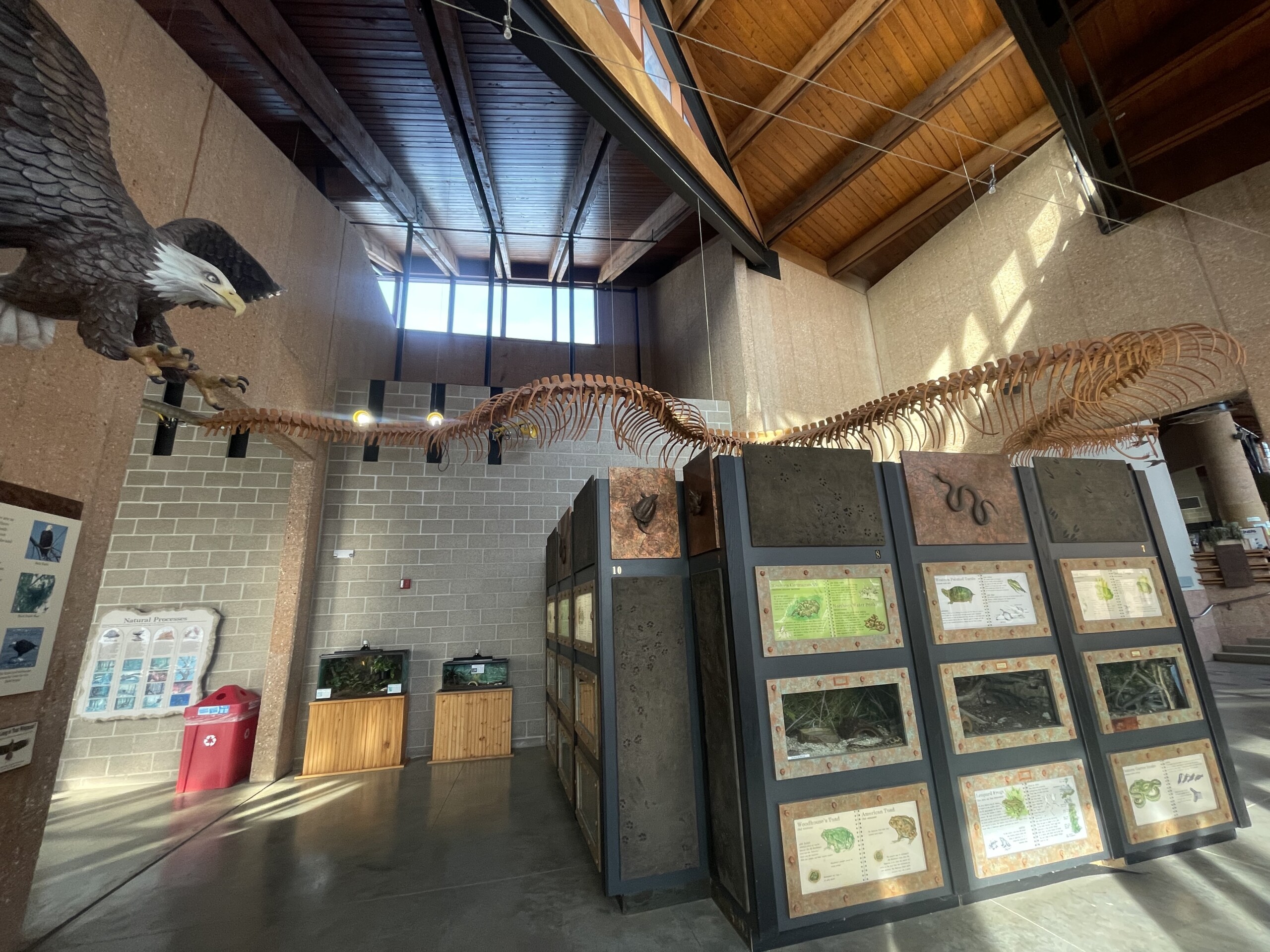
Lakeside Nature Center // photo by Cory Swieczkowski
As a branch of the KCMO Parks Department, Lakeside Nature Center relies on the support of the Friends of Lakeside Nature Center, since the Parks Department, as a service department rather than a revenue generator, cannot fund the hospital on its own. “If it weren’t for them, we wouldn’t have a hospital. They basically subsidize all the expenses to the hospital,” Blessington adds. This crucial public resource demands greater recognition and priority from city leadership.
Volunteers are the backbone of care. “We’re a little mash unit; we lack X-ray machines and key equipment, and don’t run blood tests,” Blessington observes. “We’d love to, but we just don’t have that capability.”
The center used to rely on over thirty home rehabbers to take specialized cases, but that number has dropped to eight. Blessington credits this to a lack of “time and money,” alongside the heavy emotional toll. The increasing challenges, both budgetary and staffing, have led the public institution to seek additional funding from the City. “It’s a hidden gem from our city officials as well,” Blessington points out. “Our city administrators need to know the value of this facility, and I don’t think they do… it comes down to resources we don’t get. And that’s within the department and within the city. I think it’s because there’s not enough understanding or appreciation for what we provide for the community.”
Lakeside Nature Center functions as a free resource for the community to connect with where they live and to lend a hand when possible. “I got into it because I wanted to be the voice for the animals, to make sure that they were having the optimal care,” Blessington reflects.
As we consider Kansas City’s unique ecosystem and the support it receives from people like Blessington and her team, we are reminded of the ongoing commitment required to live alongside Missouri’s changing wildlife.