Oscar-winning filmmaker and actor Ray McKinnon re-releases his films Randy and the Mob and The Accountant
Two notable films by the Deadwood actor and filmmaker, co-starring Walton Goggins, are getting the Blu-ray treatment

The Accountant
You probably know who Ray McKinnon is, even if you don’t know his name.

Randy & The Mob
McKinnon is a ubiquitous character actor who’s worked steadily since 1989 in everything from single-episode stints on NYPD Blue to memorable ensemble roles in Apollo 13 and O Brother, Where Art Thou? to beloved recurring characters on shows like Deadwood.
Like many of his fellow “that guys,” once you’ve seen McKinnon show up somewhere, you can’t stop noticing him.
McKinnon is also a decorated writer-director, with a Peabody award for his series Rectify, which ran on SundanceTV between 2013-16, and an Oscar for his 2001 short film The Accountant (no relation to the Ben Affleck movie). That film and a 2007 feature, Randy and the Mob, co-starred and were co-produced with McKinnon’s friend, fellow southerner and current Fallout star Walton Goggins under their production company Ginny Mule Pictures.
Randy and the Mob and The Accountant are now getting the Blu-ray treatment from Lightyear Entertainment, releasing April 7.
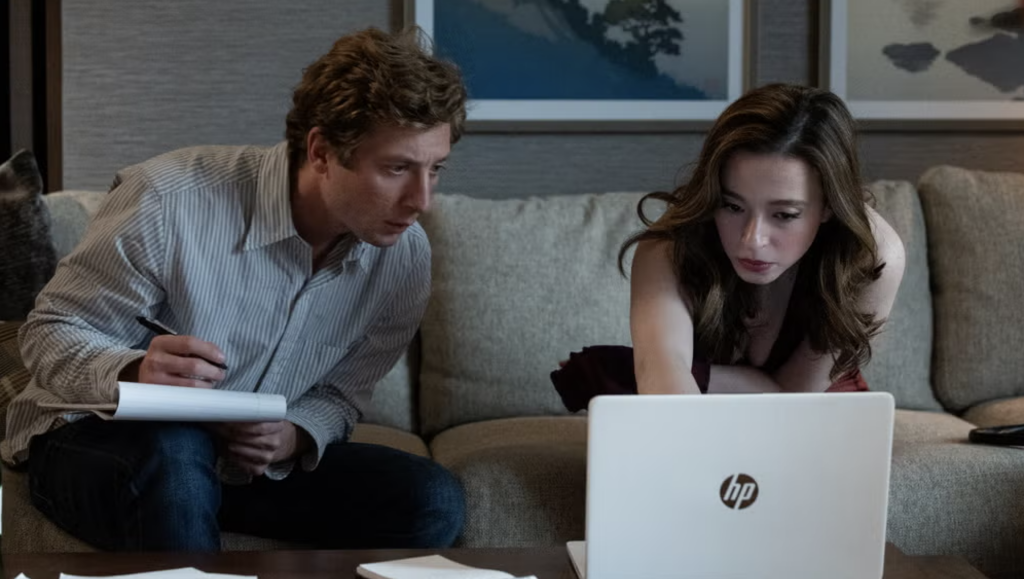
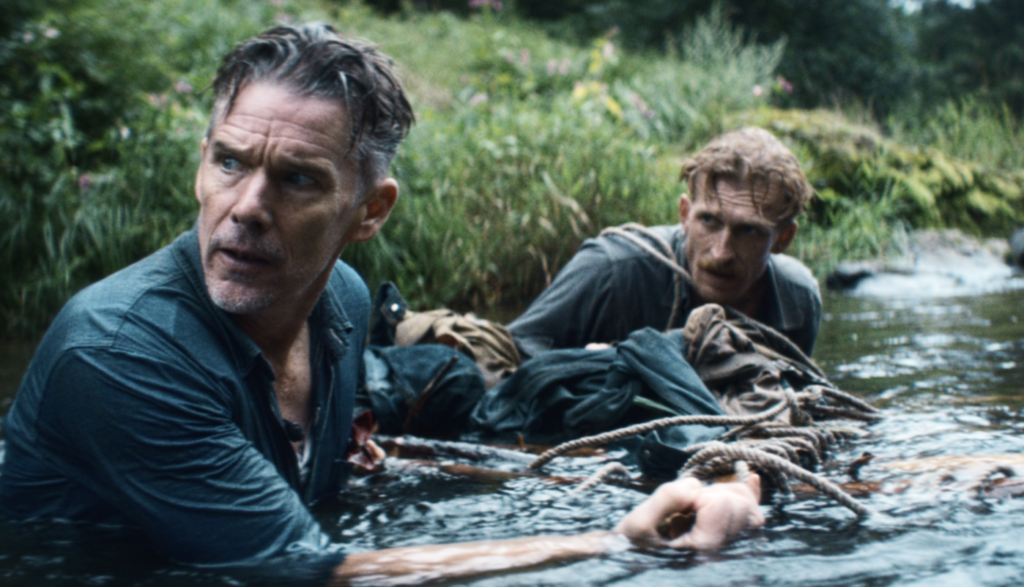
Both are surprising pleasures of 2000s independent cinema. The Accountant, about a pair of brothers (Goggins and Eddie King) who hire an unorthodox book-cooker (McKinnon) to save their family farm, is a darkly funny examination of the corporate exploitation of farmworkers and rural culture. You can feel the influence of Billy Bob Thornton’s Sling Blade and Tracy Letts’ Killer Joe running through it.
Randy and the Mob, conversely, is a sweet, big-hearted comedy about a small-town entrepreneur (McKinnon) whose troubles with the IRS and mob loan sharks result in a visit from an unlikely fixer (Goggins) who helps McKinnon’s Randy Pearson become solvent and reconnect with his wife (Lisa Blount) and estranged twin brother (McKinnon again). Released the same year as Adrienne Shelley’s Waitress and two years after the Amy Adams breakout indie Junebug, Randy and the Mob is a throwback to an earlier era of independent filmmaking—one primarily concerned with character, setting, and gentle humanism rather than high concept.
McKinnon spoke with The Pitch about the two restored films, his friendship with Goggins, and telling stories that invite people in.
The Pitch: How long have you and Walton Goggins known each other? How did your creative partnership start?
Ray McKinnon: Walton was 15, and I was 28, and we both got cast in a movie in Atlanta (the 1990 TV movie Murder in Mississippi). I was playing “Lyle’s Father.” My character didn’t even have a name. We were reading the screenplay with the producers and directors, and a kid (Goggins) came up to me and said “I’m Lyle, are you Lyle’s father?” He was 15 and just fearless, and really good. We played fellow crack dealers together on In the Heat of the Night. We kept up as friends.
When he came back into my life later in his late 20s, he’d grown up so much. He came over and had dinner with Lisa (Blount) and I. I said, “Buddy I wrote this short film,” and he asked “Can I be in it?” He was already a regular on The Shield by then, I didn’t think he’d want to do it. He was hands-on and a problem solver. That’s how it started. We saw a lot of things similarly.

Randy & The Mob
Randy and the Mob was released in 2007, and it really feels like a product of that era of independent filmmaking. It reminds me of other movies from that period, like Junebug or Waitress, where characters and a sense of place play a big role. What was the atmosphere like when you made that film? What’s changed in the years since?
I’d made a much darker film, Chrystal, kind of a hillbilly art film, right before making Randy and The Mob. After that movie, I wanted to make more of a fable, one that felt like an old-fashioned movie, and that was part of the tonal inspiration. Like, yes there are troubles, yes, there are gonna be trials, but it was gonna end up all right. There’s nothing wrong with making a movie like that, where people aren’t always full of tension that it could all go wrong.
I wanted to make films and tell stories about what my experience is where I’m from. I’d seen so many films about the south where it’s treated like the lowest common denominator. It feels like the only population group where it’s considered okay to have a two-dimensional character. Back then, I just wanted to reflect my world back to other people.
When Billy Bob Thornton made Sling Blade, I didn’t know where he was from at the time. I just remember watching it and thinking, “I don’t know who this guy is, but if he’s not southern…” That was truly an independent film. That era, it felt like you had a chance to get your film seen. People still went to the theaters in the ways that they went. I guess the thing that hasn’t changed is that people still want to make films and they’re gonna find a way to make a film no matter what. They’re gonna get seen at a festival, and some might break through. That’s still the same, and that’s the only part that matters.

The Accountant
Something I thought was so interesting about The Accountant was how, in 2001, it brought up all these ideas about the commodification and fetishization of southern culture and “country” living, right around the time that became a big patriotic aesthetic after 9-11. Where did you see that happening when you made the film? Do you still see it now?
(Laughs) What’s that place, Bucc-ee’s? I have a Tesla that I’ve had forever, and whenever I travel, I go to Bucc-ee’s because they have Tesla superchargers. It’s that ultra commodification of culture but also the capitalistic ideal of consumption.
If I made The Accountant these days, I think I’d talk more about late-stage capitalism and how it affects the world. People of that culture are not even aware anymore of the irony of what’s happening. They partake in it. It’s like Monsanto doing commercials where there’s good music, and they’re rebranding themselves as a wholesome family-forward company. It doesn’t matter what people do. It doesn’t matter what their actions are. They just rebrand it and pretend it’s not true.
I grew up in small towns. I saw a farmer lose his farm. I’ve been interested in growing food and food production, how farms work and what was happening to farms over the last 30-40 years and how many have gone, and it’s a corporate thing now. I wanted to comment on that, but I also wanted to entertain. That character got to say a lot of things that maybe he feels more strongly than me in some cases. I don’t hate people if they eat sweet cornbread, like he might.
I know a playwright who’s from Georgia, like you, but a different part of the state, and she said that until recently she felt like she had to reduce her sense of identity — her southern-ness, her rural-ness — in her work in order for it to be accepted by outside audiences. From what I’ve seen of your own work, that identity is something you put front and center. Has that caused issues for you?
My lack of broad commercial success may prove that decision to be wrong, but I’ve tried to write something more commercial. I just couldn’t do it. I don’t want to be seen as just seen as a southerner, but I’d like to be seen, I say this jokingly, as a mammal first, then go down to a human. But I really consider myself a humanist first. That’s anybody in the world, I would love to have a connection with.
That southern aspect is also very deep, but there are aspects of that culture that trouble me, and probably has helped fuel my writing and parts of the culture that I love and that’s fueled my writing, and the outside culture’s derision and superficial exploration of that culture that’s definitely fueled me over the years.
It wasn’t until I was 15 and saw The Last Picture Show that I saw a movie that reminded me of where I was from. There’s a place for everyone to reflect back their experience. And what’s happening now, in filmmaking, It’s not just southern white boys. The South is a very colorful place now, and you’re seeing reflections of all kinds of people.

Randy & The Mob
In all your work as a writer/director that I’ve seen, it feels like observation is an important quality, especially in your writing. In Randy and the Mob, there are a lot of characters who could easily become caricatures, but it’s so refreshing that none of them are the butt of the joke ever. How do you craft a story that retains that humor without punching down? Why is that important to you?
I don’t think of them as characters, just like … you’re interacting with humans here. There’s usually more layers than what you first see. When I talk to people, that’s the way it is. Right now, I’m living on a hill in Tennessee, which is different from living next to Hancock Park in LA. I meet different kinds of people, and some may have different viewpoints than I do about certain things. I try to see the humanist side that we all have. That’s how I approach characters.
Like, you look at the Coen brothers. People in the south love, and I mean love the movie O Brother, Where Art Thou?. They watch it every year at least once. They’re laughing at themselves, and it’s pretty broadly done, but also in a Coen Brothers way which is broadly smart. The Coen Brothers, I think they love those characters, and that’s what comes through in their writing, the love, even if the character is despicable. I love my characters, too, every one of them.